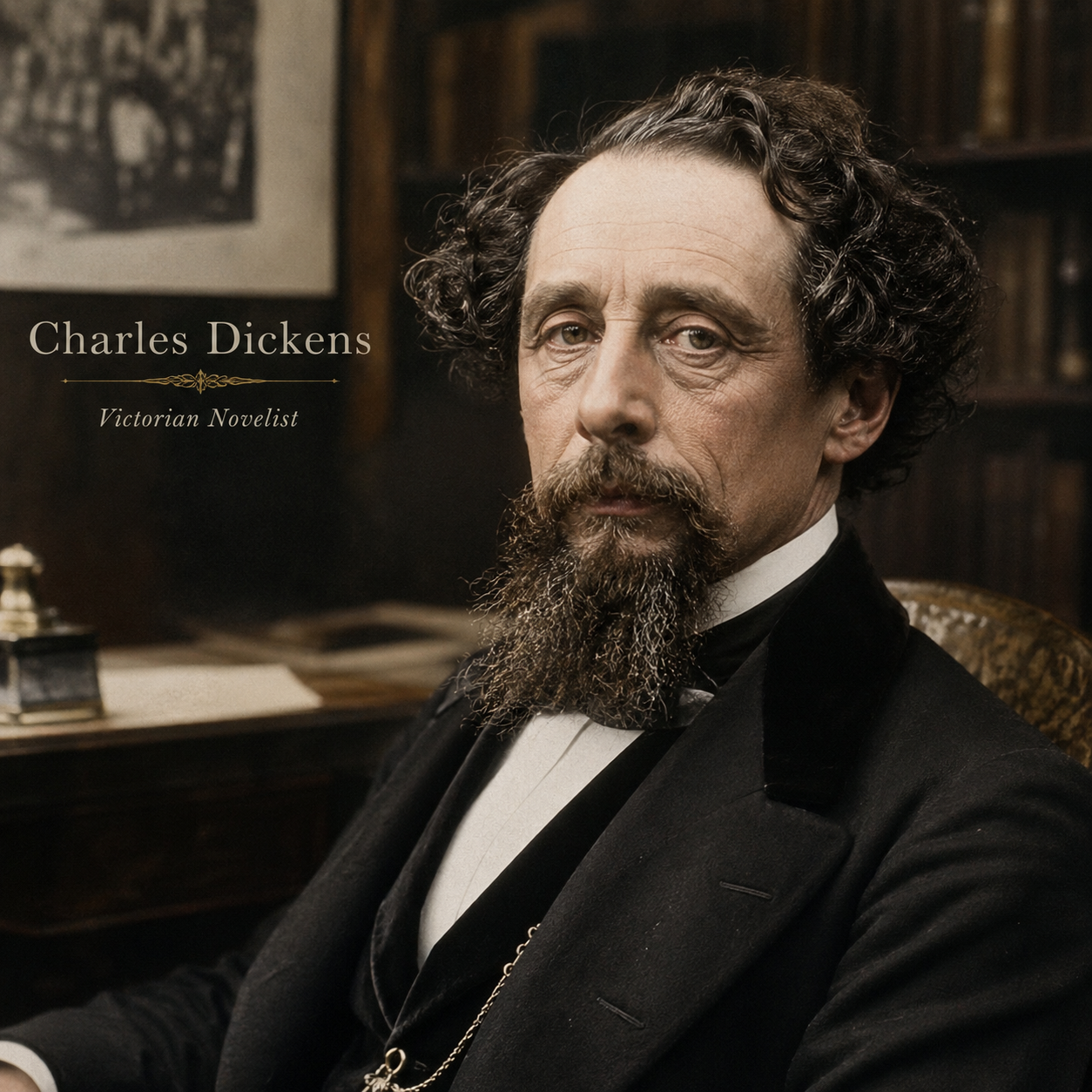
Charles Dickens — "The one great principle of the English law is, to make business for itself."
The one great principle of the English law is, to make business for itself.
The one great principle of the English law is, to make business for itself.
Click any product to generate a realistic preview. Up to 3 at a time.
* Initial load can take up to 90 seconds — revising the preview in another color is nearly instant.
"There are some people who are always grumbling because roses have thorns; I am thankful that thorns have roses."
"Heaven knows we need never be ashamed of our tears, for they are rain upon the blinding dust of earth, overlying our hard hearts."
"I am convinced that nothing has effectually suffered in the world but for want of money."
"I think that the best thing a man can do is to try to make the best of everything."
"The American women are certainly not pretty... They are not graceful, they are not elegant, they are not accomplished, they are not intellectual, they are not virtuous, and they are not honest."
English novelist whose Oliver Twist (1838), A Christmas Carol (1843), and Bleak House (1852) made Victorian poverty inescapable for the British middle class. Closely associated with William Makepeace Thackeray (Vanity Fair rival and contemporary serial novelist) and George Eliot (later Victorian giant who built on Dickens's social-realism foundation). For an intellectual contrast, see Jeremy Bentham, founder of utilitarianism (1748-1832) — Mr. Gradgrind in Hard Times (1854) is a direct caricature of Bentham-style social calculation — 'Facts, sir, nothing but Facts!' is the most-cited literary attack on utilitarianism's reduction of human life to measurable units. Dickens's serialized social-novel form is itself a rebuke of utilitarian abstraction.
Found in 2 providers: grok,deepseek
2 sources checked
Your cart is empty