John Milton — "What if the sun be dark’ned in his sphere, And with no chearful ray salute the s…"
What if the sun be dark’ned in his sphere, And with no chearful ray salute the spring?
What if the sun be dark’ned in his sphere, And with no chearful ray salute the spring?
Click any product to generate a realistic preview. Up to 3 at a time.
* Initial load can take up to 90 seconds — revising the preview in another color is nearly instant.
"For books are not absolutely dead things, but do contain a progeny of life in them to be as active as that soul whose progeny they are."
"He that can apprehend and consider vice with all her baits and seeming pleasures, and yet abstain, and yet distinguish, and yet prefer that which is truly better, he is the true warfaring Christian."
"Nor love thy life, nor hate; but what thou liv'st Live well, how long or short permit to heaven."
"Let us not stand in a panic fear of every stroke of wind that blows, but if God do stir up them to do us good, we do look that this should be done with all freedom."
"Though fall'n on evil days, on evil days though fall'n, and with laborious steps pursue my destined way."
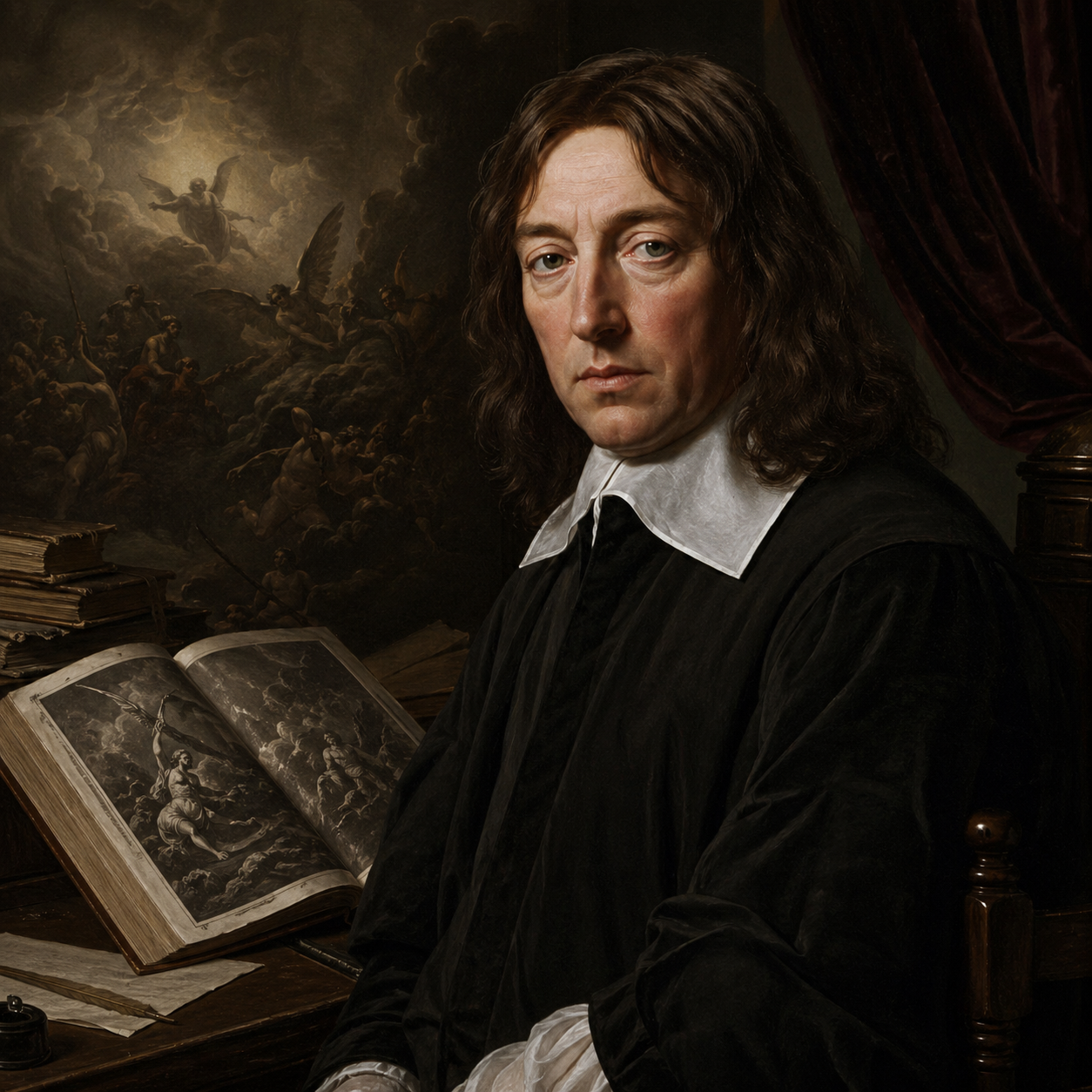
English poet whose Paradise Lost (1667) is the canonical English epic, written while blind during the Restoration after his service to Cromwell's Commonwealth. Closely associated with Andrew Marvell (Commonwealth poet and friend who protected Milton at the Restoration). For an intellectual contrast, see King Charles II's Restoration court, the courtly, sexually-libertine, theater-reopened world of 1660s London — Milton wrote Paradise Lost as a defeated Republican; the Restoration culture around him celebrated everything his Commonwealth had banned. The cleanest 'losing side writes the masterpiece' moment in English literature — Paradise Lost's Satan is freighted with the political defeat of the regicides Milton served.
Found in 1 providers: grok
1 source checked
Your cart is empty