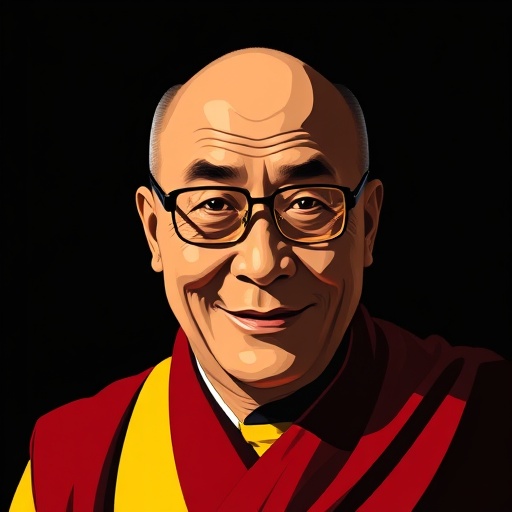
Dalai Lama (14th) — "I am a vegetarian. I used to eat meat, but then I had a dream that I was eating …"
I am a vegetarian. I used to eat meat, but then I had a dream that I was eating a dog. So I stopped.
I am a vegetarian. I used to eat meat, but then I had a dream that I was eating a dog. So I stopped.
Click any product to generate a realistic preview. Up to 3 at a time.
* Initial load can take up to 90 seconds — revising the preview in another color is nearly instant.
"My hope and prayer is that the Chinese Communist Party will change."
"We are visitors on this planet. We are here for ninety or one hundred years at the very most. During that period, we must try to do something good, something useful, with our lives. If you contribute …"
"I am a simple Buddhist monk."
"My hair is getting thin, and my teeth are falling out. But my mind is still very sharp."
"We need to learn to live together in peace and harmony, and not just tolerate each other."
Found in 1 providers: grok
1 source checked
A vivid dream about eating a dog made abstract moral reasoning suddenly personal and visceral. Most people find eating dogs repugnant because they see dogs as companions rather than food. That same revulsion, the Dalai Lama realized, should logically apply to all animals. The dream bridged the gap between knowing compassion intellectually and feeling it physically, turning a general principle into an irreversible personal conviction.
Tenzin Gyatso, born 1935, embodies ahimsa — non-harm to all sentient beings — as Buddhism's core ethical commitment. Paradoxically, traditional Tibetan Buddhist monks ate meat because Tibet's high-altitude, short-growing-season environment made vegetables scarce. His eventual vegetarianism represents a deliberate break from cultural necessity in favor of doctrinal principle, consistent with his lifelong emphasis that compassion must be actively practiced, not merely preached, even when it contradicts tradition.
The Dalai Lama has lived in exile in Dharamsala, India since China's 1959 occupation of Tibet, giving him sustained exposure to Western audiences. His adult decades coincided with the global rise of animal welfare advocacy, factory farming exposés, and mainstream plant-based eating. Speaking frequently in contexts where meat ethics are actively contested, his simple, honest account of a personal turning point carries weight precisely because it is experiential rather than preachy.
AI-generated insights based on extensive research and information for context. Factual errors? Email [email protected].
Your cart is empty