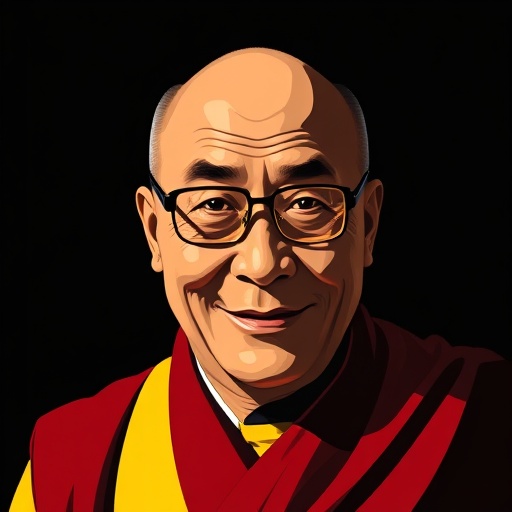
Dalai Lama (14th) — "I love to watch television. My favorite shows are nature documentaries and carto…"
I love to watch television. My favorite shows are nature documentaries and cartoons.
I love to watch television. My favorite shows are nature documentaries and cartoons.
Click any product to generate a realistic preview. Up to 3 at a time.
* Initial load can take up to 90 seconds — revising the preview in another color is nearly instant.
"The greatest happiness is to know the source of unhappiness."
"When you practice gratefulness, there is a sense of respect toward others."
"I hope that my life will be of benefit to all sentient beings."
"It is not enough to be compassionate. You must act."
"My hair is getting thin, and my teeth are falling out. But my mind is still very sharp."
Found in 1 providers: grok
1 source checked
This quote reveals genuine, unguarded humanity in one of the world's most revered spiritual figures. He openly admits enjoying simple pleasures — specifically nature documentaries and cartoons. Nature programming aligns with Buddhist reverence for all living beings, while cartoons reflect his well-documented playful, childlike joy. It is a reminder that profound spiritual depth does not demand austerity or disconnection from ordinary modern life.
Tenzin Gyatso is globally recognized for his warmth, humor, and approachability — he laughs freely during public talks and considers joy essential to Buddhist practice. His love of nature documentaries reflects the Buddhist principle of interdependence and reverence for all sentient life. His fondness for cartoons mirrors the childlike curiosity and delight he openly cultivates, qualities he consistently teaches as foundational to genuine compassion.
The Dalai Lama has lived in exile in Dharamsala, India since 1959, navigating a world of satellite broadcasting and global media expansion. Television became a window to places he could not freely travel. This era saw nature documentaries flourish — Attenborough's BBC series, National Geographic specials — and his enjoyment bridges ancient Buddhist ecology with modern environmental awareness, especially resonant as Tibet faces ongoing ecological exploitation under Chinese governance.
AI-generated insights based on extensive research and information for context. Factual errors? Email [email protected].
Your cart is empty