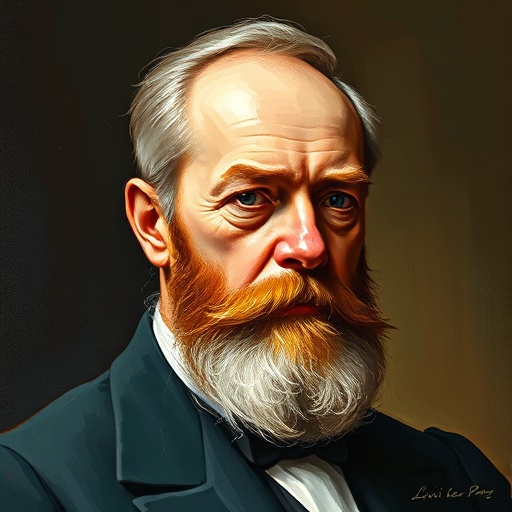
Louis Pasteur — "I have been working so hard that I sometimes forget to eat."
I have been working so hard that I sometimes forget to eat.
I have been working so hard that I sometimes forget to eat.
Click any product to generate a realistic preview. Up to 3 at a time.
* Initial load can take up to 90 seconds — revising the preview in another color is nearly instant.
"Do not let yourself be discouraged by the difficulties of research, and do not be afraid of a little suffering, for it is in this way that the truth will be revealed."
"The greatest error is to believe that one knows everything."
"I am utterly convinced that there is a germ for every disease."
"The greatest discovery of my life has been finding God."
"I am unable to find any experimental evidence that supports the doctrine of spontaneous generation."
Attributed, reflecting his intense dedication to his research.
Date: Late 19th Century (approx.)
Power & LeadershipFound in 1 providers: grok
1 source checked
The speaker admits to being so absorbed in their work that basic needs like meals slip from their mind. It expresses the kind of intense concentration where time and self-care disappear into the task at hand. Rather than boasting, it acknowledges an imbalance: dedication has crossed into self-neglect. Anyone who has lost hours to a problem they care about will recognize the feeling of looking up and realizing the day is gone.
Pasteur was legendary for marathon laboratory sessions during his work on fermentation, anthrax, and rabies. Colleagues described him arriving at dawn and leaving late, driven by a conviction that microbes caused disease when most physicians still dismissed the idea. After a stroke partially paralyzed him in 1868, he kept working at the same punishing pace. This confession matches a man who raced to save a boy bitten by a rabid dog in 1885 before his vaccine was fully proven.
In 19th-century France, science was shifting from gentleman's hobby to full-time profession, and Pasteur helped define the modern researcher. Louis Napoleon's government funded laboratories, industrial problems like spoiled wine and diseased silkworms demanded urgent answers, and rivals like Robert Koch in Germany raced for the same discoveries. There were no eight-hour workdays for scientists chasing epidemics; cholera, tuberculosis, and rabies killed while researchers worked. Skipping meals was the cost of keeping pace with a biological catastrophe.
AI-generated insights based on extensive research and information for context. Factual errors? Email [email protected].
Your cart is empty