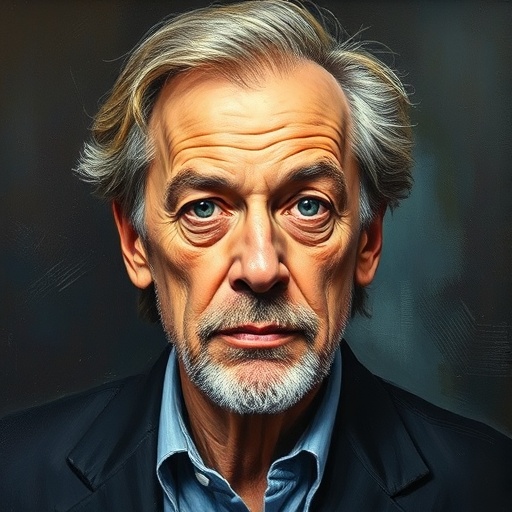
Richard Feynman — "I'd hate to die twice. It's so boring."
I'd hate to die twice. It's so boring.
I'd hate to die twice. It's so boring.
Click any product to generate a realistic preview. Up to 3 at a time.
* Initial load can take up to 90 seconds — revising the preview in another color is nearly instant.
"I can live with doubt and uncertainty and not knowing. I think it's much more interesting to live not knowing than to have answers which might be wrong."
"I have no responsibility to be like what other people expect me to be. It's their mistake, not my failing."
"Fall in love with some activity, and do it! Nobody ever figures out what life is all about, and it doesn't matter. Explore the world. Nearly everything is really interesting if you go into it deeply e…"
"The highest forms of understanding we can achieve are laughter and human compassion."
"When I was in high school, I'd read about the great scientists and I was ashamed that I was not a great scientist. I used to think, 'What's the matter with me? I'm not a great scientist.'"
American theoretical physicist who shared the 1965 Nobel for QED, developed Feynman diagrams, and wrote the Feynman Lectures on Physics. Closely associated with Julian Schwinger (co-Nobelist for QED) and Murray Gell-Mann (Caltech rival and Eightfold-Way physicist). For an intellectual contrast, see Deepak Chopra, physician and quantum-mysticism author — Feynman's Caltech 'cargo cult science' commencement address is the precise template for what he saw as misuse of physics terminology — Chopra-style appropriation of quantum vocabulary for metaphysical claims is the canonical example of what Feynman called 'fooling yourself'.
Found in 1 providers: gemini
1 source checked
Dying once is already an unwanted experience — doing it twice would compound the tedium. The quip treats death not with fear or solemnity but as a logistical inconvenience, something dull rather than terrifying. It reframes mortality through the lens of boredom, suggesting the speaker finds the process tiresome rather than frightening, and would prefer to avoid the repetition of anything so dreary.
Feynman was famous for irreverent wit and refusing to treat solemn subjects with false gravity. A Nobel laureate who played bongo drums, cracked safes at Los Alamos, and debunked the Challenger disaster with a glass of ice water, he consistently deflated pomposity. These were reportedly his actual last words, perfectly in character — meeting death with a punchline rather than a prayer, consistent with his lifelong contempt for pretension.
Feynman died in 1988, during the Cold War's final chapter when physicists carried enormous cultural weight as both heroes and harbingers of nuclear doom. Science was intensely serious public business. His refusal to perform gravitas — even at death — was a quiet rebellion against the age's tendency to mythologize scientists. The quip also reflects postwar American intellectual culture's embrace of irreverence as authenticity.
AI-generated insights based on extensive research and information for context. Factual errors? Email [email protected].
Your cart is empty