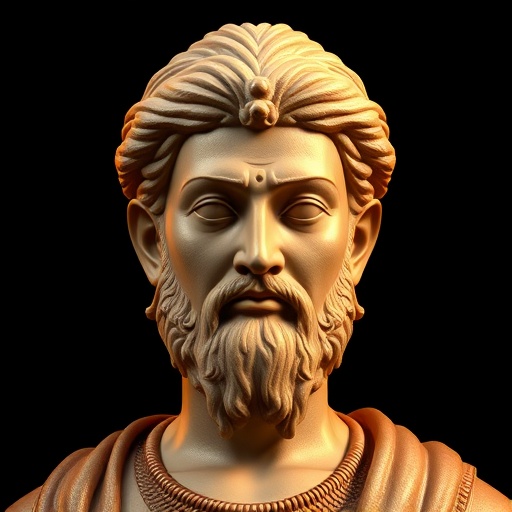
Mahavira — "All breathing, existing, living, sentient creatures should not be slain, nor tre…"
All breathing, existing, living, sentient creatures should not be slain, nor treated with violence, nor abused, nor tormented, nor driven away.
All breathing, existing, living, sentient creatures should not be slain, nor treated with violence, nor abused, nor tormented, nor driven away.
Click any product to generate a realistic preview. Up to 3 at a time.
* Initial load can take up to 90 seconds — revising the preview in another color is nearly instant.
"A man is born alone and dies alone; and he experiences the good and bad consequences of his karma alone; and he goes alone to hell or the supreme abode."
"Every soul is pure in its origin."
"The universe is governed by immutable laws."
"One who neglects the supreme art of living, which is self-knowledge, knows nothing of life."
"The soul is pure and eternal. It is never born, nor does it ever die."
24th and last Tirthankara of Jainism, whose teachings of strict ahimsa (non-violence), aparigraha (non-attachment), and karma reshaped ancient Indian religion. Closely associated with The Buddha (near-contemporary moral revolutionary, also reacting against Vedic ritualism). For an intellectual contrast, see Vedic Brahmanical ritual sacrifice, the animal-sacrifice-centered Vedic religion of his era — Mahavira's ahimsa demanded total non-violence, including not eating root vegetables that kill the plant — a maximum-distance ethical move from the Vedic priestly tradition that ritually sacrificed cattle and horses. The two cleanest poles of ancient Indian religious ethics.
Found in 1 providers: deepseek
1 source checked
Every living being capable of breath, sensation, or experience deserves protection from harm in all forms—killing, physical force, verbal abuse, psychological torment, or displacement. This is an absolute ethical command extending moral consideration beyond humans to all sentient life, demanding active nonviolence rather than merely avoiding obvious cruelty.
Mahavira, the 24th Tirthankara who systematized Jain philosophy around 600 BCE, lived as an ascetic for 12 years, carefully stepping to avoid harming insects. Ahimsa was his central teaching—he expanded it beyond prior traditions into a comprehensive doctrine covering thought, speech, and action toward every life form, forming Jainism's ethical foundation.
In 6th-century BCE India, animal sacrifice was central to Vedic religious practice, and social hierarchies determined whose lives held value. Mahavira's radical egalitarianism across all species directly challenged Brahminical ritual culture. Alongside Buddha, he represented a śramaṇa countermovement rejecting sacrificial religion and asserting that liberation required harmlessness rather than priestly ceremony.
AI-generated insights based on extensive research and information for context. Factual errors? Email [email protected].
Your cart is empty