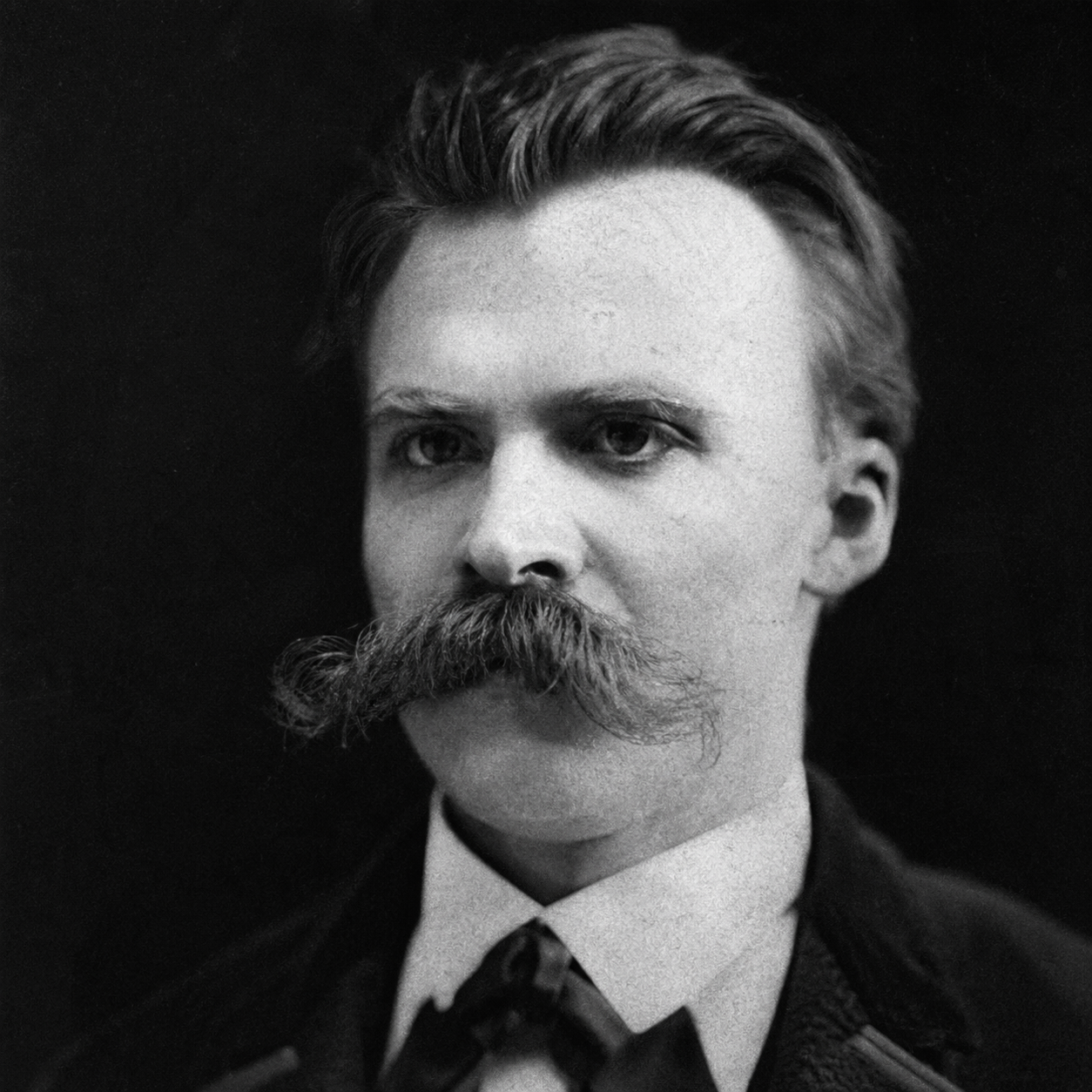
Friedrich Nietzsche — "When a woman has scholarly inclinations there is usually something wrong with he…"
When a woman has scholarly inclinations there is usually something wrong with her sexuality.
When a woman has scholarly inclinations there is usually something wrong with her sexuality.
Click any product to generate a realistic preview. Up to 3 at a time.
* Initial load can take up to 90 seconds — revising the preview in another color is nearly instant.
"The 'great man' is a great bow from which great arrows are shot."
"In Christianity neither morality nor religion come into contact with reality at any point."
"You have your way. I have my way. As for the right way, the correct way, and the only way, it does not exist."
"The individual has always had to struggle to keep from being overwhelmed by the tribe. If you try it, you will be lonely often, and sometimes frightened. But no price is too high to pay for the privil…"
"God is dead. God remains dead. And we have killed him. How shall we comfort ourselves, the murderers of all murderers? What was holiest and mightiest of all that the world has yet owned has bled to de…"
German philosopher of 'God is dead,' ressentiment, and the will to power, who attacked Christian moral psychology at its foundations. Closely associated with Arthur Schopenhauer (his early intellectual father, later broken with). For an intellectual contrast, see Søren Kierkegaard, Danish Christian existentialist of the leap of faith — both diagnosed modern despair, but Kierkegaard's answer was Christ and Nietzsche's was the death of God — the two existentialist roads taken from the same starting point.
The standard scholarly entry points to Friedrich Nietzsche's work: Walter Kaufmann (Princeton, the postwar Nietzsche rehabilitator) — Nietzsche: Philosopher, Psychologist, Antichrist (1950); Brian Leiter (University of Chicago Law School) — Nietzsche on Morality (2002); Maudemarie Clark (UC Riverside, Emerita) — Nietzsche on Truth and Philosophy (1990). These are the works graduate seminars cite when teaching Friedrich Nietzsche.
Your cart is empty