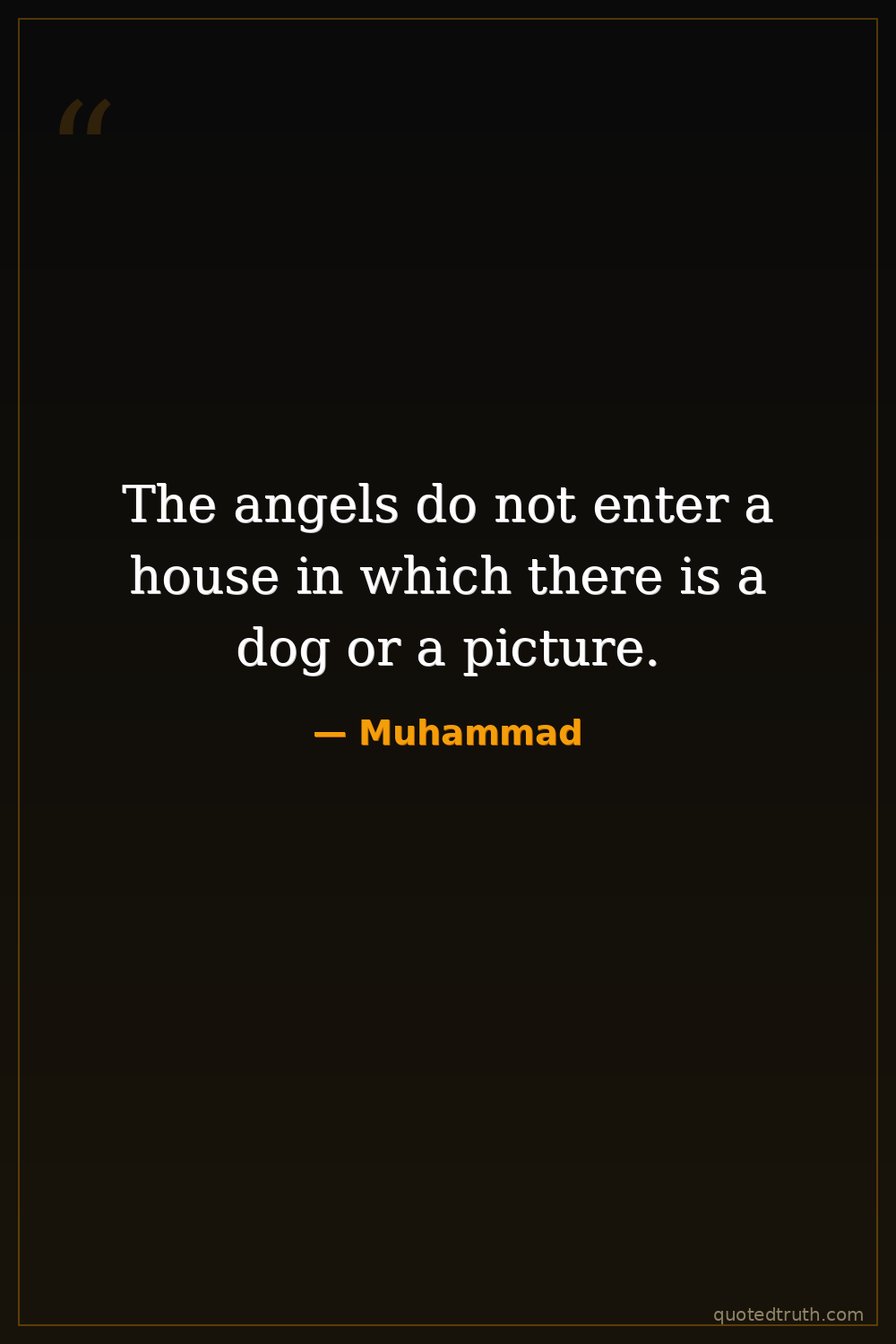
Muhammad — "The angels do not enter a house in which there is a dog or a picture."
The angels do not enter a house in which there is a dog or a picture.
The angels do not enter a house in which there is a dog or a picture.
Click any product to generate a realistic preview. Up to 3 at a time.
* Initial load can take up to 90 seconds — revising the preview in another color is nearly instant.
"The one who repents from sin is like one who has not sinned at all."
"The best among you is he who learns the Quran and teaches it."
"Do not become angry, and paradise will be yours."
"The Hour will not be established until you fight with the Jews, and the stone behind which a Jew will be hiding will say. 'O Muslim! There is a Jew hiding behind me, so kill him.'"
"except with their wives and slave girls, for these are lawful to them."
Found in 1 providers: grok
1 source checked
This saying warns that divine presence or blessing stays away from homes containing dogs or images of living beings. In practical terms, it tells believers that certain household contents create spiritual barriers, keeping messengers of mercy from entering. It reflects a concern that physical space shapes spiritual condition, and that what people keep around them influences whether grace and goodness can reach their domestic lives.
Muhammad shaped early Muslim households through such directives, blending religious guidance with daily practice. As a prophet issuing rulings on worship, cleanliness, and representation, he repeatedly cautioned against imagery that could lead to idol veneration, a concern rooted in his mission against the polytheism of pre-Islamic Arabia. His scope included pet-keeping rules, distinguishing working dogs from indoor companions, reflecting his attention to lived detail.
Seventh-century Arabia was saturated with idols, tribal shrines, and figurative art tied to pagan worship, which Muhammad was actively dismantling around the Kaaba. Dogs roamed as scavengers in settlements, linked to impurity concerns common across the region. Medieval Near Eastern cultures often associated household images with ancestor or deity veneration, so restricting pictures inside homes was a pointed break from surrounding Byzantine, Persian, and Arab customs of decorative religious imagery.
AI-generated insights based on extensive research and information for context. Factual errors? Email [email protected].
Your cart is empty