Pope Urban II — "You will wear the sign of the cross on your garments, as a pledge of your immova…"
You will wear the sign of the cross on your garments, as a pledge of your immovable vow, and you will wear it until you return.
You will wear the sign of the cross on your garments, as a pledge of your immovable vow, and you will wear it until you return.
Click any product to generate a realistic preview. Up to 3 at a time.
* Initial load can take up to 90 seconds — revising the preview in another color is nearly instant.
"When you have decided to go, you must publicly make your vow and dedicate yourselves to God."
"And we do not command or advise that the old or feeble, or those unfit for bearing arms, undertake this journey; nor ought women to set out at all, without their husbands or brothers or legal guardian…"
"We desire that you should know that the Lord is with you."
"Undertake this journey for the remission of your sins, with the assurance of the imperishable glory of the kingdom of heaven."
"Let those who have been for a long time plunderers, now become Christian knights."
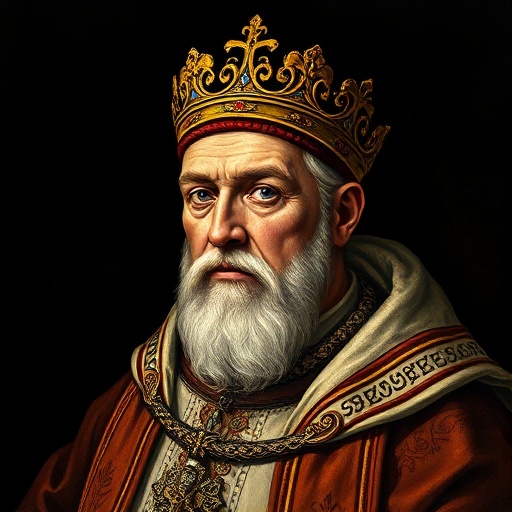
Pope (1088-1099) whose Council of Clermont speech (November 1095) launched the First Crusade — the founding event of nine centuries of Christian-Muslim military conflict. Closely associated with Pope Gregory VII (his predecessor on papal-imperial reform). For an intellectual contrast, see Saladin, Kurdish-Muslim Sultan of Egypt and Syria (1138-1193) — Saladin recaptured Jerusalem in 1187, undoing the First Crusade Urban II launched 92 years earlier. Saladin's chivalrous treatment of Christian prisoners became the canonical Muslim counter-image to Crusader brutality. The cleanest before/after pairing of the Crusades' moral arc.
Found in 1 providers: grok
1 source checked
Crusaders must sew a cross onto their clothing as a physical, public pledge binding them to the holy mission until they return home. The cross is not decoration — it is an unbreakable oath made visible to God and everyone around them. Removing it before completing the journey would be spiritual betrayal. The garment becomes a contract between the soldier and God, witnessed by the entire community.
Urban II, born Odo de Châtillon, was a Cluniac monk steeped in vow-keeping and monastic discipline before becoming pope. His entire reform agenda centered on enforcing sacred commitments against a corrupt clergy. At Clermont in November 1095, he personally invented the crusader cross tradition, channeling his monastic instinct — that a vow worn on the body creates accountability — into a mass military movement he desperately needed to actually materialize.
In 1095, Seljuk Turks controlled Jerusalem and had shattered Byzantine forces at Manzikert. Feudal lords routinely abandoned inconvenient oaths. Urban needed a mechanism to prevent thousands of volunteers from simply going home when campaigns turned brutal. A visible cross on one's tunic created social and spiritual accountability in an age where public shame and eternal damnation were genuine behavioral controls — making desertion spiritually catastrophic, not merely dishonorable.
AI-generated insights based on extensive research and information for context. Factual errors? Email [email protected].
Your cart is empty