Pope Urban II — "Let your arms be stained with the blood of the infidels."
Let your arms be stained with the blood of the infidels.
Let your arms be stained with the blood of the infidels.
Click any product to generate a realistic preview. Up to 3 at a time.
* Initial load can take up to 90 seconds — revising the preview in another color is nearly instant.
"Let none of your possessions detain you, no solicitude for your family affairs, since this land which you inhabit is everywhere shut in by the sea and surrounded by mountain peaks."
"They torture Christians with unheard-of cruelties."
"From the confines of Jerusalem and the city of Constantinople a horrible tale has gone forth and very frequently has been brought to our ears, namely, that a race from the kingdom of the Persians, an …"
"All who die in the true faith will receive the crown of life."
"Oh, what a disgrace if such a despised and base race, which worships demons, should conquer a people which has the faith of omnipotent God and has been made glorious with the name of Christ!"
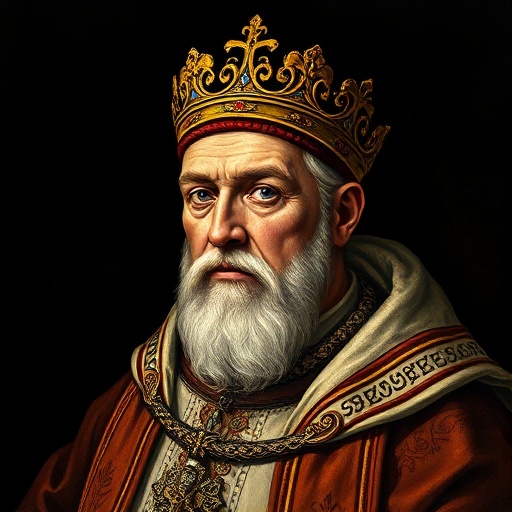
Pope (1088-1099) whose Council of Clermont speech (November 1095) launched the First Crusade — the founding event of nine centuries of Christian-Muslim military conflict. Closely associated with Pope Gregory VII (his predecessor on papal-imperial reform). For an intellectual contrast, see Saladin, Kurdish-Muslim Sultan of Egypt and Syria (1138-1193) — Saladin recaptured Jerusalem in 1187, undoing the First Crusade Urban II launched 92 years earlier. Saladin's chivalrous treatment of Christian prisoners became the canonical Muslim counter-image to Crusader brutality. The cleanest before/after pairing of the Crusades' moral arc.
Found in 1 providers: grok
1 source checked
A direct call for Christian warriors to kill enemies of the faith without hesitation or mercy. It frames battlefield killing as a religious obligation rather than a moral wrong. The speaker is urging soldiers to fully commit to violence against those labeled infidels — non-Christians, specifically Muslims — treating bloodshed not as sin but as sacred duty and proof of devotion to God.
Urban II launched the First Crusade at Clermont in 1095, personally rallying European knights with impassioned speeches promising spiritual rewards for fighting. As pope, he wielded both spiritual and political authority, and he weaponized that authority to mobilize armies. He genuinely believed reclaiming Jerusalem justified mass violence. He died weeks before crusaders took the city in 1099, never seeing his project's brutal culmination.
In 1095, Seljuk Turks controlled Jerusalem and had recently crushed Byzantine armies at Manzikert. Christian pilgrimage routes were disrupted. Europe's feudal warrior class needed religious purpose, and the papacy needed political relevance. The concept of penitential warfare — killing as path to salvation — was new and controversial. Urban's Clermont speech gave it institutional sanction, transforming private violence into organized holy war.
AI-generated insights based on extensive research and information for context. Factual errors? Email [email protected].
Your cart is empty