Pope Urban II — "Let none of you, by any pretext, delay to undertake this journey."
Let none of you, by any pretext, delay to undertake this journey.
Let none of you, by any pretext, delay to undertake this journey.
Click any product to generate a realistic preview. Up to 3 at a time.
* Initial load can take up to 90 seconds — revising the preview in another color is nearly instant.
"Those who have made a vow to go to Jerusalem, let them fulfill it as soon as possible."
"All who are burdened with debt and wish to escape it, let them join this holy expedition."
"Go forth, therefore, and fear not; for the Lord God of hosts will be with you."
"Let those who have been accustomed to make private war against the faithful carry on an approved war against the infidels."
"Of holy Jerusalem, brethren, we dare not speak, for we are exceedingly afraid and ashamed to speak of it. This very city, in which, as you all know, Christ Himself suffered for us, because our sins de…"
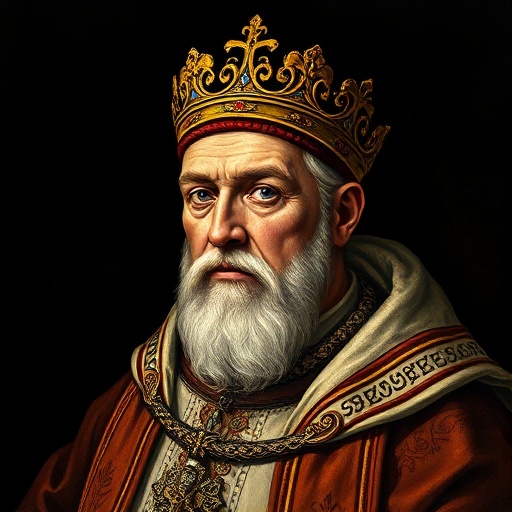
Pope (1088-1099) whose Council of Clermont speech (November 1095) launched the First Crusade — the founding event of nine centuries of Christian-Muslim military conflict. Closely associated with Pope Gregory VII (his predecessor on papal-imperial reform). For an intellectual contrast, see Saladin, Kurdish-Muslim Sultan of Egypt and Syria (1138-1193) — Saladin recaptured Jerusalem in 1187, undoing the First Crusade Urban II launched 92 years earlier. Saladin's chivalrous treatment of Christian prisoners became the canonical Muslim counter-image to Crusader brutality. The cleanest before/after pairing of the Crusades' moral arc.
Found in 1 providers: grok
1 source checked
Do not make excuses or postpone this sacred mission. Every person capable of joining must act immediately, without hesitation or delay. Urgency is paramount — waiting is itself a form of failure. The call demands total commitment now, not later.
Urban II preached these words at the Council of Clermont in 1095, personally launching the First Crusade. As pope, he wielded spiritual authority to mobilize Christian Europe. This reflects his decisive, commanding leadership style and his belief that reclaiming Jerusalem was God's urgent command, not a voluntary suggestion.
In 1095, Seljuk Turks controlled Jerusalem and had defeated Byzantine forces at Manzikert in 1071. Byzantine Emperor Alexios I begged Rome for help. Western Europe's feudal knights were restless. Urban channeled that energy into holy war, creating the crusading movement that would define the next two centuries of Christian-Muslim conflict.
AI-generated insights based on extensive research and information for context. Factual errors? Email [email protected].
Your cart is empty