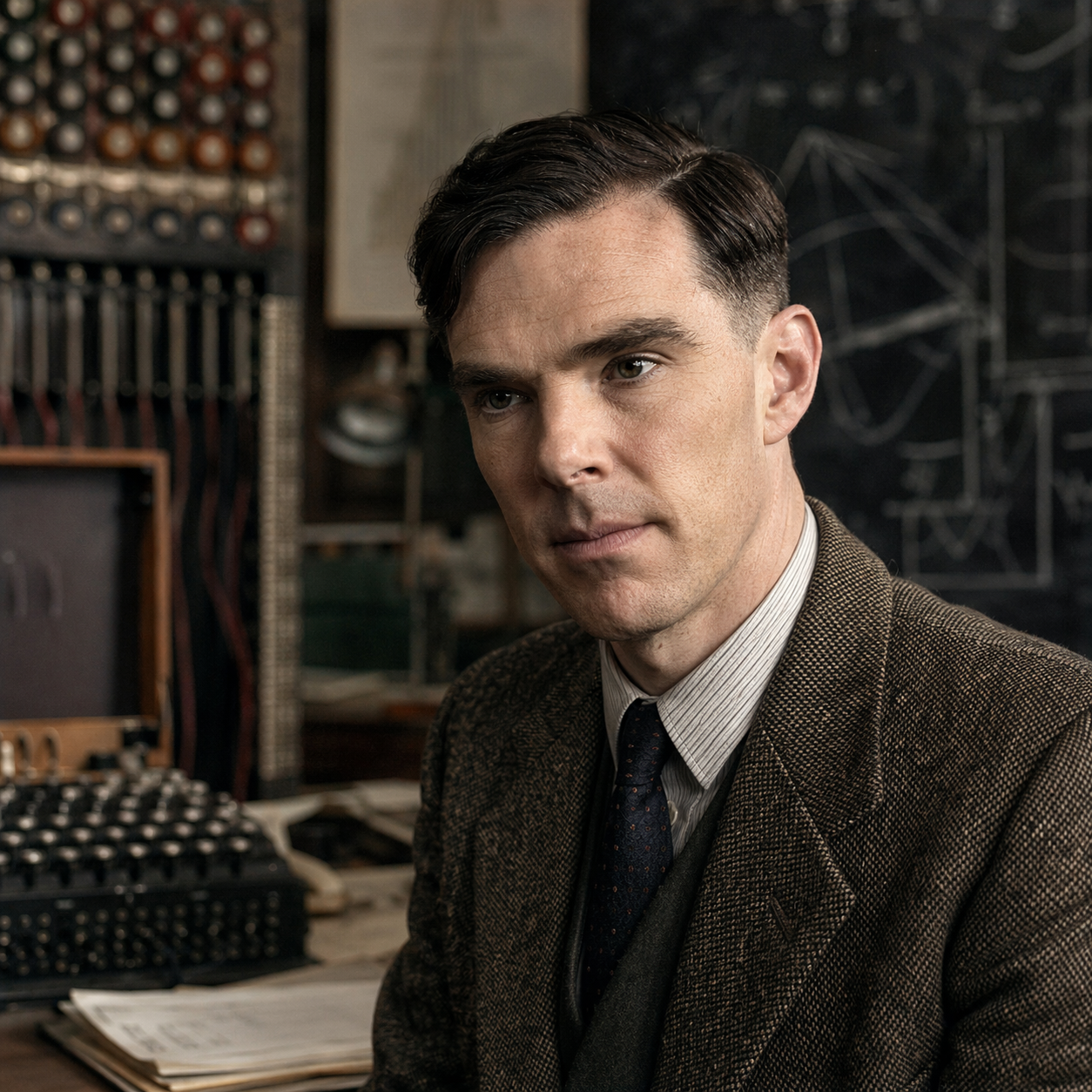
Alan Turing — "The human brain is a biological computer."
The human brain is a biological computer.
The human brain is a biological computer.
Click any product to generate a realistic preview. Up to 3 at a time.
* Initial load can take up to 90 seconds — revising the preview in another color is nearly instant.
"The human mind is a self-organizing system."
"I have had a dream indicating rather clearly that I am on the way to being hetero, though I don't accept it with much enthusiasm either awake or in the dreams."
"I am not very impressed with theological arguments whatever they may be used to support. Such arguments have often been found unsatisfactory in the past. In the time of Galileo it was argued that the …"
"I like to think the brain is a kind of pudding, but not a Christmas pudding."
"I propose to consider the question, 'Can machines think?' This should begin with definitions of the meaning of the terms 'machine' and 'think.'"
Attributed, general implication from his writings, but exact quote is elusive.
Date: Approx. 1950s
ShockingFound in 1 providers: grok
1 source checked
The brain operates like a computing machine — it takes in information, processes it through biological structures, and produces outputs in the form of thoughts, decisions, and behaviors. Intelligence, memory, and reasoning are not mystical but mechanical processes running on organic hardware, subject to the same logical principles that govern any information-processing system.
Turing pioneered the idea that machine intelligence could mirror human thought, famously proposing the Turing Test in 1950. His foundational work on computability and the universal machine led him to view cognition as computation. This parallel between brain and computer wasn't metaphor to Turing — it was the central thesis driving his entire career and his vision for artificial intelligence.
In the mid-20th century, the first electronic computers were being built, and scientists were grappling with what distinguished human minds from machines. Behaviorism dominated psychology, reducing mental processes to stimulus-response. Turing's framing bridged engineering and neuroscience before cognitive science existed as a field, challenging both religious notions of the soul and vitalist ideas that minds transcended physical explanation.
AI-generated insights based on extensive research and information for context. Factual errors? Email [email protected].
Your cart is empty