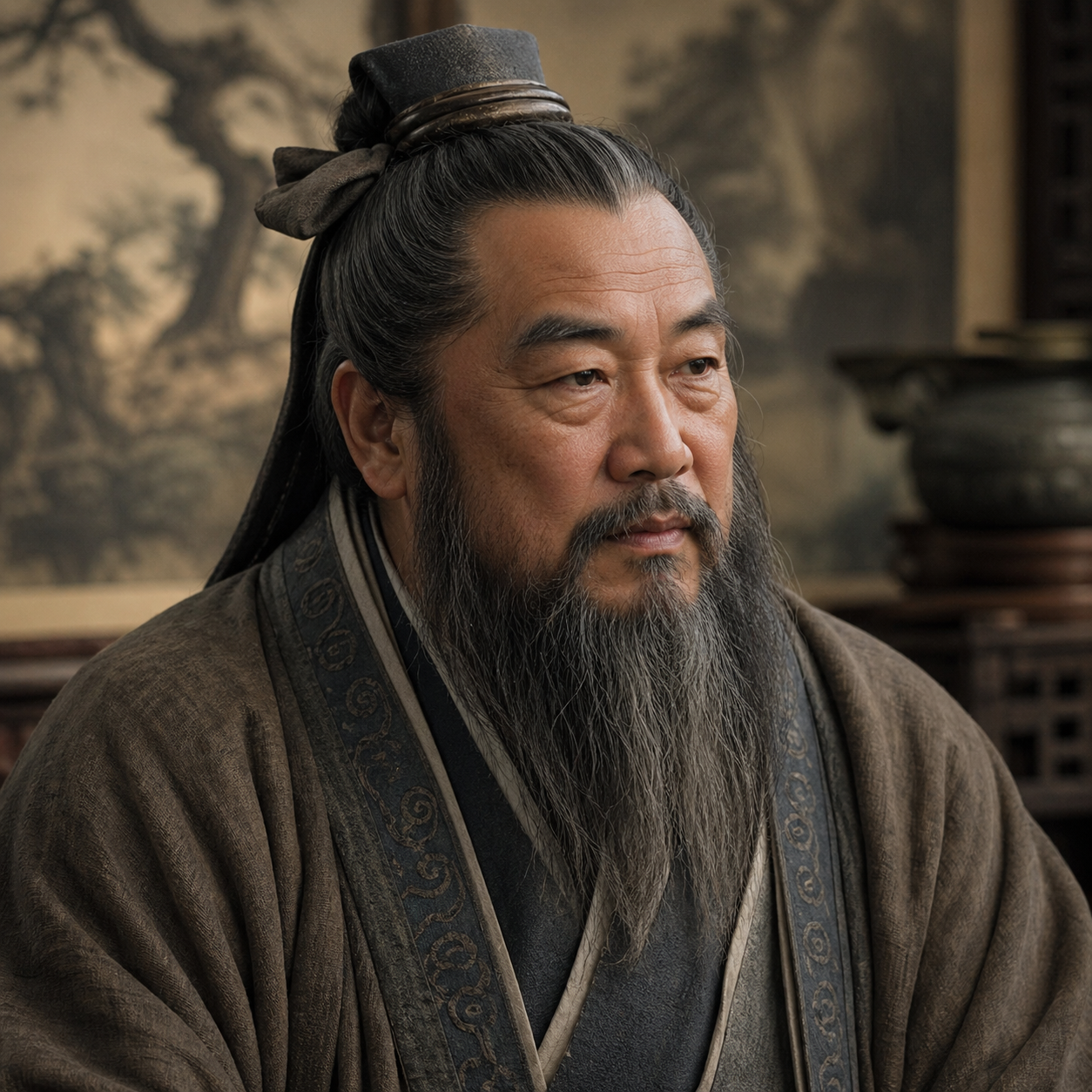
Confucius — "The gentleman is at ease without being proud; the small man is proud without bei…"
The gentleman is at ease without being proud; the small man is proud without being at ease.
The gentleman is at ease without being proud; the small man is proud without being at ease.
Click any product to generate a realistic preview. Up to 3 at a time.
* Initial load can take up to 90 seconds — revising the preview in another color is nearly instant.
"The man who moves a mountain begins by carrying away small stones."
"The superior man is dignified, but not contentious; social, but not clannish."
"Is it not pleasant to learn with a constant perseverance and application? Is it not delightful to have friends coming from distant quarters? Is he not a man of complete virtue, who feels no discomposu…"
"The gentleman considers righteousness to be essential. He performs it according to the rules of propriety. He brings it forth in humility. He completes it with sincerity. This is indeed a gentleman."
"The superior man thinks of virtue; the small man thinks of comfort."
Chinese philosopher and teacher whose teachings (compiled by his students in the Analects) became the foundational ethical framework of East Asian civilization for 2,500 years. Closely associated with Mencius (his most-influential follower a century later). For an intellectual contrast, see Laozi, near-contemporary Chinese sage and Tao Te Ching author — Confucius systematized social order through ritual and family hierarchy; Laozi's Taoist effortless-action philosophy argued such systems were the disease, not the cure. The two founding poles of Chinese moral philosophy — every East Asian moral tradition since has positioned itself between them.
The standard scholarly entry points to Confucius's work: Philip J. Ivanhoe (Georgetown, Chinese philosophy) — Confucian Moral Self Cultivation (2000); Edward Slingerland (UBC, Asian Studies) — Effortless Action: Wu-wei as Conceptual Metaphor (2003); Tu Weiming (Harvard, Confucian scholar) — Confucian Thought: Selfhood as Creative Transformation (1985). These are the works graduate seminars cite when teaching Confucius.
Found in 1 providers: gemini
1 source checked
True confidence is quiet. A person of genuine character carries themselves calmly, secure in who they are without needing to prove it. The insecure person, by contrast, puffs themselves up with arrogance because they have no inner stability. Pride that needs an audience is a sign of weakness; composure that needs no validation is the mark of real strength. Status-seeking and serenity are opposites.
Confucius spent his life teaching that moral cultivation, not birthright or wealth, defined the junzi or 'gentleman.' He distinguished this ideal from the petty xiaoren driven by self-interest. Having served briefly in government and then wandered as a teacher, often rejected by rulers, he embodied composure under setback. His refusal to flatter powerful patrons or chase status reflects exactly the unproud ease he describes here.
Confucius lived during the late Spring and Autumn period (roughly 551-479 BCE), an era of collapsing Zhou authority where warlords competed brutally for power and ostentatious display signaled rank. Aristocrats flaunted chariots, titles, and ritual privileges to assert dominance amid instability. By redefining nobility as inner moral character rather than bloodline or pomp, Confucius offered a radical alternative to a society where pride had become a survival tactic among insecure elites.
AI-generated insights based on extensive research and information for context. Factual errors? Email [email protected].
Your cart is empty