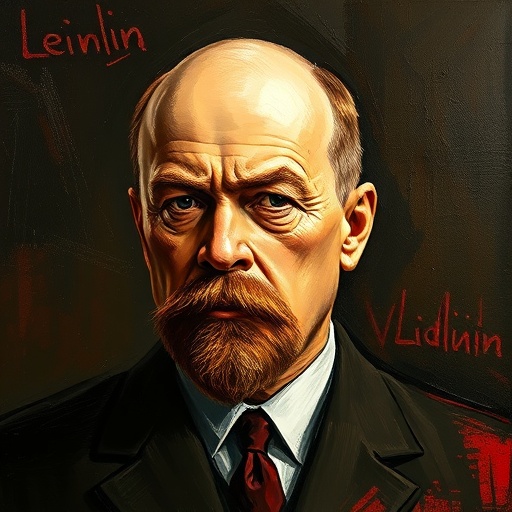
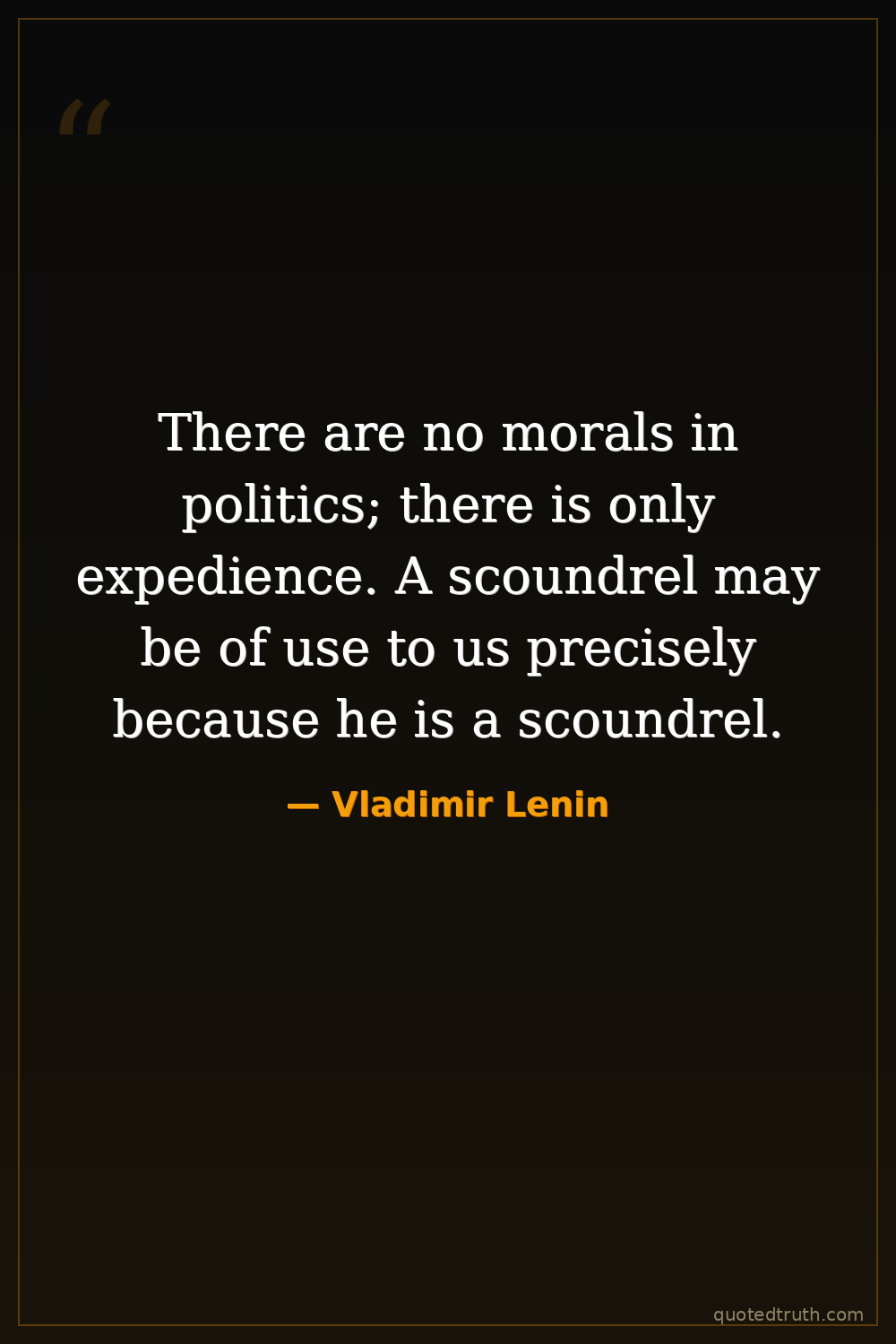
Vladimir Lenin — "There are no morals in politics; there is only expedience. A scoundrel may be of…"
There are no morals in politics; there is only expedience. A scoundrel may be of use to us precisely because he is a scoundrel.
There are no morals in politics; there is only expedience. A scoundrel may be of use to us precisely because he is a scoundrel.
Click any product to generate a realistic preview. Up to 3 at a time.
* Initial load can take up to 90 seconds — revising the preview in another color is nearly instant.
"The opportunists are those who sacrifice the fundamental interests of the masses to the temporary interests of an insignificant minority."
"Oh, yes, gentlemen! You are free not only to invite us, but to go yourselves wherever you will, even into the marsh. In fact, we think that the marsh is your proper place, and we are prepared to rende…"
"We need electricity to make communism."
"The most important thing is to make sure that the people don't know what we're doing."
"We can and must write in a language which sows among the masses hate, revulsion, and scorn toward those who disagree with us."
Russian revolutionary who led the October 1917 Bolshevik Revolution and founded the Soviet state; What Is to Be Done? (1902) shaped 20th-century revolutionary practice. Closely associated with Leon Trotsky (his Red Army organizer and 1917 partner) and Karl Marx (the source Lenin claimed (and adapted)). For an intellectual contrast, see Karl Popper, Austrian-British philosopher — Popper's The Open Society and Its Enemies (1945) systematically attacked Marx-and-Lenin 'historical inevitability' as the philosophical structure that produces totalitarianism — Lenin's vanguard-party doctrine is Popper's primary 20th-century target.
Your cart is empty