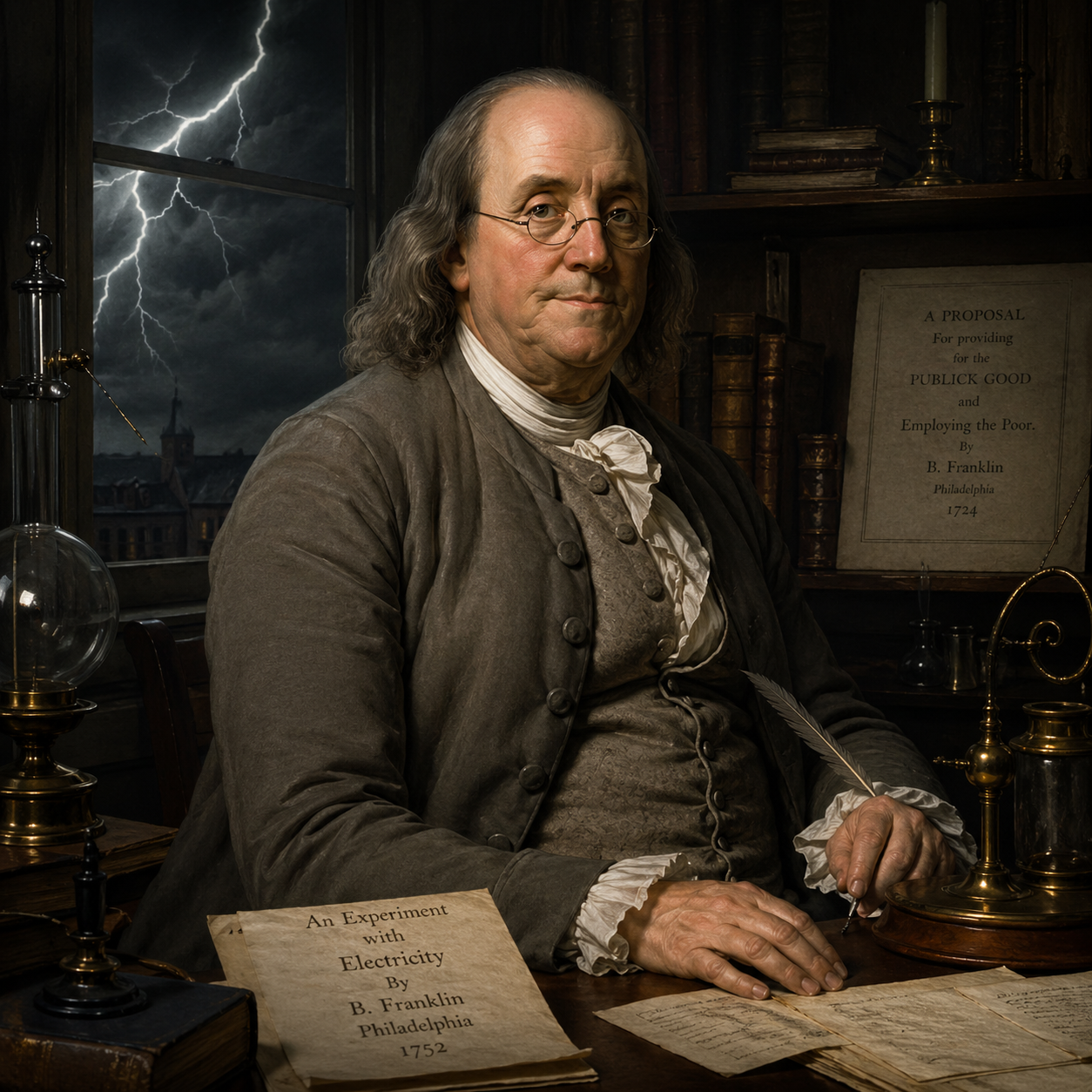
Benjamin Franklin — "Wink at small faults; remember thou hast great ones."
Wink at small faults; remember thou hast great ones.
Wink at small faults; remember thou hast great ones.
Click any product to generate a realistic preview. Up to 3 at a time.
* Initial load can take up to 90 seconds — revising the preview in another color is nearly instant.
"The way to wealth is as short as the way to market."
"The worship of God is a duty; the hearing and reading of sermons may be useful; but if men rest in hearing and praying, as too many do, it is as if a tree should value itself in being watered and putt…"
"Save a moment each day by leaving your trousers on while you relieve your bladder."
"Hunger is the best sauce."
"He that has a trade, has an estate; and he that has a calling, has an office of profit and honor."
Polymath Founding Father, diplomat, and Poor Richard's Almanack author who helped draft the Declaration of Independence and the Constitution. Closely associated with John Adams (fellow Founder, Massachusetts statesman) and Thomas Jefferson (fellow Declaration drafter). For an intellectual contrast, see Thomas Hutchinson, last royal governor of colonial Massachusetts — Franklin leaked Hutchinson's loyalist correspondence to Boston in 1772 to inflame revolutionary sentiment — Hutchinson represented the colonial-aristocrat crown-loyalty that Franklin's revolution was organized to dismantle.
Found in 1 providers: gemini
1 source checked
Be lenient toward other people's minor mistakes because you yourself carry significant flaws. It demands self-awareness before judgment: tolerance flows naturally once you honestly reckon with your own imperfections. It's a practical check on self-righteousness — the person quickest to condemn others is often least aware of their own failures. Humility here isn't weakness; it's intellectual honesty applied to moral judgment.
Franklin famously tracked his own 13 virtues in a daily ledger, documenting personal moral failures firsthand. His autobiography candidly confessed major errata: abandoning fiancée Deborah Read while in England, fathering an illegitimate son. Despite towering achievements as inventor, diplomat, and statesman, he cultivated deliberate humility, believing genuine moral growth required unflinching honesty about one's own shortcomings before presuming to judge others.
In 18th-century Colonial America, Puritan moral culture encouraged public judgment of sinners — stocks, shaming, and social condemnation were commonplace. Calvinist theology emphasized human depravity, often applied selectively. Franklin, shaped by Philadelphia's Quaker-founded tolerance, pushed back through Poor Richard's Almanack. The Enlightenment was challenging inherited moral hierarchy, asserting reason and self-reflection over communal punishment. This quote reflects that humanist shift: reform yourself before policing others.
AI-generated insights based on extensive research and information for context. Factual errors? Email [email protected].
Your cart is empty