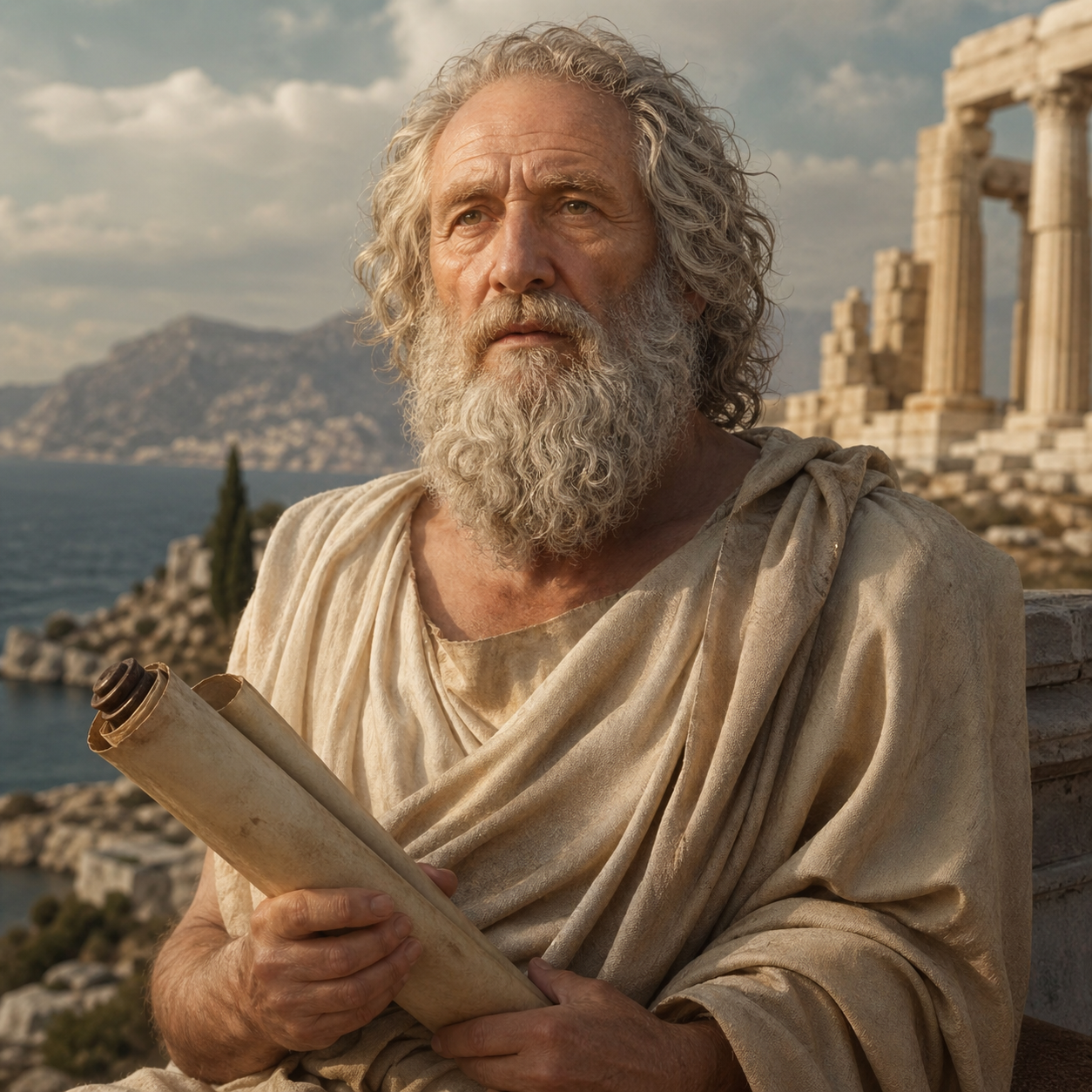
Homer — "A man's greatest possession is his self-respect."
A man's greatest possession is his self-respect.
A man's greatest possession is his self-respect.
Click any product to generate a realistic preview. Up to 3 at a time.
* Initial load can take up to 90 seconds — revising the preview in another color is nearly instant.
"For the winner a large tripod made to stride a fire / and worth a dozen oxen, so the soldiers reckoned. / For the loser he led a woman through their midst, / worth four, they thought, and skilled in m…"
"Even a fool learns something by experience."
"The sea is a cruel mistress."
"It is not good to have a rule of many."
"Nobody -- that's my name. Nobody -- so my mother and father call me, all my friends."
Greek epic poet traditionally credited with the Iliad and the Odyssey, the foundational works of Western literature. Closely associated with Hesiod (near-contemporary Greek poet of Theogony and Works and Days). For an intellectual contrast, see Plato, Greek philosopher of the Republic — Republic Book X bans the poets from the ideal city, with Homer as the explicit target — Plato argued Homer's gods set immoral examples and that poetry corrupts moral education. The founding philosophy-versus-poetry quarrel of Western thought.
Attributed, but precise source within Homeric works is debated/difficult to pinpoint definitively as a direct quote.
Date: c. 8th century BCE
Food & DrinkFound in 1 providers: grok
1 source checked
Your cart is empty