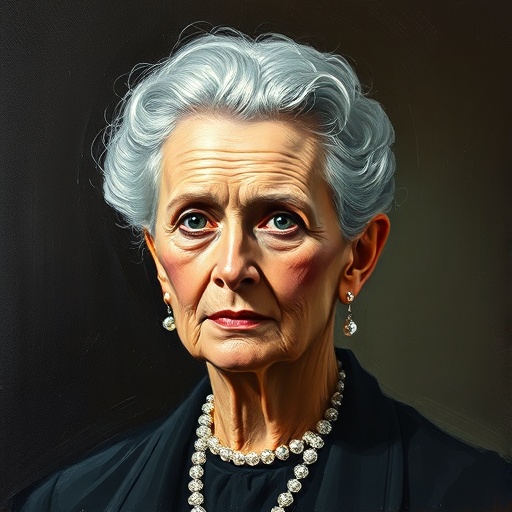
Marie Curie — "A scientist must not be a poet. A scientist must be a scientist."
A scientist must not be a poet. A scientist must be a scientist.
A scientist must not be a poet. A scientist must be a scientist.
Click any product to generate a realistic preview. Up to 3 at a time.
* Initial load can take up to 90 seconds — revising the preview in another color is nearly instant.
"You must never be fearful about what you are doing when it is right."
"Humanity needs practical men, who get the most out of their work, and, without forgetting the general good, safeguard their own interests. But humanity also needs dreamers, for whom the disinterested …"
"My mind is entirely absorbed by my studies, and I consider it a great privilege to be able to devote myself to them."
"In science, we must be interested in things, not in persons."
"A scientist in his laboratory is not only a technician: he is also a child placed before natural phenomena which impress him like a fairy tale."
Reported in biographies, possibly a simplification of her view on scientific rigor.
Date: Early 20th Century
GeneralFound in 1 providers: grok
1 source checked
The quote insists that scientific work demands strict discipline and objectivity, not imagination or emotional embellishment. A researcher should stick to evidence, measurement, and rigorous method rather than speculation or flowery interpretation. It draws a hard line between creative expression and empirical inquiry, arguing that mixing the two corrupts the reliability of results. In short, do the work with precision and let the data speak, not personal feeling or narrative flourish.
Curie embodied this ethos: she processed tons of pitchblende by hand to isolate radium, recorded meticulous measurements, and refused to patent her methods so science could progress openly. As the first woman to win a Nobel, and the only person to win in two sciences (Physics 1903, Chemistry 1911), she faced constant pressure to be a symbol rather than a scientist. She resisted sentimentality and stayed focused on laboratory rigor until radiation exposure killed her.
Curie worked from the 1890s through the 1930s, when physics was being rewritten by radioactivity, X-rays, relativity, and quantum theory. Science was professionalizing, pulling away from 19th-century natural philosophy and Romantic-era speculation. Women were largely barred from universities and labs; Curie was denied French Academy membership in 1911 despite two Nobels. Her insistence on scientist-not-poet discipline pushed back against both Romantic mysticism and the sexist framing that cast her as muse rather than researcher.
AI-generated insights based on extensive research and information for context. Factual errors? Email [email protected].
Your cart is empty