Mahavira — "All souls are alike in nature, and all souls are potentially alike in developmen…"
All souls are alike in nature, and all souls are potentially alike in development.
All souls are alike in nature, and all souls are potentially alike in development.
Click any product to generate a realistic preview. Up to 3 at a time.
* Initial load can take up to 90 seconds — revising the preview in another color is nearly instant.
"The universe is governed by immutable laws."
"The highest form of worship is to serve humanity."
"The greatest mistake of a man is to think that he is not a man."
"The real self is beyond all forms of karma."
"Do not indulge in unnecessary talk."
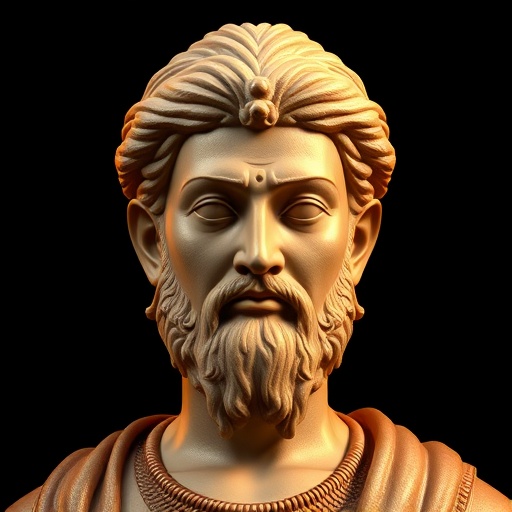
24th and last Tirthankara of Jainism, whose teachings of strict ahimsa (non-violence), aparigraha (non-attachment), and karma reshaped ancient Indian religion. Closely associated with The Buddha (near-contemporary moral revolutionary, also reacting against Vedic ritualism). For an intellectual contrast, see Vedic Brahmanical ritual sacrifice, the animal-sacrifice-centered Vedic religion of his era — Mahavira's ahimsa demanded total non-violence, including not eating root vegetables that kill the plant — a maximum-distance ethical move from the Vedic priestly tradition that ritually sacrificed cattle and horses. The two cleanest poles of ancient Indian religious ethics.
Found in 1 providers: grok
1 source checked
Every living being shares the same fundamental essence — pure consciousness, capable of knowing and experiencing. No soul is inherently superior or inferior to another. And every soul has the same potential to evolve spiritually, shed karma, and reach liberation. The path to freedom is open to all, regardless of birth, caste, or circumstance. Development is not predetermined — it depends entirely on one's choices and ethical conduct.
Mahavira, the 24th Tirthankara, renounced his royal life and practiced severe asceticism, achieving omniscience before teaching publicly. He openly rejected caste hierarchy, accepting disciples from all social ranks including women. His belief that every soul shares the same nature directly grounds Jain ethics: ahimsa, non-violence toward all living beings, follows naturally if every soul is equally precious. His own disciplined life modeled the potential development he preached as available to anyone.
Mahavira lived in 6th–5th century BCE northeastern India, contemporary with Siddhartha Gautama, during a period of philosophical upheaval. The Vedic social order gave Brahmins exclusive spiritual authority; lower castes and women were denied paths to liberation. Śramaṇa movements challenged this orthodoxy directly. Declaring all souls equal in nature and spiritual potential was a radical act, undercutting hereditary privilege and offering a universal path to those the dominant system had excluded entirely.
AI-generated insights based on extensive research and information for context. Factual errors? Email [email protected].
Your cart is empty