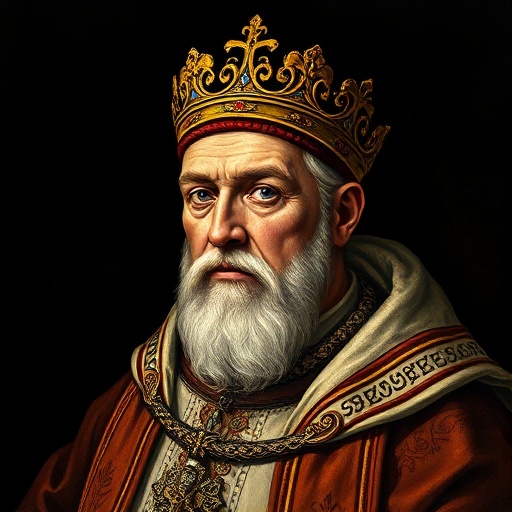
Pope Urban II — "All who are going to go into battle should wear the sign of the cross on their g…"
All who are going to go into battle should wear the sign of the cross on their garments.
All who are going to go into battle should wear the sign of the cross on their garments.
Click any product to generate a realistic preview. Up to 3 at a time.
* Initial load can take up to 90 seconds — revising the preview in another color is nearly instant.
"All who are burdened with debt and wish to escape it, let them join this holy expedition."
"The kingdom of the Greeks is already dismembered by them."
"When they wish to torture people by a base death, they perforate their navels, and dragging forth the extremity of the intestines, bind it to a stake; then with flogging they lead the victim around un…"
"If you must have blood, bathe in the blood of the infidels."
"May your courage be increased, and your hearts be strengthened, for the Lord is with you."
Pope (1088-1099) whose Council of Clermont speech (November 1095) launched the First Crusade — the founding event of nine centuries of Christian-Muslim military conflict. Closely associated with Pope Gregory VII (his predecessor on papal-imperial reform). For an intellectual contrast, see Saladin, Kurdish-Muslim Sultan of Egypt and Syria (1138-1193) — Saladin recaptured Jerusalem in 1187, undoing the First Crusade Urban II launched 92 years earlier. Saladin's chivalrous treatment of Christian prisoners became the canonical Muslim counter-image to Crusader brutality. The cleanest before/after pairing of the Crusades' moral arc.
Found in 1 providers: grok
1 source checked
A command for soldiers to mark themselves with the cross before combat. In modern terms: wear your cause as a visible badge. The cross wasn't decorative—it declared each fighter a servant of God, their violence spiritually authorized. It collapsed the distinction between soldier and pilgrim, reframing warfare as an act of devotion. Dying in battle became martyrdom, not sin. The insignia made the sacred mission undeniable and public.
Urban II rose through the Cluniac reform movement, which held the Church must govern all Christian life, including warfare. As pope from 1088, he wielded unprecedented moral authority to redirect knightly violence toward a sacred goal. The cross-insignia was his practical innovation: it unified disparate armies across Europe under a single religious identity. His Council of Clermont speech in 1095 was the direct source of this command—his defining act of papal leadership.
By 1095, the Seljuk Turks had captured Jerusalem and devastated Byzantine Anatolia after Manzikert (1071). Western knights—trained for violence but condemned by the Church for inter-Christian warfare—were spiritually restless. The Peace of God movement had tried and largely failed to contain them. Urban's crusade gave knights a holy outlet. Marking garments with a cross solved the army's identity problem: no shared language, nation, or commander, but one visible symbol of divine purpose.
AI-generated insights based on extensive research and information for context. Factual errors? Email [email protected].
Your cart is empty