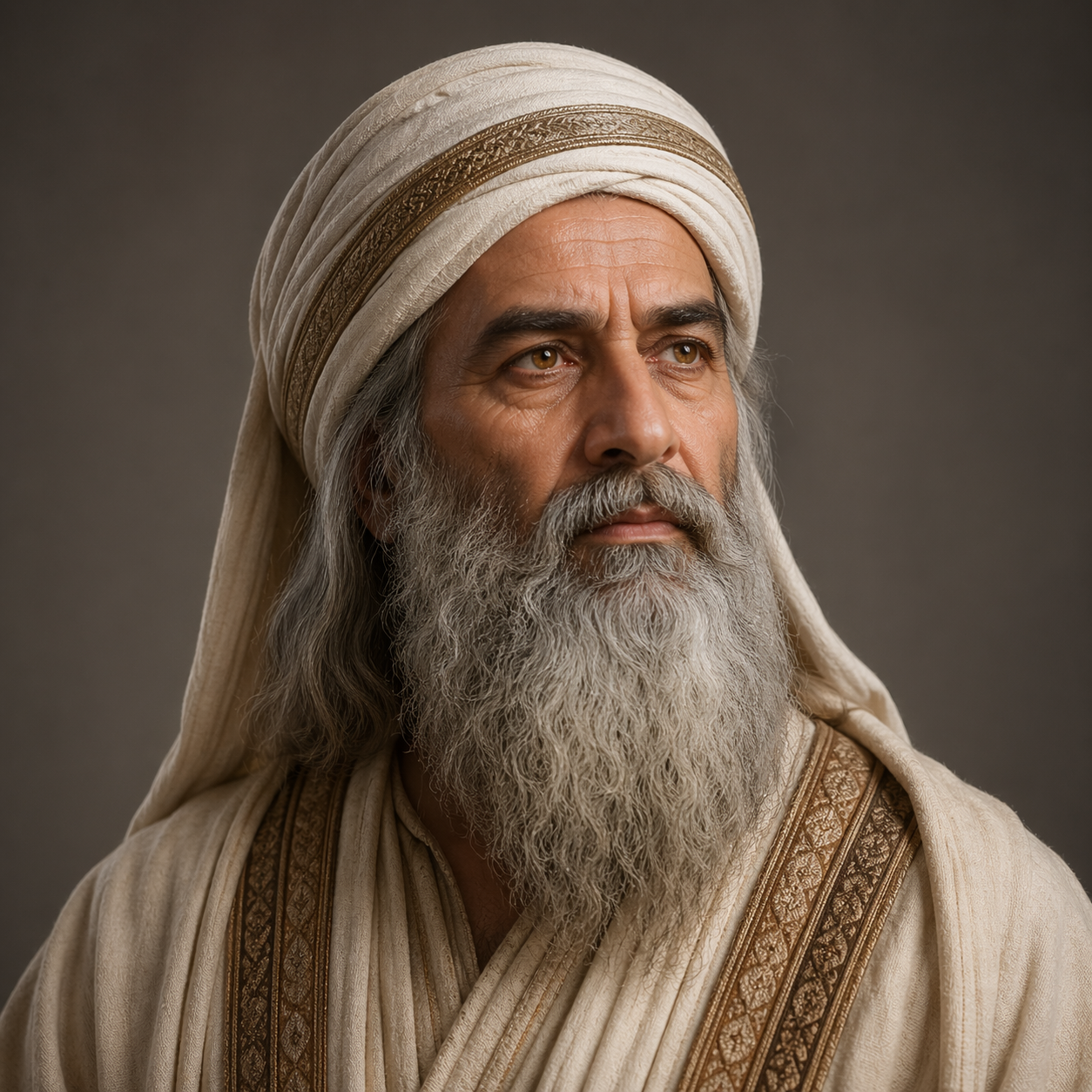
Zoroaster — "And the evil ones shall be led to their ruin, but the good ones shall come to th…"
And the evil ones shall be led to their ruin, but the good ones shall come to their reward.
And the evil ones shall be led to their ruin, but the good ones shall come to their reward.
Click any product to generate a realistic preview. Up to 3 at a time.
* Initial load can take up to 90 seconds — revising the preview in another color is nearly instant.
"Evil to the evil, good reward to the good."
"May your heart be full of love and your pockets full of... well, whatever you like."
"Reply to thine enemy with gentleness."
"Satisfaction linked with dishonor or with harm to others is a prison for the seeker."
"He who takes delight in the cattle and in the pasture, he is the one who serves Mazda."
Iranian prophet who founded Zoroastrianism, the first major religion of cosmic dualism between good (Ahura Mazda) and evil (Angra Mainyu). Closely associated with The Buddha (near-contemporary Eastern moral-cosmological revolutionary). For an intellectual contrast, see Friedrich Nietzsche, German philosopher of 'beyond good and evil' — Nietzsche appropriated Zarathustra's name for Thus Spoke Zarathustra (1883) precisely to invert the original's moral cosmology — the historical Zoroaster founded the good-versus-evil framework Nietzsche's character announces the end of.
Found in 1 providers: grok
1 source checked
Actions carry consequences that eventually catch up with the person who committed them. Those who choose harm, cruelty, or deception end up destroying themselves through the very path they walked, while those who live with honesty, kindness, and integrity receive the rewards their choices earned. Justice is not random or external but built into the moral structure of reality itself, with each person ultimately collecting the outcome seeded by their behavior.
Zoroaster built his entire religious teaching around the cosmic struggle between Asha (truth, order) and Druj (the lie, chaos), with every human choice weighted on this scale. He taught that souls cross the Chinvat Bridge after death, where the righteous pass to paradise and the wicked fall into torment. This quote distills his central doctrine: moral dualism where personal ethical choice determines eternal destiny, a belief he preached as a priest-prophet in ancient Iran.
Zoroaster lived roughly 1500-1000 BCE in ancient Persia, a polytheistic tribal world of nature gods, blood sacrifice, and warrior raids. Moral behavior was tied to ritual correctness and clan loyalty, not personal conscience. By proclaiming one supreme god, Ahura Mazda, and framing life as an individual ethical contest between good and evil, Zoroaster introduced revolutionary concepts that later shaped Jewish, Christian, and Islamic ideas of heaven, hell, judgment, and personal moral accountability.
AI-generated insights based on extensive research and information for context. Factual errors? Email [email protected].
Your cart is empty