Geoffrey Chaucer — "And thogh a widwe hadde but o sho, So plesaunt was hire song, she wolde have two…"
And thogh a widwe hadde but o sho, So plesaunt was hire song, she wolde have two.
And thogh a widwe hadde but o sho, So plesaunt was hire song, she wolde have two.
Click any product to generate a realistic preview. Up to 3 at a time.
* Initial load can take up to 90 seconds — revising the preview in another color is nearly instant.
"He had maad ful many a mariage Of yonge wommen at his owne cost."
"A good felawe, ye, a verray charitee!"
"He knew the tavernes wel in every toun / And every hostiler and tappestere / Bet than a lazar or a beggestere."
"A man may do no synne but if he wole."
"He hadde a forhead reed as any glede, / With eyen narwe, and hoote as any goot."
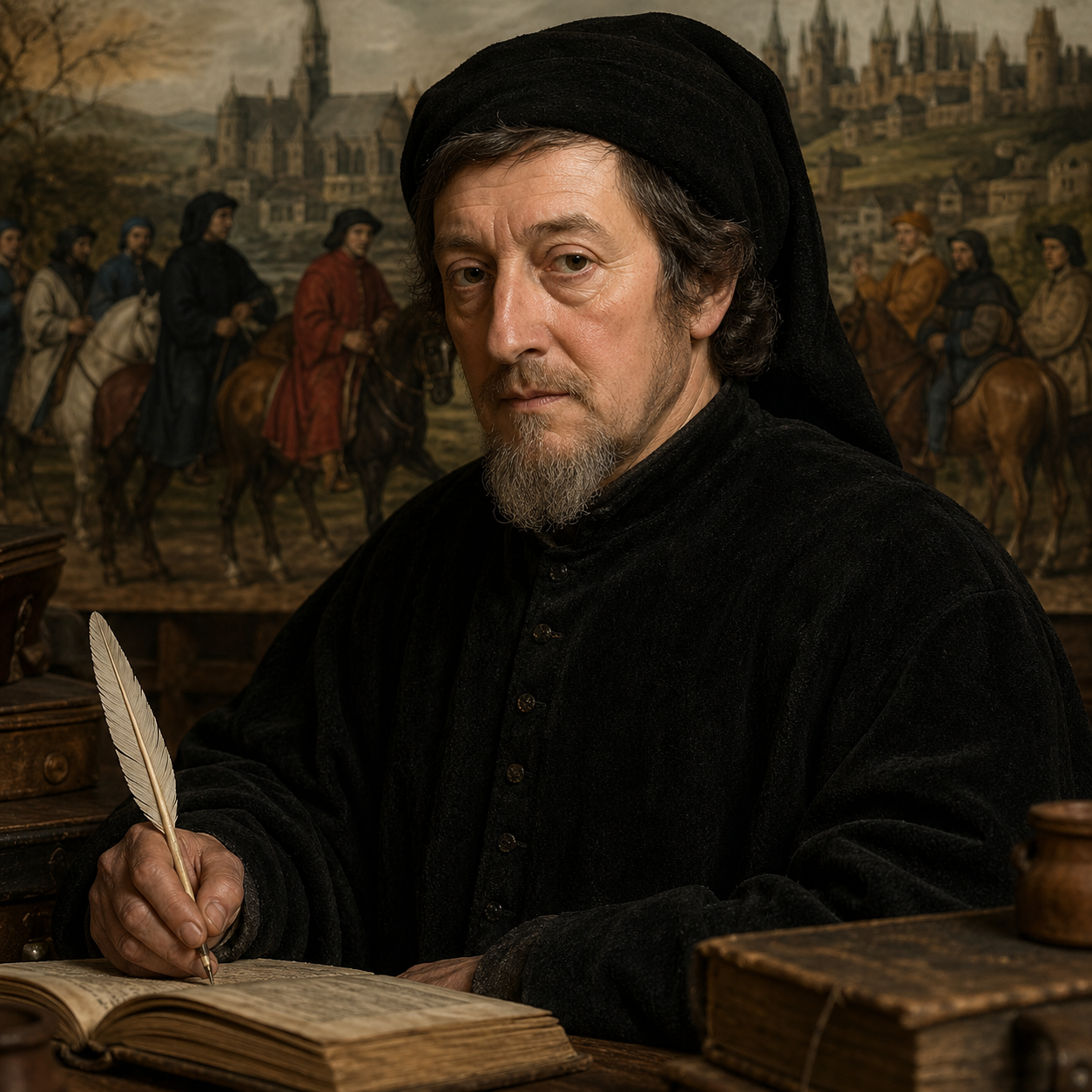
English poet, civil servant, and the father of English literature; The Canterbury Tales (~1387-1400) is the founding text of English-language storytelling. Closely associated with Giovanni Boccaccio (his Italian predecessor; the Decameron preceded the Canterbury Tales by ~40 years). For an intellectual contrast, see John Wycliffe, English theologian and Lollard reform-movement leader — Wycliffe and Chaucer were near-contemporaries in the same English Christian world — Chaucer's Wife of Bath and Pardoner are the canonical literary defense of fleshly humanity against the Lollard moral austerity that would later become English Puritanism. Earthy storytelling vs proto-Protestant moralism.
Your cart is empty