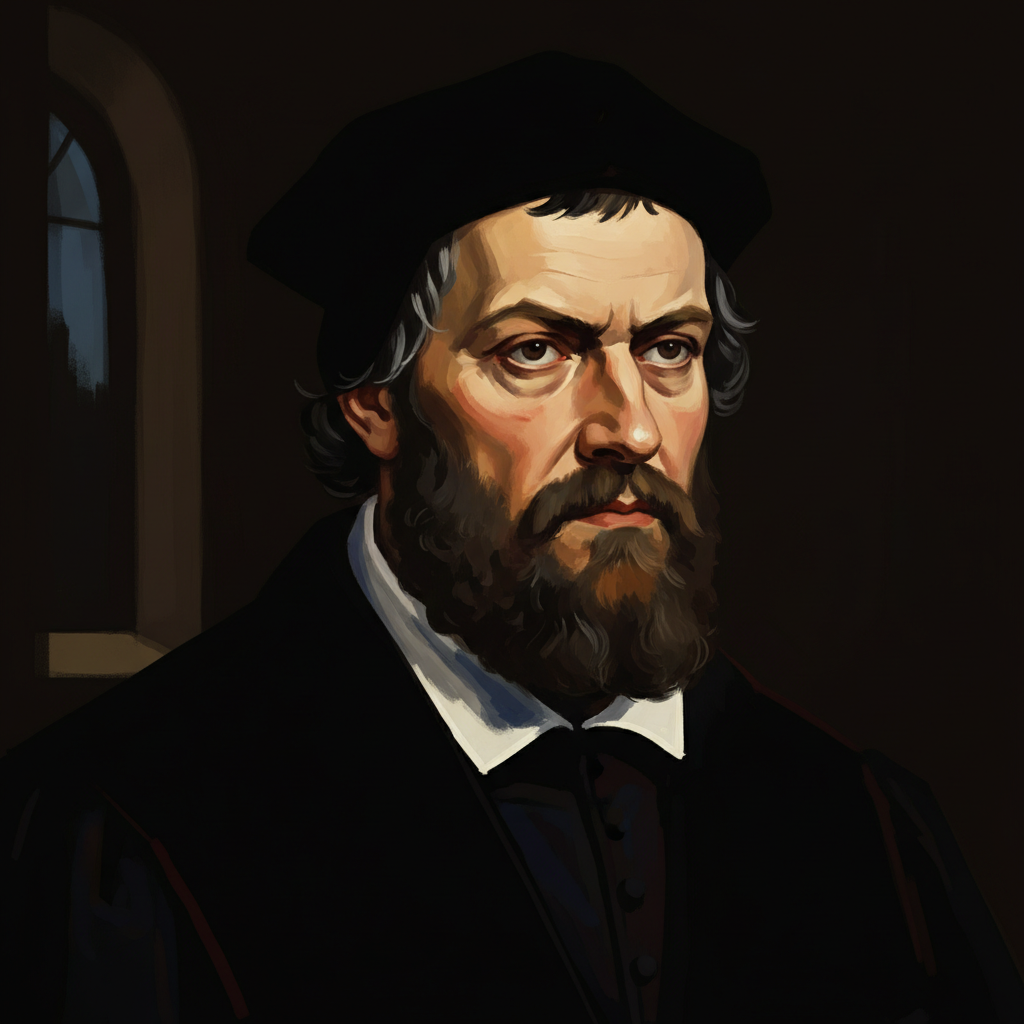
Martin Luther — "Beer is made by men, wine by God."
Beer is made by men, wine by God.
Beer is made by men, wine by God.
Click any product to generate a realistic preview. Up to 3 at a time.
* Initial load can take up to 90 seconds — revising the preview in another color is nearly instant.
"Tomorrow I have to lecture on the drunkenness of Noah [Gen. 9:20-27], so I should drink enough this evening to be able to talk about that wickedness as one who knows by experience."
"What is worse, the Jews, in their synagogues, curse our Lord Jesus Christ and Mary His mother, and call her a whore, and Christ a mamzer [bastard], that is, a son of a whore."
"Everything that is done in this world is done by hope."
"Sixthly, they ought to be deprived of the opportunity to practice usury, and all their cash and treasure of silver and gold should be taken from them and put aside for safekeeping."
"If you want to change the world, pick up your pen."
German theologian whose 95 Theses (1517) launched the Protestant Reformation and broke the Catholic Church's monopoly on Western Christianity. Closely associated with Philipp Melanchthon (Lutheran systematizer) and John Calvin (later Reformer who built on Luther's break). For an intellectual contrast, see Pope Leo X, Renaissance pope (1513-1521) — Leo X's indulgence sales triggered Luther's break and Leo excommunicated him in 1521 — Luther's entire Reformation is structured as a direct answer to the indulgence-funded Vatican Leo represented.
Found in 2 providers: grok,gemini
2 sources checked
Luther playfully contrasts two drinks to highlight their origins. Beer requires human skill, brewing, and labor to exist, while wine comes from grapes that grow naturally on the vine through divine creation. The line celebrates wine as a gift from nature while giving humans credit for the craft of brewing. It is a witty toast more than a theological statement, honoring both human ingenuity and the natural world as sources of enjoyment.
Luther was famously fond of beer and drank heavily with friends during long theological debates, often crediting his wife Katharina's home brew for sustaining him. Despite launching the Reformation in 1517 and challenging papal authority, he rejected ascetic monasticism and embraced earthly pleasures as God-given. His table talk, recorded by students, is full of such earthy humor, reflecting his belief that faith did not require renouncing food, drink, or marriage.
In early modern Germany, beer and wine were dietary staples safer than water, and monastic breweries dominated production. Luther's 1520s-30s Wittenberg was a brewing hub where Katharina ran a household brewery. The Reformation coincided with growing German beer culture and the 1516 Reinheitsgebot purity law. Luther's quip reflected tension with Catholic Mediterranean wine culture while celebrating northern brewing traditions, reinforcing Protestant identity through everyday pleasures rather than Rome's sacramental monopoly on wine.
AI-generated insights based on extensive research and information for context. Factual errors? Email [email protected].
Your cart is empty