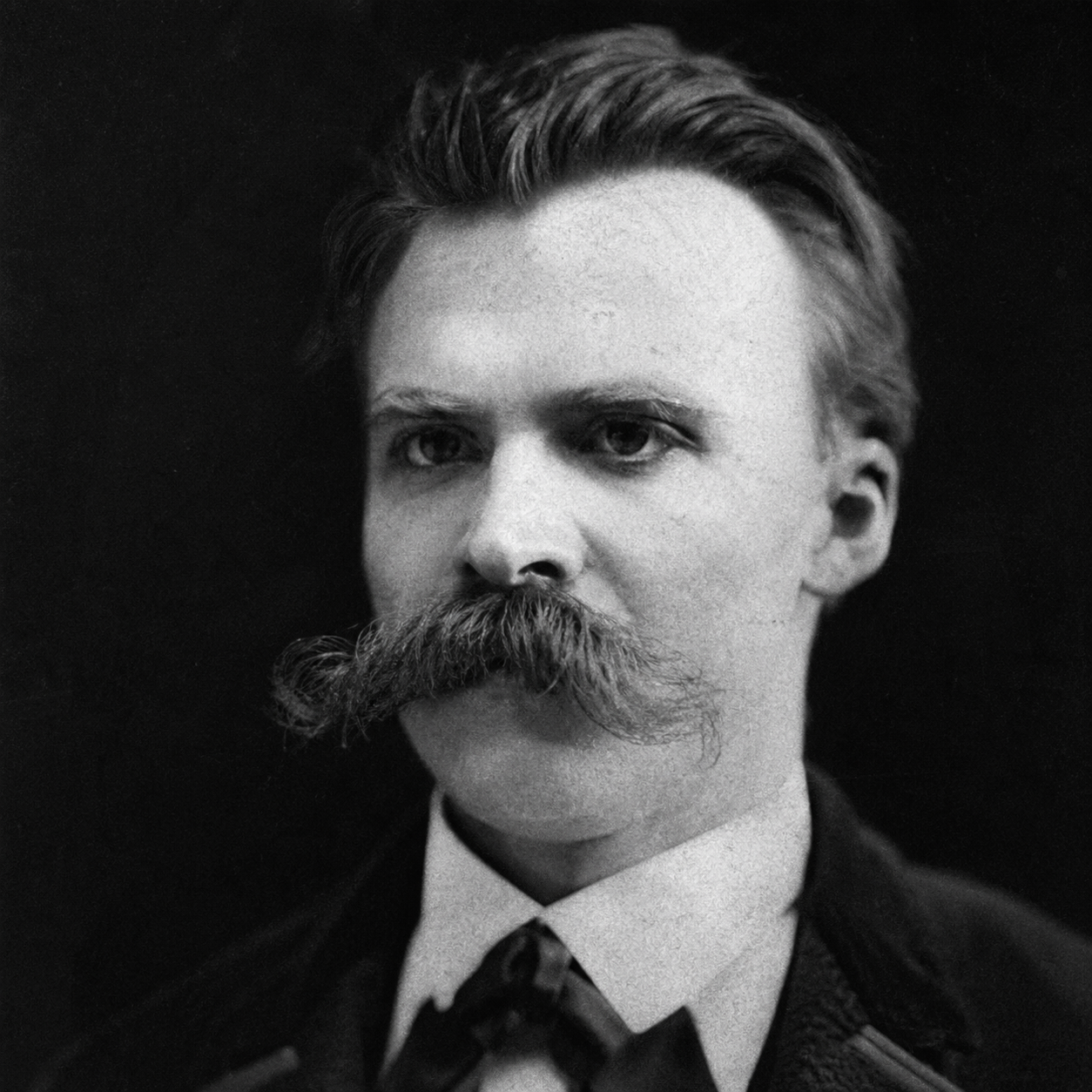
Friedrich Nietzsche — "But thus do I counsel you, my friends: distrust all in whom the impulse to punis…"
But thus do I counsel you, my friends: distrust all in whom the impulse to punish is powerful!
But thus do I counsel you, my friends: distrust all in whom the impulse to punish is powerful!
Click any product to generate a realistic preview. Up to 3 at a time.
* Initial load can take up to 90 seconds — revising the preview in another color is nearly instant.
"There is an innocence in lying which is the sign of good faith in a cause."
"We are unknown to ourselves, we knowers."
"Thoughts are the shadows of our feelings – always darker, emptier, and simpler."
"The church has precisely as much truth as it needs to exist."
"Man's maturity: to have reacquired the seriousness that one had as a child at play."
German philosopher of 'God is dead,' ressentiment, and the will to power, who attacked Christian moral psychology at its foundations. Closely associated with Arthur Schopenhauer (his early intellectual father, later broken with). For an intellectual contrast, see Søren Kierkegaard, Danish Christian existentialist of the leap of faith — both diagnosed modern despair, but Kierkegaard's answer was Christ and Nietzsche's was the death of God — the two existentialist roads taken from the same starting point.
The standard scholarly entry points to Friedrich Nietzsche's work: Walter Kaufmann (Princeton, the postwar Nietzsche rehabilitator) — Nietzsche: Philosopher, Psychologist, Antichrist (1950); Brian Leiter (University of Chicago Law School) — Nietzsche on Morality (2002); Maudemarie Clark (UC Riverside, Emerita) — Nietzsche on Truth and Philosophy (1990). These are the works graduate seminars cite when teaching Friedrich Nietzsche.
Your cart is empty