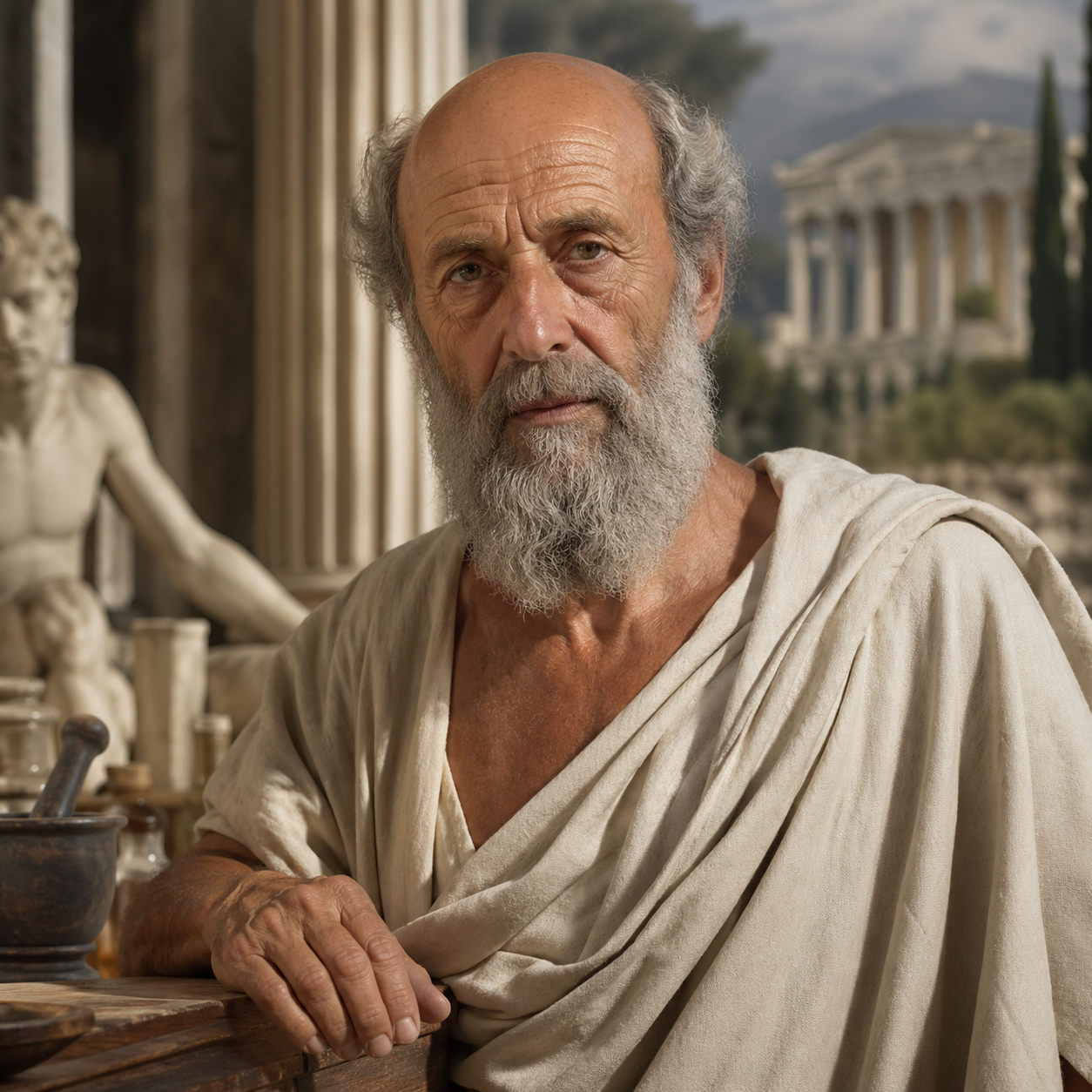
Hippocrates — "Cure sometimes, treat often and comfort always."
Cure sometimes, treat often and comfort always.
Cure sometimes, treat often and comfort always.
Click any product to generate a realistic preview. Up to 3 at a time.
* Initial load can take up to 90 seconds — revising the preview in another color is nearly instant.
"The physician must be able to tell the future."
"The sacred disease (epilepsy) is no more divine or sacred than any other disease, but has a natural cause."
"Leave your drugs in the chemist's pot if you can cure the patient with food."
"That which is used - develops. That which is not used wastes away."
"If we could give every individual the right amount of nourishment and exercise, not too little and not too much, we would have found the safest way to health."
A compassionate and realistic approach to medical practice, acknowledging limitations and the importance of care.
Date: c. 5th Century BCE
PhilosophicalFound in 1 providers: gemini
1 source checked
Medicine cannot always eliminate disease, but practitioners should engage with patients every time and never withhold human care. The three-part structure is a hierarchy of reality: cures are rare victories; treatment—managing symptoms, slowing decline—happens far more often; but easing suffering and offering presence is always possible and always required. It reframes medical duty away from heroic cure toward consistent, humane engagement.
Hippocrates built medicine on observation rather than prayer, cataloguing hundreds of cases on Cos to understand prognosis over cure. His clinical writings document fevers, epilepsy, and fractures with honest notes on outcomes he could not change. The Hippocratic Oath's emphasis on patient welfare echoes this humility. He championed diet, rest, and environment as healing tools precisely because pharmaceutical options were so limited, making comfort an active clinical strategy rather than a last resort.
In 5th-century BCE Greece, illness was widely blamed on divine punishment or demonic forces; priests at Asclepion temples used ritual and dream-healing. Hippocrates's school at Cos insisted disease had natural causes, but without germ theory or effective surgery, most serious conditions were still fatal. In that reality, a healer who could diagnose honestly, ease pain, and remain present with dying patients was providing real medicine—making comfort not sentiment but clinical necessity.
AI-generated insights based on extensive research and information for context. Factual errors? Email [email protected].
Your cart is empty