Zoroaster — "Devotion, like fire, goeth upward."
Devotion, like fire, goeth upward.
Devotion, like fire, goeth upward.
Click any product to generate a realistic preview. Up to 3 at a time.
* Initial load can take up to 90 seconds — revising the preview in another color is nearly instant.
"To thee, Ahura Mazda, and to Asha (Truth) and Vohu Manah (Good Mind), I dedicate my life, my body, and my soul."
"The soul of the righteous shall be immortal, the soul of the wicked shall perish."
"I will sing praises to You, O Ahura Mazda, with good thoughts and truthful words."
"The reward of the righteous is the radiant existence, the punishment of the wicked is the long darkness."
"Choose the truth. And if the truth is inconvenient, choose it anyway. But maybe grumble a little."
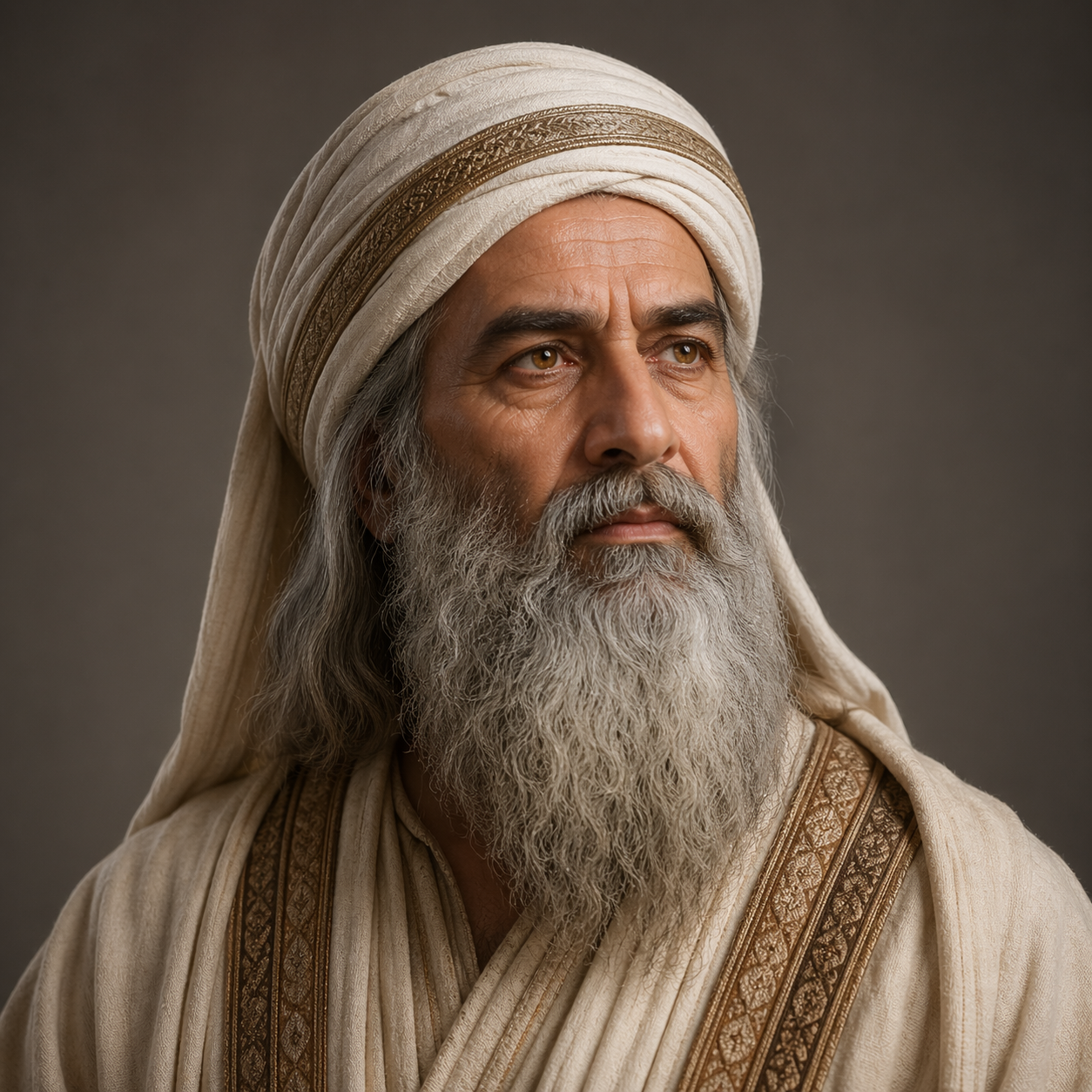
Iranian prophet who founded Zoroastrianism, the first major religion of cosmic dualism between good (Ahura Mazda) and evil (Angra Mainyu). Closely associated with The Buddha (near-contemporary Eastern moral-cosmological revolutionary). For an intellectual contrast, see Friedrich Nietzsche, German philosopher of 'beyond good and evil' — Nietzsche appropriated Zarathustra's name for Thus Spoke Zarathustra (1883) precisely to invert the original's moral cosmology — the historical Zoroaster founded the good-versus-evil framework Nietzsche's character announces the end of.
Found in 1 providers: gemini
1 source checked
True devotion naturally rises and reaches toward something higher than itself, just as flames always climb upward regardless of what feeds them. Sincere reverence cannot be contained, suppressed, or pointed downward into petty concerns. When a person genuinely commits their heart to a worthy cause or higher principle, that commitment radiates outward and elevates them, lifting their thoughts, actions, and aspirations above ordinary self-interest toward something transcendent and pure.
Zoroaster founded a faith that placed sacred fire at the literal center of worship, with fire temples maintaining ever-burning flames as symbols of Ahura Mazda's truth and purity. As a prophet-priest who reformed older Indo-Iranian rituals, he taught that righteous thought, word, and deed (asha) lifted the soul toward the divine. The image of upward-moving fire perfectly mirrors his theology where spiritual purity ascends while corruption sinks downward.
Zoroaster lived in ancient Persia roughly 1500-1000 BCE, during a tribal Indo-Iranian society dominated by polytheistic ritual sacrifice, cattle-raiding warlords, and competing daeva cults. He preached a radical monotheism centered on one wise creator and a cosmic battle between truth and lie. Fire altars were already central to Indo-Iranian religion, but Zoroaster reframed them as symbols of divine order, transforming pastoral fire-worship into an ethical, world-shaping faith later adopted by Persian empires.
AI-generated insights based on extensive research and information for context. Factual errors? Email [email protected].
Your cart is empty