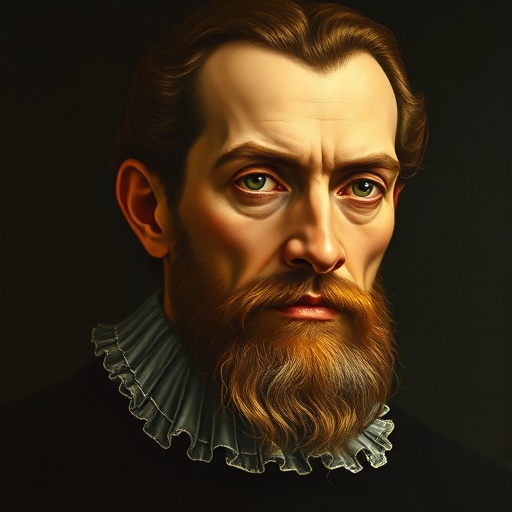
Machiavelli — "Everyone sees what you appear to be, few experience what you really are."
Everyone sees what you appear to be, few experience what you really are.
Everyone sees what you appear to be, few experience what you really are.
Click any product to generate a realistic preview. Up to 3 at a time.
* Initial load can take up to 90 seconds — revising the preview in another color is nearly instant.
"For where the very safety of the country depends upon the resolution to be taken, no considerations whatever of justice or injustice, humanity or cruelty, nor of glory or disgrace, should be allowed t…"
"No enterprise is more likely to succeed than one concealed from the enemy until it is ripe for execution."
"War is just when it is necessary; arms are permissible when there is no hope except in arms."
"In the actions of men, and especially of princes, from which there is no appeal, the end justifies the means."
"God is not willing to do everything, and thus take away our free will and that share of glory which belongs to us."
Florentine diplomat and political theorist whose The Prince (written 1513) became the founding text of political realism and gave us the adjective 'Machiavellian.' Closely associated with Francesco Guicciardini (fellow Florentine political analyst and historian). For an intellectual contrast, see Erasmus of Rotterdam, Dutch humanist and The Education of a Christian Prince author (1516) — Erasmus's princely-instruction manual was published three years after Machiavelli's, for the same European audience, and is the explicit Christian-virtue alternative to Machiavellian power-realism. The cleanest 'realism vs idealism' founding pairing in modern political theory.
Your cart is empty