John Milton — "Evil into the mind of God or man may come and go, so unapproved, and leave no sp…"
Evil into the mind of God or man may come and go, so unapproved, and leave no spot or blame behind.
Evil into the mind of God or man may come and go, so unapproved, and leave no spot or blame behind.
Click any product to generate a realistic preview. Up to 3 at a time.
* Initial load can take up to 90 seconds — revising the preview in another color is nearly instant.
"For what more often than not is the cause of all our miseries, but the ill-matching of our desires, and the ill-governing of our affections?"
"A man may be a heretic in the truth; and if he believe things only because his pastor says so, or the assembly so determines, without knowing other reason, though his belief be true, yet the very trut…"
"How charming is divine Philosophy! Not harsh, and crabbed, as dull fools suppose, But musical as is Apollo's lute, And a perpetual feast of nectared sweets, Where no crude surfeit reigns."
"Chaos umpire sits, and by decision more embroils the fray by which he reigns: next him high arbiter Chance governs all."
"Abashed the devil stood, and felt how awful goodness is."
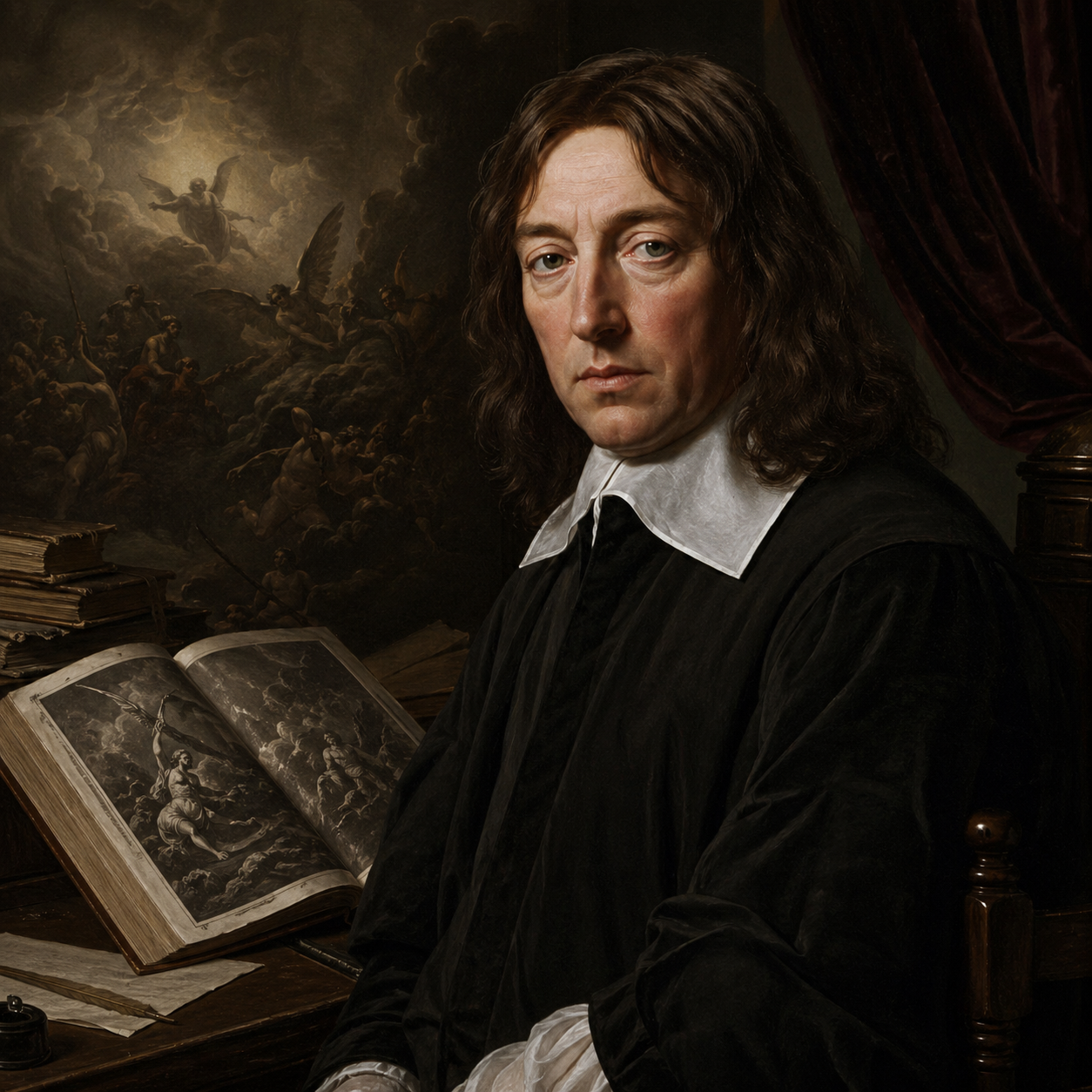
English poet whose Paradise Lost (1667) is the canonical English epic, written while blind during the Restoration after his service to Cromwell's Commonwealth. Closely associated with Andrew Marvell (Commonwealth poet and friend who protected Milton at the Restoration). For an intellectual contrast, see King Charles II's Restoration court, the courtly, sexually-libertine, theater-reopened world of 1660s London — Milton wrote Paradise Lost as a defeated Republican; the Restoration culture around him celebrated everything his Commonwealth had banned. The cleanest 'losing side writes the masterpiece' moment in English literature — Paradise Lost's Satan is freighted with the political defeat of the regicides Milton served.
Your cart is empty