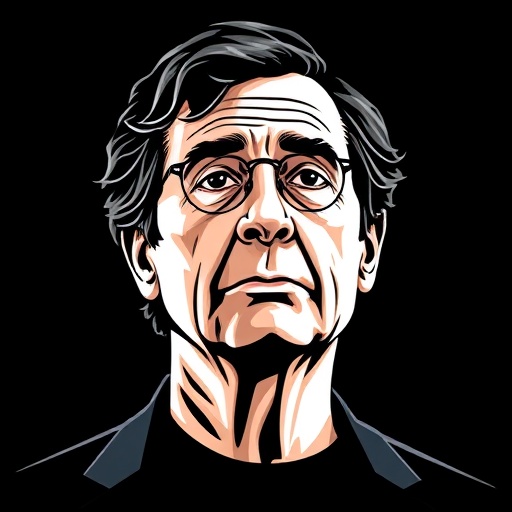
Carl Sagan — "Extraordinary claims require extraordinary evidence."
Extraordinary claims require extraordinary evidence.
Extraordinary claims require extraordinary evidence.
Click any product to generate a realistic preview. Up to 3 at a time.
* Initial load can take up to 90 seconds — revising the preview in another color is nearly instant.
"The universe is full of mysteries waiting to be solved."
"The greatest discoveries are often made by accident."
"Science is not only compatible with spirituality; it is a profound source of spirituality."
"For small creatures such as we the vastness is bearable only through love."
"An atheist is someone who is certain that God does not exist, someone who has compelling evidence against the existence of God. I know of no such compelling evidence. Because God can be relegated to i…"
Found in 2 providers: grok,deepseek
2 sources checked
If a claim overturns established knowledge or asserts something remarkable, weak or anecdotal evidence isn't enough to accept it as true. The burden of proof scales with how unusual the claim is. Common assertions need common evidence; dramatic ones demand rigorous, reproducible, independently verified proof. It's a call for proportional skepticism — not cynicism, but intellectual honesty about how much evidence a surprising idea truly requires before belief is warranted.
Sagan built his career on rigorous scientific standards while simultaneously exploring fringe possibilities — searching for extraterrestrial intelligence, analyzing UFO reports, and debunking pseudoscience. He co-founded the Committee for Skeptical Inquiry and wrote The Demon-Haunted World (1995) to champion critical thinking. This principle defined his approach: he didn't dismiss wild ideas outright but demanded proportional proof, whether evaluating alien contact claims, nuclear winter models, or ancient astronaut theories.
The 1970s and 1980s were a golden age of American pseudoscience: Uri Geller's spoon-bending toured stadiums, UFO sightings flooded tabloids, astrology columns ran in daily newspapers, and televangelists promised faith healings on national television. Meanwhile, the Cold War demanded scientific credibility for nuclear deterrence and the space program. Sagan's Cosmos (1980) reached 500 million viewers worldwide at a moment when distinguishing science from spectacle felt genuinely urgent.
AI-generated insights based on extensive research and information for context. Factual errors? Email [email protected].
Your cart is empty