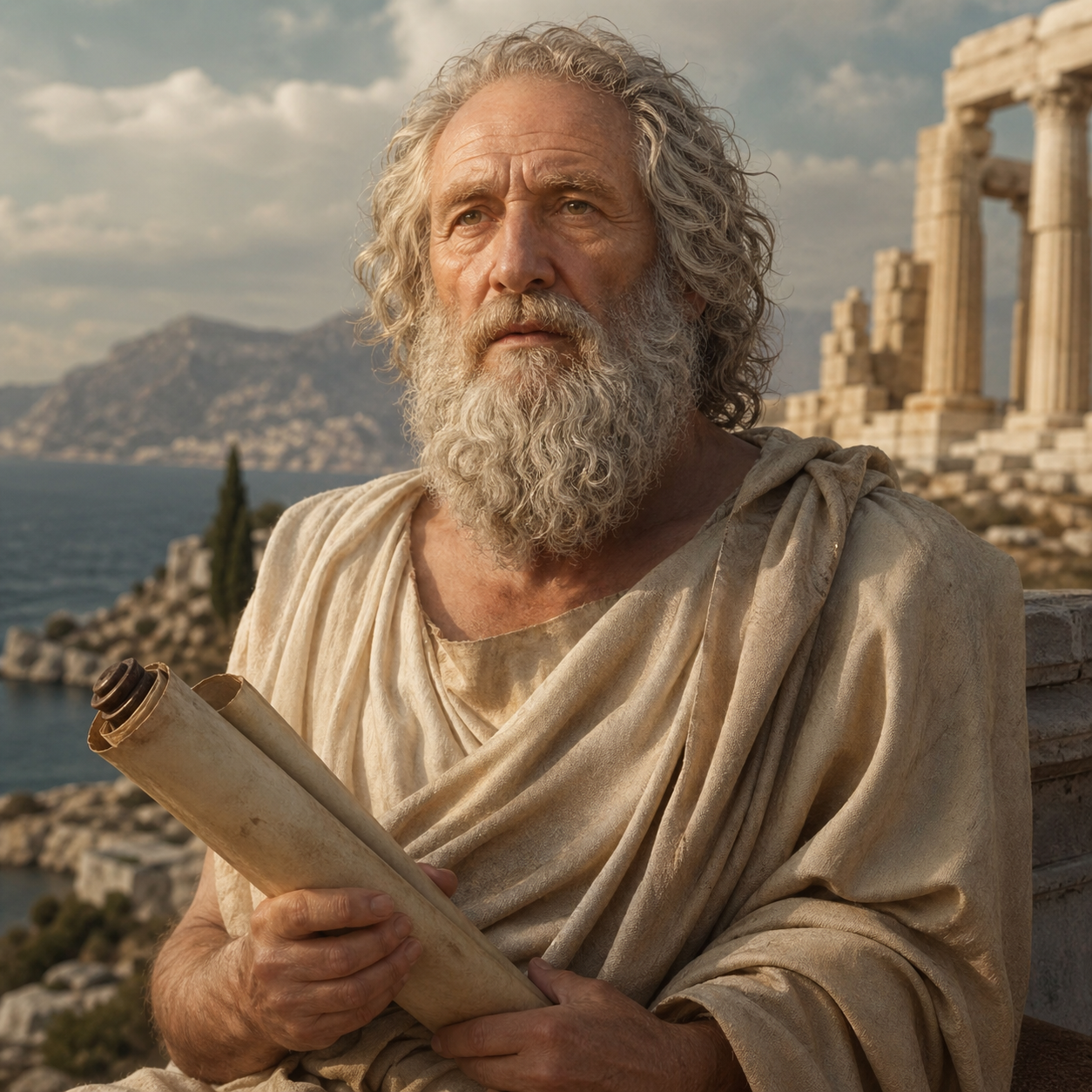
Homer — "For Fate has wove the thread of life with pain, And twins ev'n from the birth ar…"
For Fate has wove the thread of life with pain, And twins ev'n from the birth are Misery and Man!
For Fate has wove the thread of life with pain, And twins ev'n from the birth are Misery and Man!
Click any product to generate a realistic preview. Up to 3 at a time.
* Initial load can take up to 90 seconds — revising the preview in another color is nearly instant.
"Ah how shameless – the way these mortals blame the gods. From us alone they say come all their miseries yes but they themselves with their own reckless ways compound their pains beyond their proper sh…"
"Would that I were still young and strong as I was in those days, for then some one of you swineherds would give me a cloak both out of good will and for the respect due to a brave soldier; but now peo…"
"Not to have been born is best, but if one has seen the light of day, the next best thing is to return as quickly as possible to where he came from."
"But among the blessed immortals uncontrollable laughter went up as they saw Hephaestos bustling about the palace."
"Strange to behold, what blame these mortals can bring against godhead! For their ills, they assert, are from us, when they themselves by their mad recklessness have pain far past what is fated."
Greek epic poet traditionally credited with the Iliad and the Odyssey, the foundational works of Western literature. Closely associated with Hesiod (near-contemporary Greek poet of Theogony and Works and Days). For an intellectual contrast, see Plato, Greek philosopher of the Republic — Republic Book X bans the poets from the ideal city, with Homer as the explicit target — Plato argued Homer's gods set immoral examples and that poetry corrupts moral education. The founding philosophy-versus-poetry quarrel of Western thought.
Your cart is empty