John Milton — "For God, when he gave the command to multiply, did not mean that it should be a …"
For God, when he gave the command to multiply, did not mean that it should be a perpetual or a forced generation, but a free and voluntary one.
For God, when he gave the command to multiply, did not mean that it should be a perpetual or a forced generation, but a free and voluntary one.
Click any product to generate a realistic preview. Up to 3 at a time.
* Initial load can take up to 90 seconds — revising the preview in another color is nearly instant.
"A good book is the precious life-blood of a master spirit, embalmed and treasured up on purpose to a life beyond life."
"For neither was it fit the Lord of all things Should be unhonour'd, and his works not sung."
"Let us not stand in a panic fear of every stroke of wind that blows, but if God do stir up them to do us good, we do look that this should be done with all freedom."
"All is not lost, the unconquerable will, And study of revenge, immortal hate, And courage never to submit or yield."
"What boots it with incessant care To tend the homely slighted shepherd's trade, And strictly meditate the thankless Muse?"
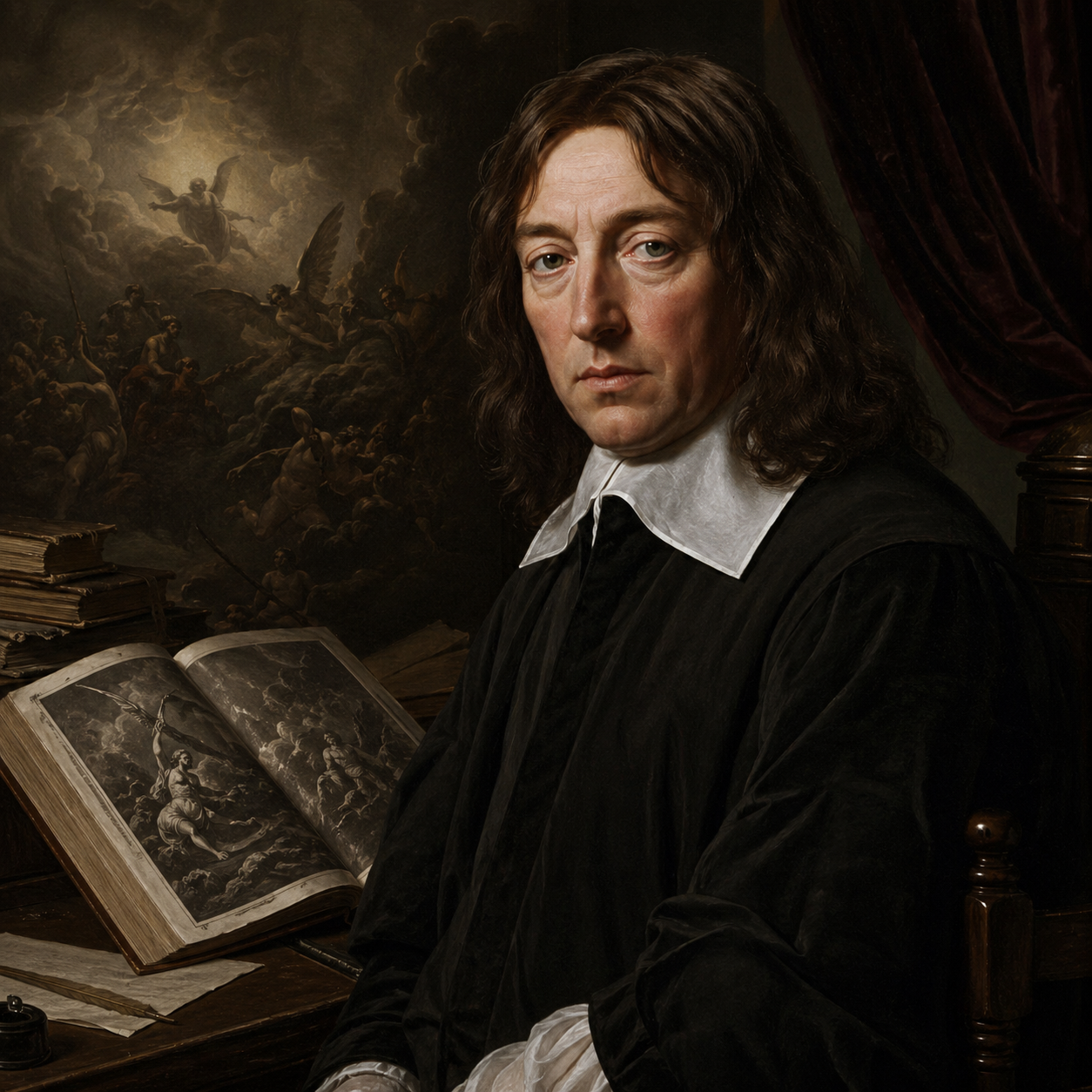
English poet whose Paradise Lost (1667) is the canonical English epic, written while blind during the Restoration after his service to Cromwell's Commonwealth. Closely associated with Andrew Marvell (Commonwealth poet and friend who protected Milton at the Restoration). For an intellectual contrast, see King Charles II's Restoration court, the courtly, sexually-libertine, theater-reopened world of 1660s London — Milton wrote Paradise Lost as a defeated Republican; the Restoration culture around him celebrated everything his Commonwealth had banned. The cleanest 'losing side writes the masterpiece' moment in English literature — Paradise Lost's Satan is freighted with the political defeat of the regicides Milton served.
Your cart is empty