Homer — "For there is no more oppressive trouble for a man than a wandering life."
For there is no more oppressive trouble for a man than a wandering life.
For there is no more oppressive trouble for a man than a wandering life.
Click any product to generate a realistic preview. Up to 3 at a time.
* Initial load can take up to 90 seconds — revising the preview in another color is nearly instant.
"A generation of men is like a generation of leaves; the wind scatters some leaves upon the ground, while others the burgeoning wood brings forth."
"Two diverse gates there are of bodiless dreams, These of sawn ivory, and those of horn. Such dreams as issue where the ivory gleams Fly without fate, and turn our hopes to scorn. But dreams which issu…"
"After the event, even a fool is wise."
"Attach a golden chain from heaven, and all of you take hold of it, you gods and goddesses, yet would you not be able to drag Zeus the most high from heaven to earth."
"Of all that breathes and crawls across the earth, our mother earth breeds nothing feebler than a man. So long as the gods grant him power, spring in his knees, he thinks he will never suffer afflictio…"
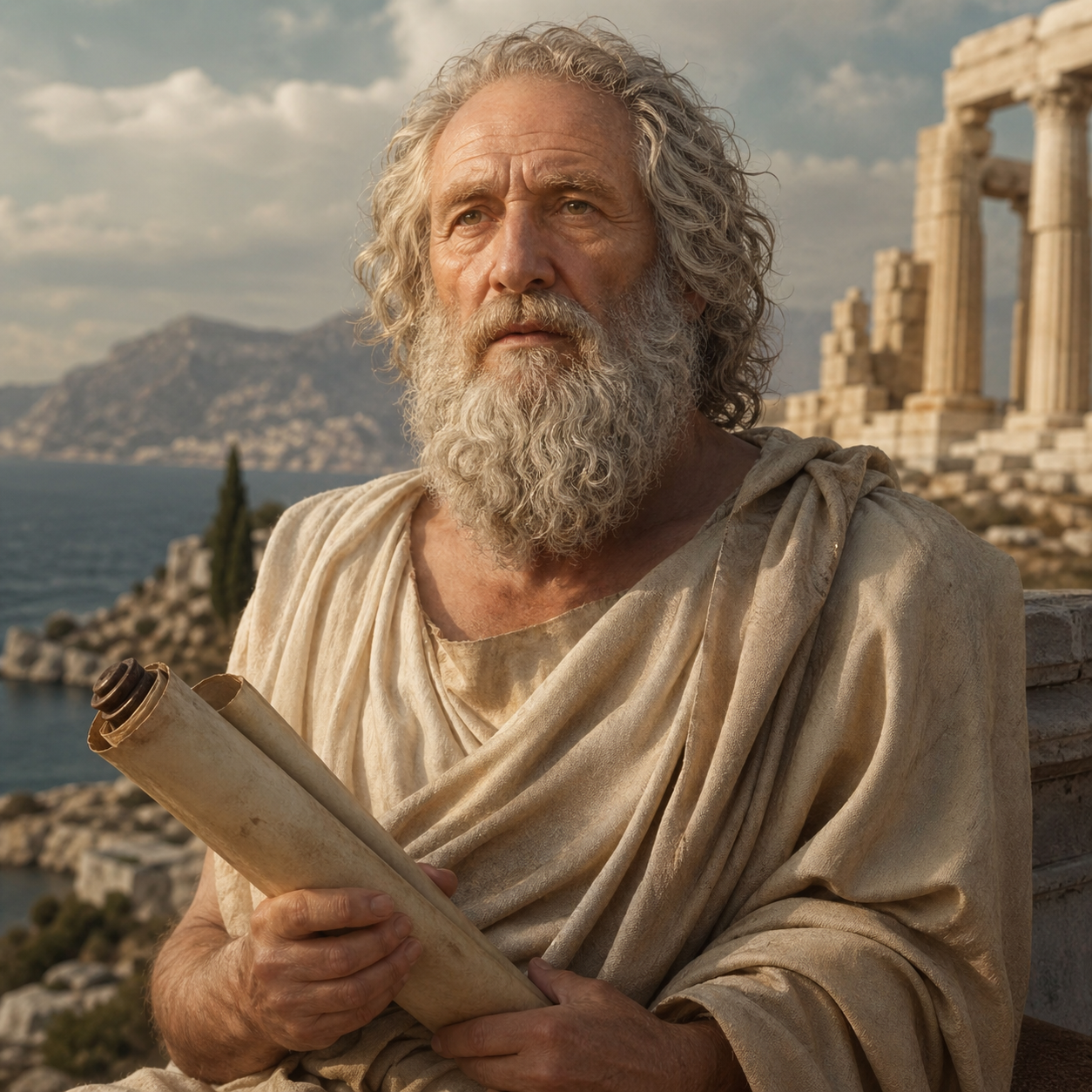
Greek epic poet traditionally credited with the Iliad and the Odyssey, the foundational works of Western literature. Closely associated with Hesiod (near-contemporary Greek poet of Theogony and Works and Days). For an intellectual contrast, see Plato, Greek philosopher of the Republic — Republic Book X bans the poets from the ideal city, with Homer as the explicit target — Plato argued Homer's gods set immoral examples and that poetry corrupts moral education. The founding philosophy-versus-poetry quarrel of Western thought.
Your cart is empty