John Milton — "Give me the liberty to know, to utter, and to argue freely according to conscien…"
Give me the liberty to know, to utter, and to argue freely according to conscience, above all liberties.
Give me the liberty to know, to utter, and to argue freely according to conscience, above all liberties.
Click any product to generate a realistic preview. Up to 3 at a time.
* Initial load can take up to 90 seconds — revising the preview in another color is nearly instant.
"For what can be more unjust than to throw the blame of a bad cause upon the fault of the first man?"
"For what can war, but acts of war still breed, Till injur'd truth from violence be freed?"
"Nor love thy life, nor hate; but what thou liv'st Live well, how long or short permit to heaven."
"For neither do the spirits damned lose all their virtue, lest bad men should boast their specious deeds on earth."
"I cannot praise a fugitive and cloistered virtue, unexercised and unbreathed, that never sallies out and seeks her adversary, but slinks out of the race, where that immortal garland is to be run for, …"
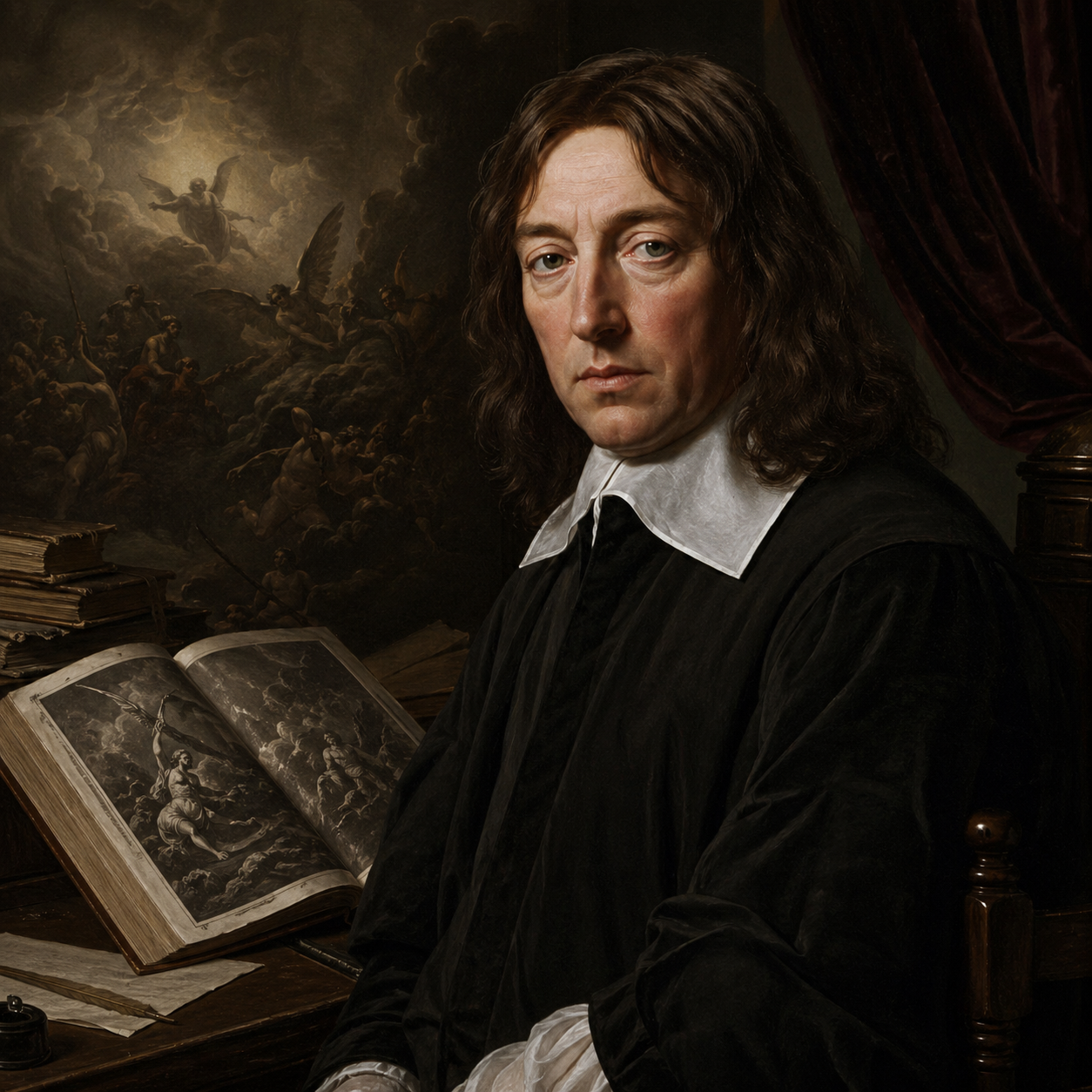
English poet whose Paradise Lost (1667) is the canonical English epic, written while blind during the Restoration after his service to Cromwell's Commonwealth. Closely associated with Andrew Marvell (Commonwealth poet and friend who protected Milton at the Restoration). For an intellectual contrast, see King Charles II's Restoration court, the courtly, sexually-libertine, theater-reopened world of 1660s London — Milton wrote Paradise Lost as a defeated Republican; the Restoration culture around him celebrated everything his Commonwealth had banned. The cleanest 'losing side writes the masterpiece' moment in English literature — Paradise Lost's Satan is freighted with the political defeat of the regicides Milton served.
Found in 3 providers: deepseek,grok,gemini
3 sources checked
Your cart is empty