John Calvin — "God, by a just and irreprehensible, but incomprehensible judgment, has predestin…"
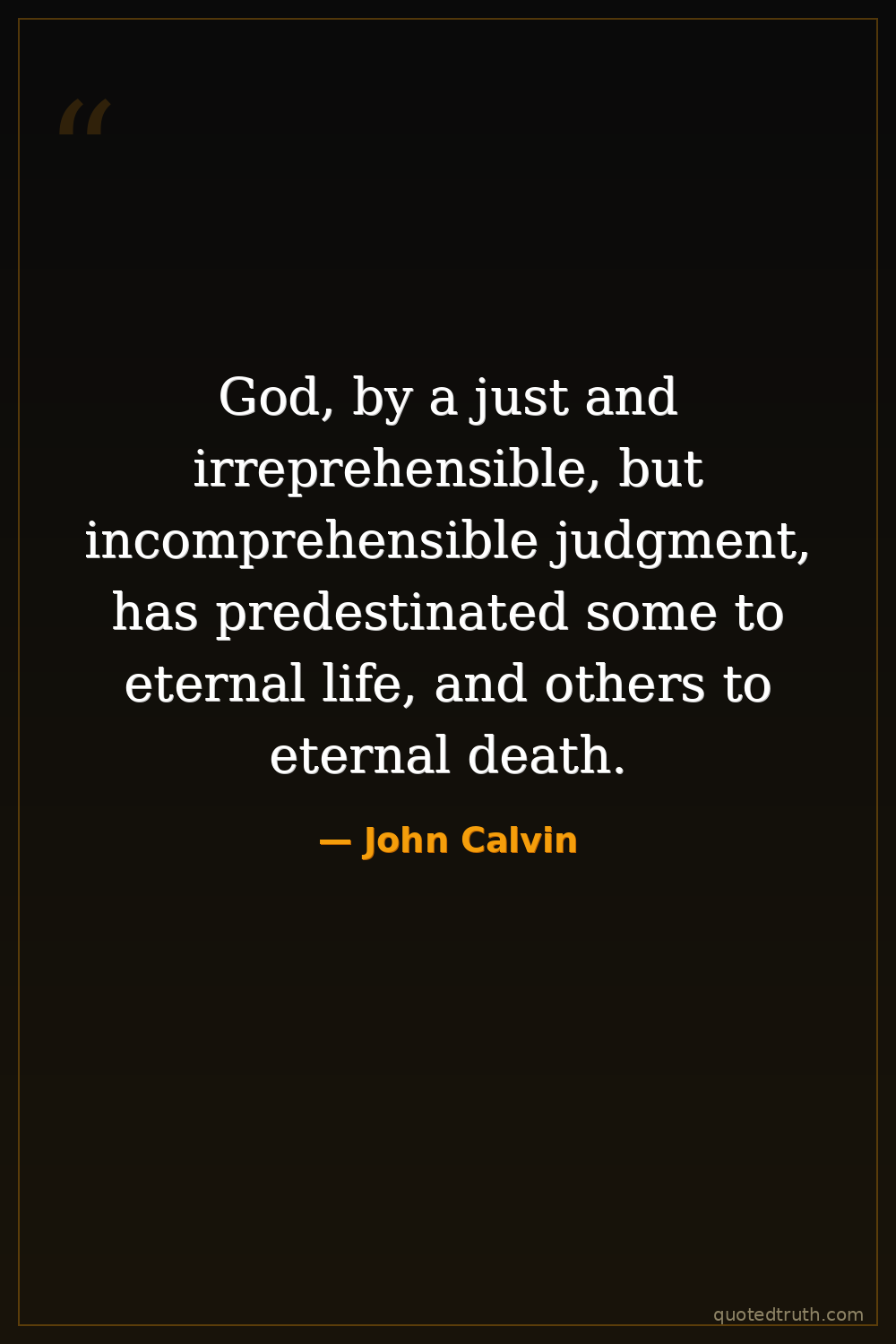
God, by a just and irreprehensible, but incomprehensible judgment, has predestinated some to eternal life, and others to eternal death.
God, by a just and irreprehensible, but incomprehensible judgment, has predestinated some to eternal life, and others to eternal death.
Click any product to generate a realistic preview. Up to 3 at a time.
* Initial load can take up to 90 seconds — revising the preview in another color is nearly instant.
"The reprobate are not without excuse, because their blindness is voluntary."
"God always remains true to himself."
"This is not laid down on human authority; it is God who speaks and prescribes a perpetual rule for his Church."
"I am unwilling to pledge my word for his safety, for if he shall come [to Geneva], I shall never permit him to depart alive, provided my authority be of any avail."
"The elect are saved by grace, and the reprobate are damned by justice."
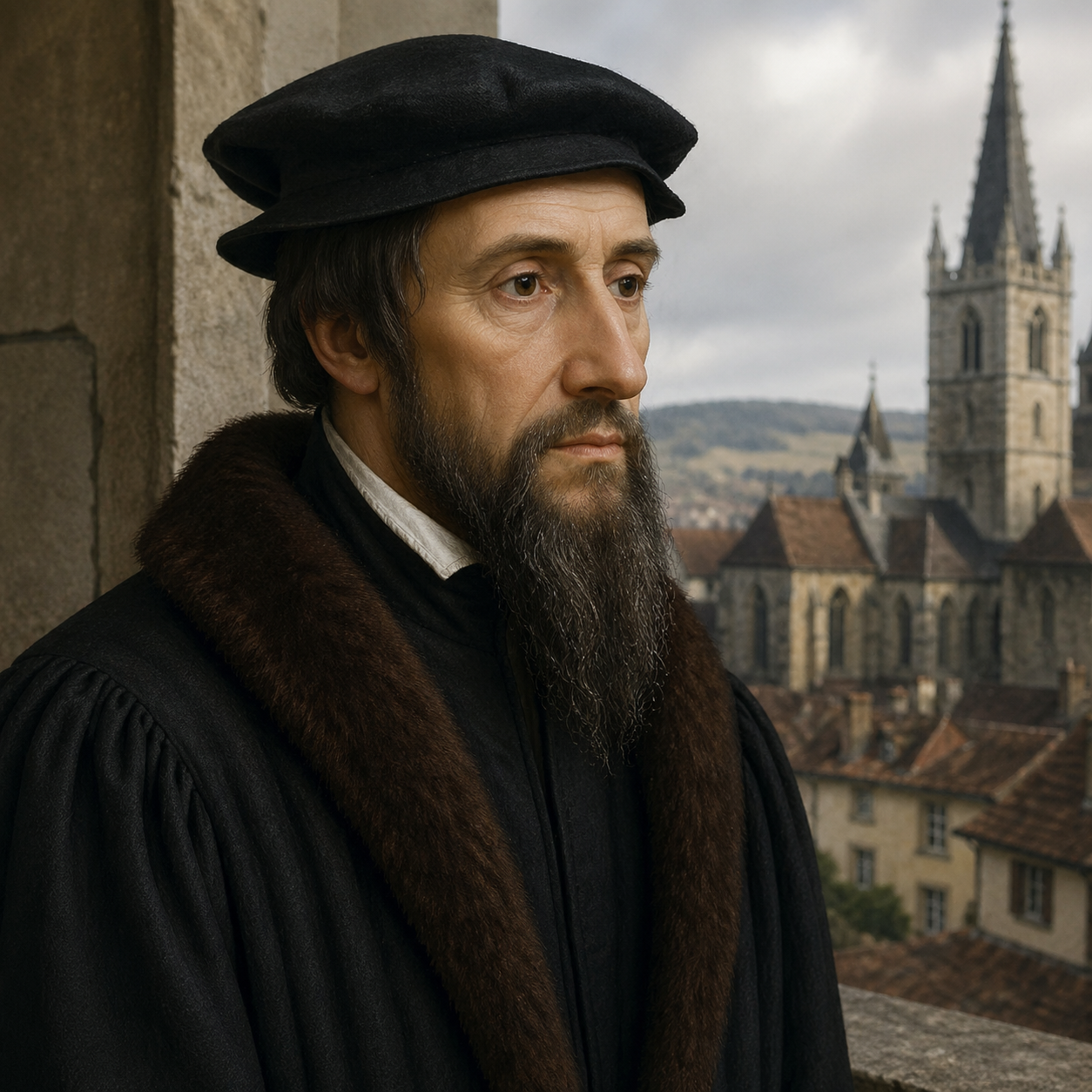
French theologian whose Institutes of the Christian Religion (1536) systematized Protestant Reformed doctrine, including predestination. Closely associated with Martin Luther (Reformation founder, Calvin's predecessor). For an intellectual contrast, see Jacobus Arminius, Dutch Reformed theologian (1560-1609) — Arminius's rejection of strict double-predestination founded Arminianism — the theological tradition modern Methodism, most evangelicalism, and Pentecostalism descend from. The Calvinist-Arminian debate has divided Protestantism for 400 years.
Found in 1 providers: grok
1 source checked
God has already decided, before creation, which souls are destined for heaven and which for hell. No human merit, deed, or choice influences this verdict. Calvin insists the judgment is just — God cannot be faulted — yet beyond human comprehension. This doctrine, called double predestination, strips salvation entirely from human agency and places it solely in God's sovereign, eternal will, making grace something given, never earned or achieved.
Calvin, a trained lawyer turned theologian, built his Geneva theocracy on sovereign grace. His Institutes of the Christian Religion systematized predestination with legal precision. Having fled Catholic France and risked his life for Protestant beliefs, he understood salvation as entirely God's act — humans contribute nothing. As Geneva's pastor and reformer for decades, he preached, defended, and codified this doctrine against fierce opposition, making it the cornerstone of Reformed theology worldwide.
The 16th-century Reformation shattered Catholic Europe's unified soteriology. Rome taught salvation through sacraments, penance, and meritorious works — a system Calvin saw as corrupt human bargaining with God. As religious wars tore through France, Germany, and Switzerland, and the Council of Trent hardened Catholic doctrine in response, the stakes of predestination debates were life and death. Calvin's doctrine answered: salvation belongs entirely to God's decree, removing priestly intermediaries and institutional gatekeeping.
AI-generated insights based on extensive research and information for context. Factual errors? Email [email protected].
Your cart is empty