Martin Luther — "God created the world, and he gave it to man, and he said, 'Be fruitful and mult…"
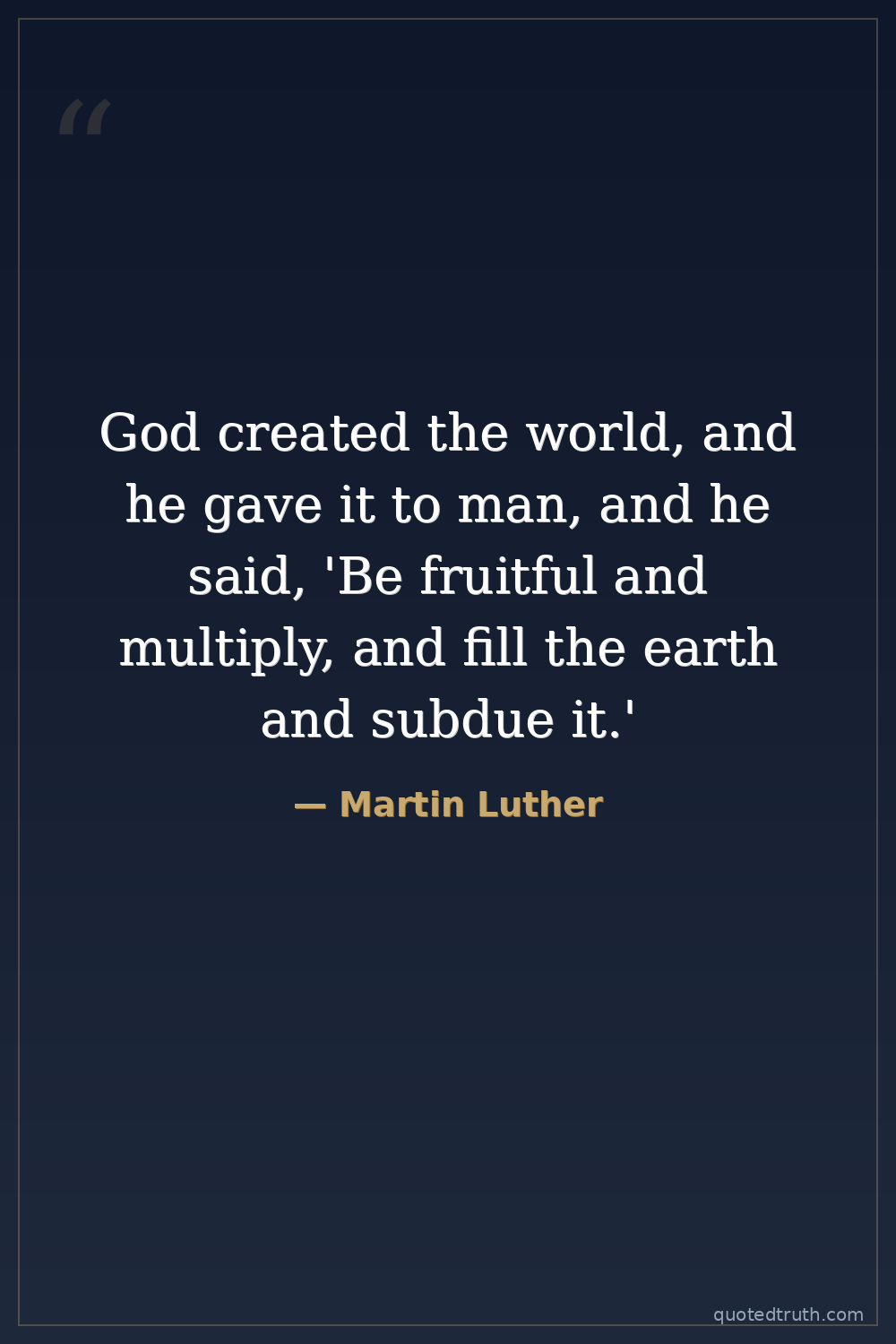
God created the world, and he gave it to man, and he said, 'Be fruitful and multiply, and fill the earth and subdue it.'
God created the world, and he gave it to man, and he said, 'Be fruitful and multiply, and fill the earth and subdue it.'
Click any product to generate a realistic preview. Up to 3 at a time.
* Initial load can take up to 90 seconds — revising the preview in another color is nearly instant.
"Our Lord has written the promise of the resurrection, not in books alone, but in every leaf in springtime."
"Whoever smells it first, out of him it crept."
"The woman is like a nail, driven into the wall. . . . She sits at home."
"I resist the devil, and often it is with a fart that I chase him away. When he tempts me with silly sins I say, 'Devil, yesterday I broke wind too. Have you written it down on your list?'"
"If I could understand how a good Christian could be a usurer, I would eat him."
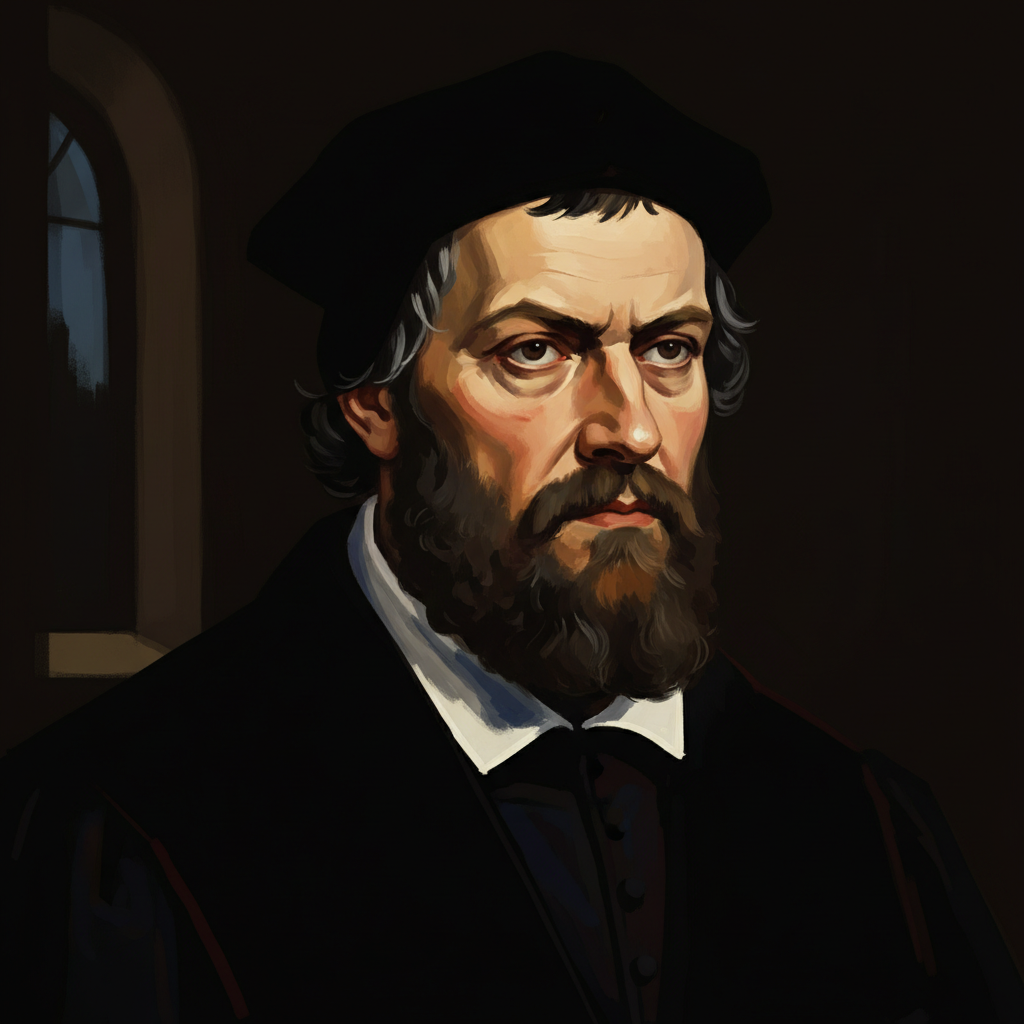
German theologian whose 95 Theses (1517) launched the Protestant Reformation and broke the Catholic Church's monopoly on Western Christianity. Closely associated with Philipp Melanchthon (Lutheran systematizer) and John Calvin (later Reformer who built on Luther's break). For an intellectual contrast, see Pope Leo X, Renaissance pope (1513-1521) — Leo X's indulgence sales triggered Luther's break and Leo excommunicated him in 1521 — Luther's entire Reformation is structured as a direct answer to the indulgence-funded Vatican Leo represented.
Found in 1 providers: grok
1 source checked
Humanity received the earth as a gift from God, along with a clear mandate: have children, spread across the planet, and take active control over it. People are not passive tenants but authorized caretakers and rulers, expected to work the land, grow families, and shape nature toward human purposes. Life, reproduction, and stewardship of the physical world are framed as divine assignments rather than accidents or optional pursuits.
Luther broke with centuries of Catholic teaching that elevated celibacy and monastic withdrawal above ordinary family life. He left his own monastery, married former nun Katharina von Bora, fathered six children, and championed marriage, labor, and household duties as holy callings. Quoting Genesis to affirm procreation and earthly dominion fits his doctrine of vocation: farming, parenting, and governing were sacred work, not spiritually inferior to priestly office.
Luther lived during the early sixteenth-century Reformation, when Europe was questioning papal authority, clerical celibacy, and monastic wealth. Printing presses spread vernacular Bibles, letting laypeople read Genesis directly. Explorers were colonizing and exploiting the Americas under similar dominion language. Plague, famine, and high child mortality made Be fruitful and multiply a practical survival creed, while Protestant reformers were dismantling monasteries and urging clergy to marry and raise families.
AI-generated insights based on extensive research and information for context. Factual errors? Email [email protected].
Your cart is empty