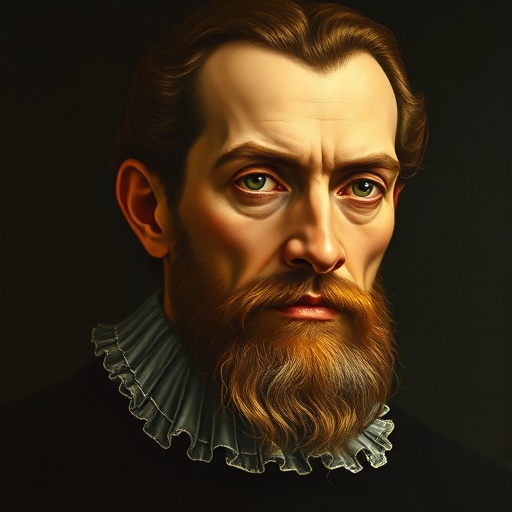
Machiavelli — "God does not want to do everything, so as not to deprive us of our free will and…"
God does not want to do everything, so as not to deprive us of our free will and part of the glory that belongs to us.
God does not want to do everything, so as not to deprive us of our free will and part of the glory that belongs to us.
Click any product to generate a realistic preview. Up to 3 at a time.
* Initial load can take up to 90 seconds — revising the preview in another color is nearly instant.
"A prince being thus obliged to know well how to act as a beast must imitate the fox and the lion, for the lion cannot protect himself from traps, and the fox cannot defend himself from wolves."
"It is not the well-being of individuals, but the general good, that makes cities great."
"Hence it comes that all armed prophets have conquered and unarmed ones have failed."
"The more corrupt the state, the more numerous the laws."
"The lion cannot protect himself from traps, and the fox cannot defend himself from wolves. One must therefore be a fox to recognize traps, and a lion to frighten wolves."
Florentine diplomat and political theorist whose The Prince (written 1513) became the founding text of political realism and gave us the adjective 'Machiavellian.' Closely associated with Francesco Guicciardini (fellow Florentine political analyst and historian). For an intellectual contrast, see Erasmus of Rotterdam, Dutch humanist and The Education of a Christian Prince author (1516) — Erasmus's princely-instruction manual was published three years after Machiavelli's, for the same European audience, and is the explicit Christian-virtue alternative to Machiavellian power-realism. The cleanest 'realism vs idealism' founding pairing in modern political theory.
Your cart is empty