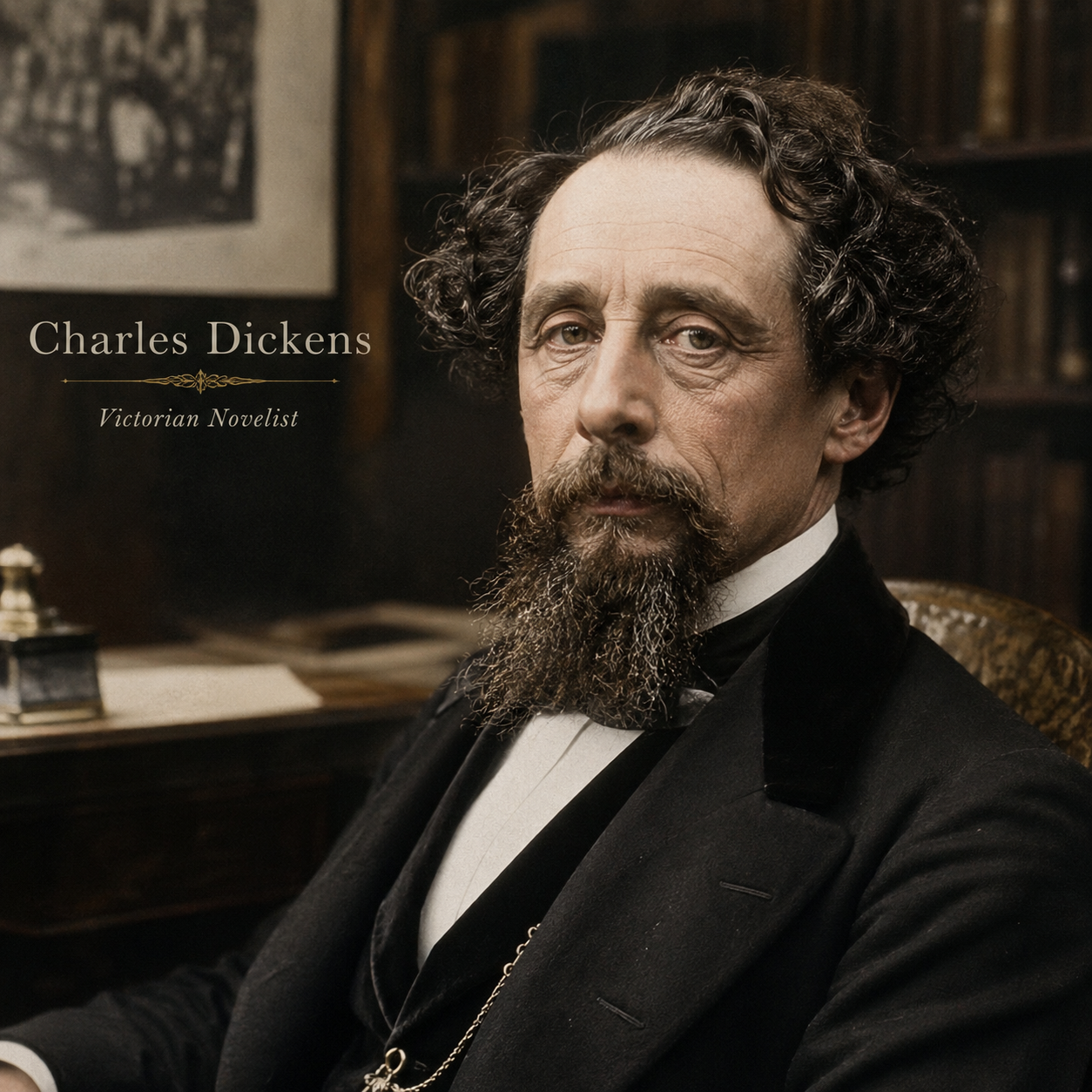
Charles Dickens — "He had a head of hair that was like a wig, and a face that was like a mask."
He had a head of hair that was like a wig, and a face that was like a mask.
He had a head of hair that was like a wig, and a face that was like a mask.
Click any product to generate a realistic preview. Up to 3 at a time.
* Initial load can take up to 90 seconds — revising the preview in another color is nearly instant.
"I am not a man of many words, but I am a man of many thoughts."
"The English are, so far as I know, the hardest worked people on whom the sun shines. Be content if in their wretched intervals of leisure they read for amusement and do no worse."
"It is a very remarkable thing, that the very things which are most necessary are the very things that are most neglected."
"It is a pleasant thing to reflect upon, and good for a man's heart, that however poor he may be, he always has a thousand friends; and not one of them will desert him."
"I have always been a quarter of an hour before my time, and it has made all the difference to my life."
English novelist whose Oliver Twist (1838), A Christmas Carol (1843), and Bleak House (1852) made Victorian poverty inescapable for the British middle class. Closely associated with William Makepeace Thackeray (Vanity Fair rival and contemporary serial novelist) and George Eliot (later Victorian giant who built on Dickens's social-realism foundation). For an intellectual contrast, see Jeremy Bentham, founder of utilitarianism (1748-1832) — Mr. Gradgrind in Hard Times (1854) is a direct caricature of Bentham-style social calculation — 'Facts, sir, nothing but Facts!' is the most-cited literary attack on utilitarianism's reduction of human life to measurable units. Dickens's serialized social-novel form is itself a rebuke of utilitarian abstraction.
Your cart is empty