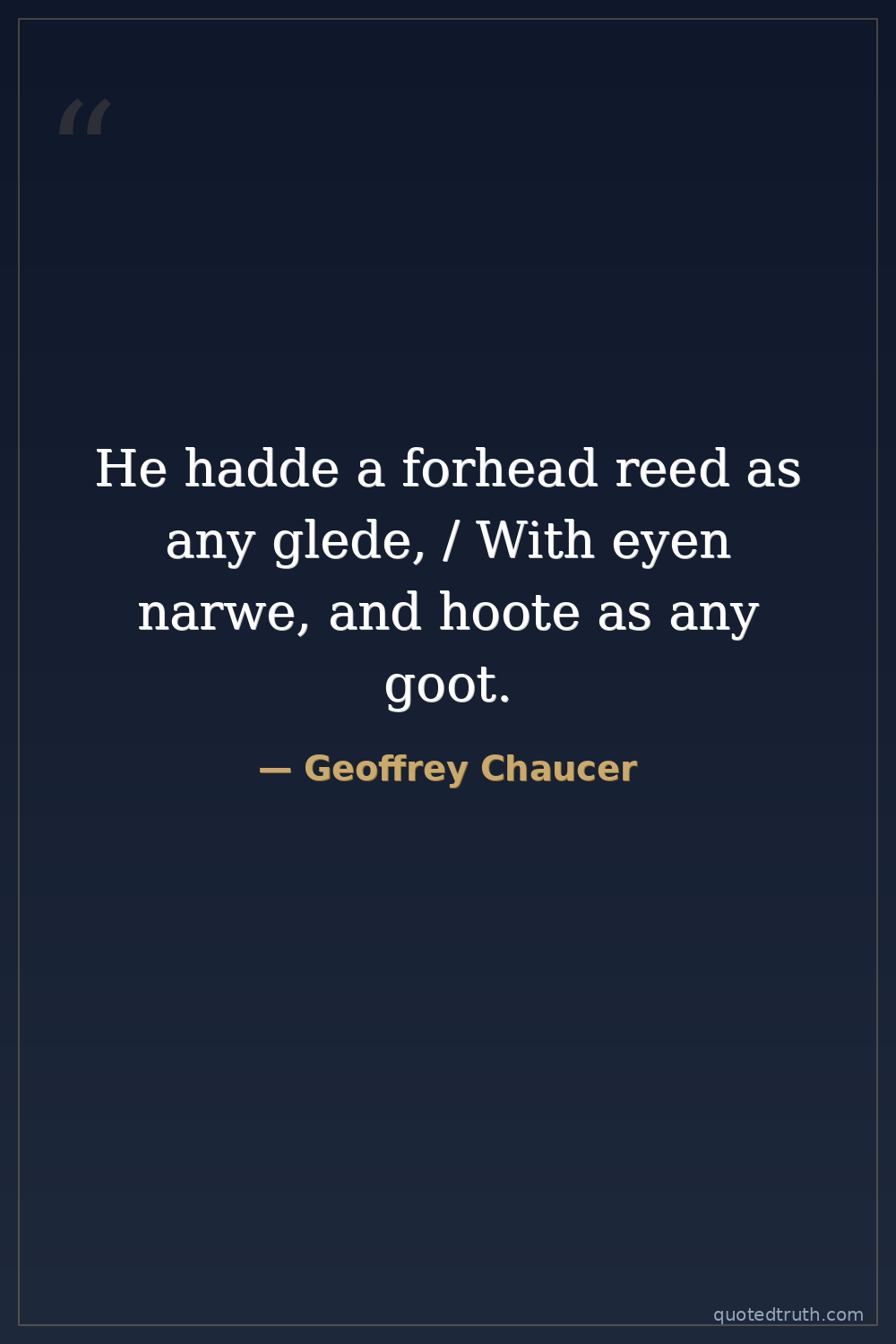
Geoffrey Chaucer — "He hadde a forhead reed as any glede, / With eyen narwe, and hoote as any goot."
He hadde a forhead reed as any glede, / With eyen narwe, and hoote as any goot.
He hadde a forhead reed as any glede, / With eyen narwe, and hoote as any goot.
Click any product to generate a realistic preview. Up to 3 at a time.
* Initial load can take up to 90 seconds — revising the preview in another color is nearly instant.
"As for to speke of innocence, I woot no man that may be exempt from it."
"This goode wyf, that was so trewe and kynde, Hadde in hir lyf ful many a joly tyde."
"What is this world? what asketh men to have? Now with his love, now in his colde grave, Allone, withouten any compaignye."
"And if he foond owher a good felawe, / He wolde techen hym to have noon awe / In swich caas of the ercedekenes curs, / But if a man's purs were in his ers."
"And everich was worth to been an alderman, / For they hadde ynough of catel and of rente."
English poet, civil servant, and the father of English literature; The Canterbury Tales (~1387-1400) is the founding text of English-language storytelling. Closely associated with Giovanni Boccaccio (his Italian predecessor; the Decameron preceded the Canterbury Tales by ~40 years). For an intellectual contrast, see John Wycliffe, English theologian and Lollard reform-movement leader — Wycliffe and Chaucer were near-contemporaries in the same English Christian world — Chaucer's Wife of Bath and Pardoner are the canonical literary defense of fleshly humanity against the Lollard moral austerity that would later become English Puritanism. Earthy storytelling vs proto-Protestant moralism.
Your cart is empty