Benjamin Franklin — "He that is rich, and wants a reputation, may buy it dear. But he that is poor, a…"
He that is rich, and wants a reputation, may buy it dear. But he that is poor, and wants one, may buy it cheap.
He that is rich, and wants a reputation, may buy it dear. But he that is poor, and wants one, may buy it cheap.
Click any product to generate a realistic preview. Up to 3 at a time.
* Initial load can take up to 90 seconds — revising the preview in another color is nearly instant.
"No sin withers the soul more quickly than laughter."
"Being ignorant is not so much a shame, as being unwilling to learn."
"The worship of God is a duty; the hearing and reading of sermons may be useful; but if men rest in hearing and praying, as too many do, it is as if a tree should value itself in being watered and putt…"
"God works wonders now and then; Behold! a lawyer, an honest man!"
"The sting of a reproach, is the truth of it."
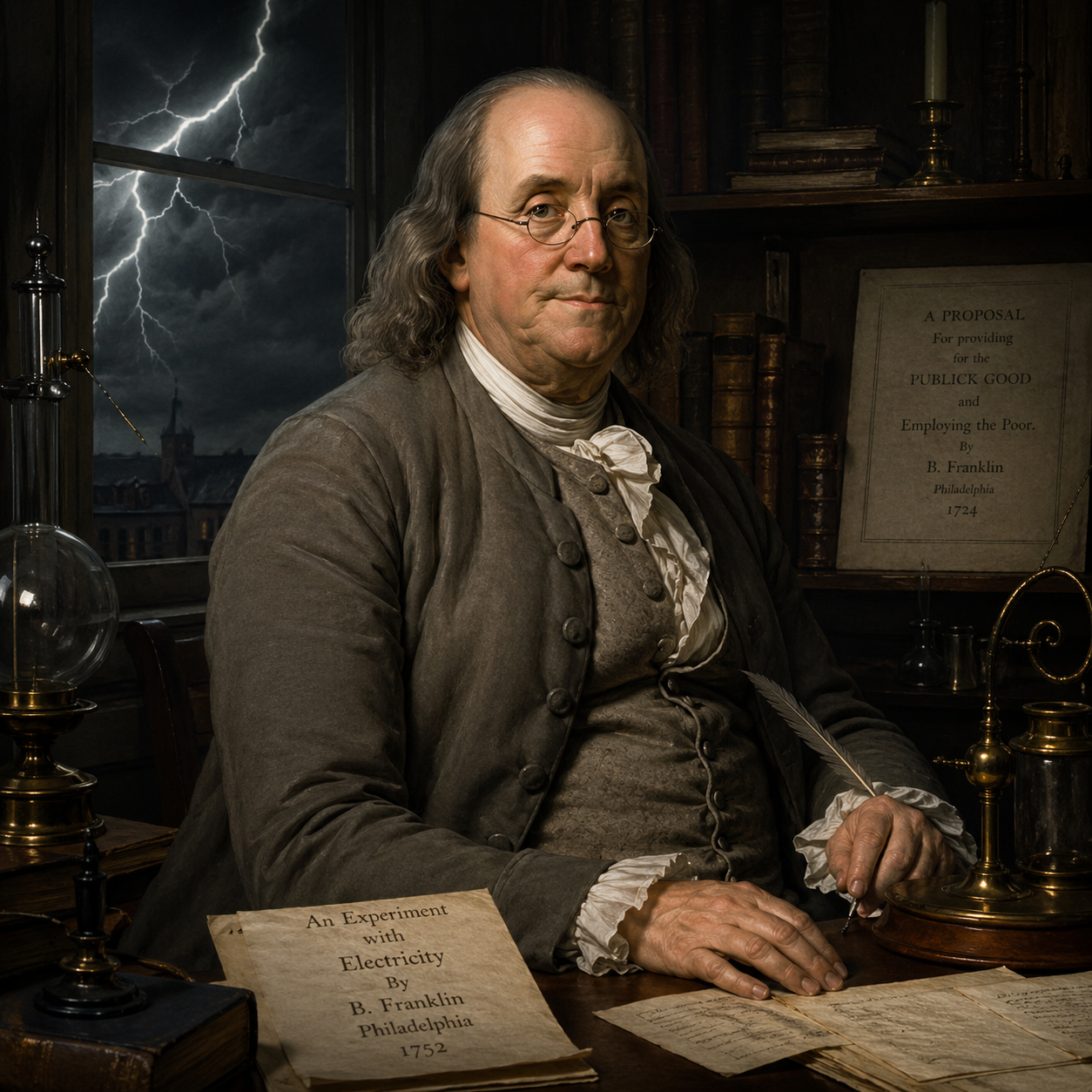
Polymath Founding Father, diplomat, and Poor Richard's Almanack author who helped draft the Declaration of Independence and the Constitution. Closely associated with John Adams (fellow Founder, Massachusetts statesman) and Thomas Jefferson (fellow Declaration drafter). For an intellectual contrast, see Thomas Hutchinson, last royal governor of colonial Massachusetts — Franklin leaked Hutchinson's loyalist correspondence to Boston in 1772 to inflame revolutionary sentiment — Hutchinson represented the colonial-aristocrat crown-loyalty that Franklin's revolution was organized to dismantle.
Found in 1 providers: grok
1 source checked
Reputation isn't equally priced for everyone. A wealthy person who lacks good standing must spend enormous resources—philanthropy, public displays, favors—to buy social respect. A poor person can earn genuine reputation far more cheaply through honest dealing, hard work, and virtuous character. The deeper point: authentic reputation grows from behavior, not money, and is more durable. The poor man's path to a good name is actually more accessible and more lasting than any purchased one.
Franklin rose from poverty as the 15th of 17 children, a runaway apprentice printer who built his reputation through diligent work and public service, not inherited wealth. He proved his own principle: founding libraries, fire companies, and the American Philosophical Society earned him international respect. His electrical experiments cost little but yielded enormous prestige. Poor Richard's Almanack preached exactly this gospel—virtue and industry were the poor man's cheapest and surest path to standing.
In 18th-century America and Britain, personal reputation functioned as literal economic credit—merchants extended goods on a man's known trustworthiness, not collateral. Colonial society was breaking from European aristocracy, creating space for self-made men to rise. The Protestant work ethic framed virtue and industry as accessible to anyone. For common tradespeople and artisans, a reputation for honesty was more valuable than silver; it opened partnerships, credit lines, and political influence.
AI-generated insights based on extensive research and information for context. Factual errors? Email [email protected].
Your cart is empty