Laozi — "He who boasts of his own achievements will not endure."
He who boasts of his own achievements will not endure.
He who boasts of his own achievements will not endure.
Click any product to generate a realistic preview. Up to 3 at a time.
* Initial load can take up to 90 seconds — revising the preview in another color is nearly instant.
"Fill your bowl to the brim and it will spill."
"Yield and overcome; Bend and be straight; Empty and be full; Wear out and be new; Have little and gain; Have much and be confused."
"When the great Tao is lost, there is 'benevolence' and 'righteousness'."
"A good traveler has no fixed plans and is not intent on arriving."
"Nature does not hurry, yet everything is accomplished."
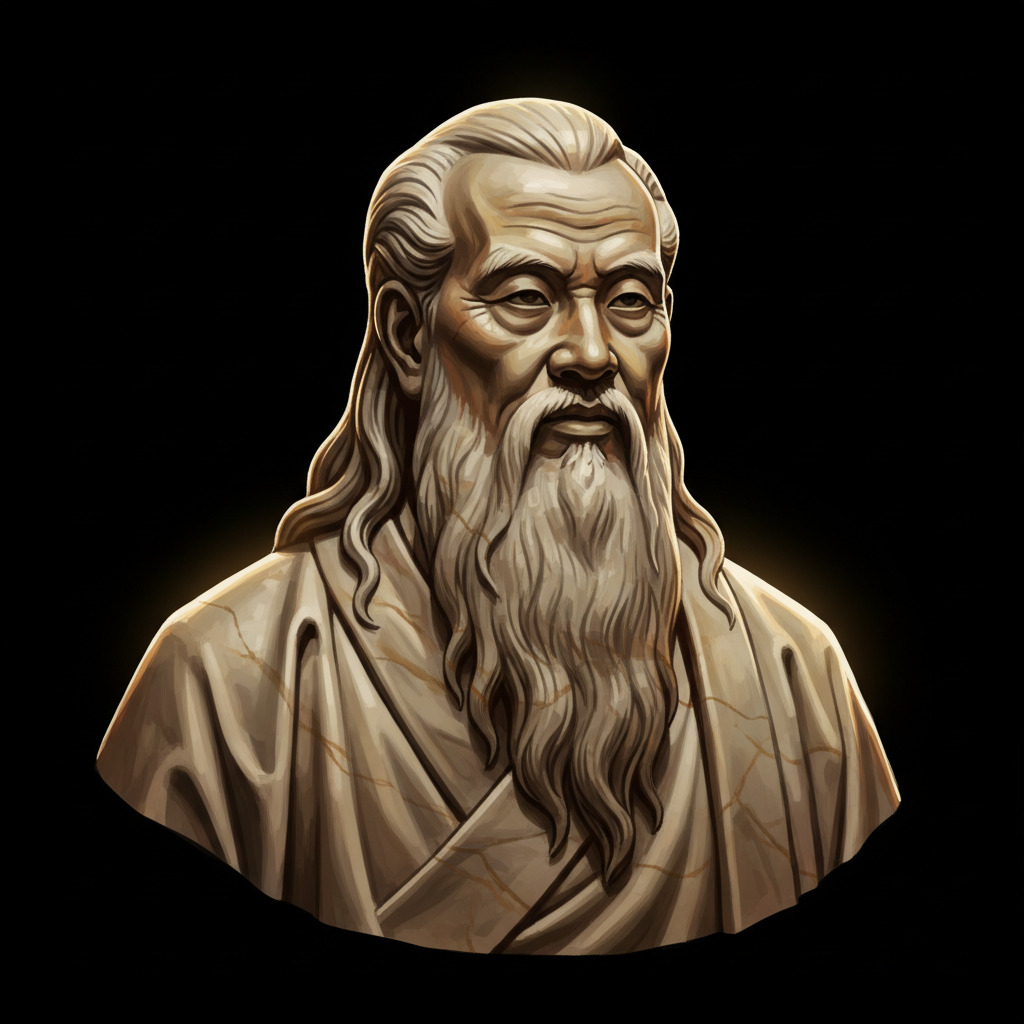
Reputed founder of Taoism and author of the Tao Te Ching, whose wu wei (effortless action) shaped East Asian philosophy. Closely associated with Zhuangzi (later Taoist who extended Laozi's framework). For an intellectual contrast, see Confucius, near-contemporary Chinese sage of social ritual and duty — Confucius systematized social order through ritual and hierarchy; Laozi argued that all such systems were the disease, not the cure — the two founding poles of Chinese moral philosophy.
Found in 1 providers: grok
1 source checked
Bragging about what you've accomplished undermines the very success you're trying to celebrate. When you loudly claim credit, you provoke envy, invite scrutiny, and attach your identity to past wins that fade. People stop trusting you and your reputation curdles. Real staying power comes from letting the work speak and moving on quietly, without demanding recognition. Self-promotion is a short-term high with a long-term cost: it erodes the standing you built.
Laozi taught wu wei, effortless action without striving or self-display, and famously said the sage acts but does not take credit. Tradition holds he worked as an archivist in the Zhou royal court, then left westward on a water buffalo rather than seek fame, only writing the Tao Te Ching at a border guard's request. His whole life modeled the humility this line prescribes: do the work, refuse the applause, disappear.
Laozi lived during the late Zhou dynasty, around the 6th century BCE, as centralized authority crumbled into the Warring States era. Ambitious lords, ministers, and traveling advisors openly boasted of victories and virtue to win patronage and power. Against that culture of self-promotion, Taoism and early Confucianism both critiqued prideful display, but Laozi went furthest, arguing that boasters collapse under their own noise while the quiet endure as courts and kingdoms fell around them.
AI-generated insights based on extensive research and information for context. Factual errors? Email [email protected].
Your cart is empty