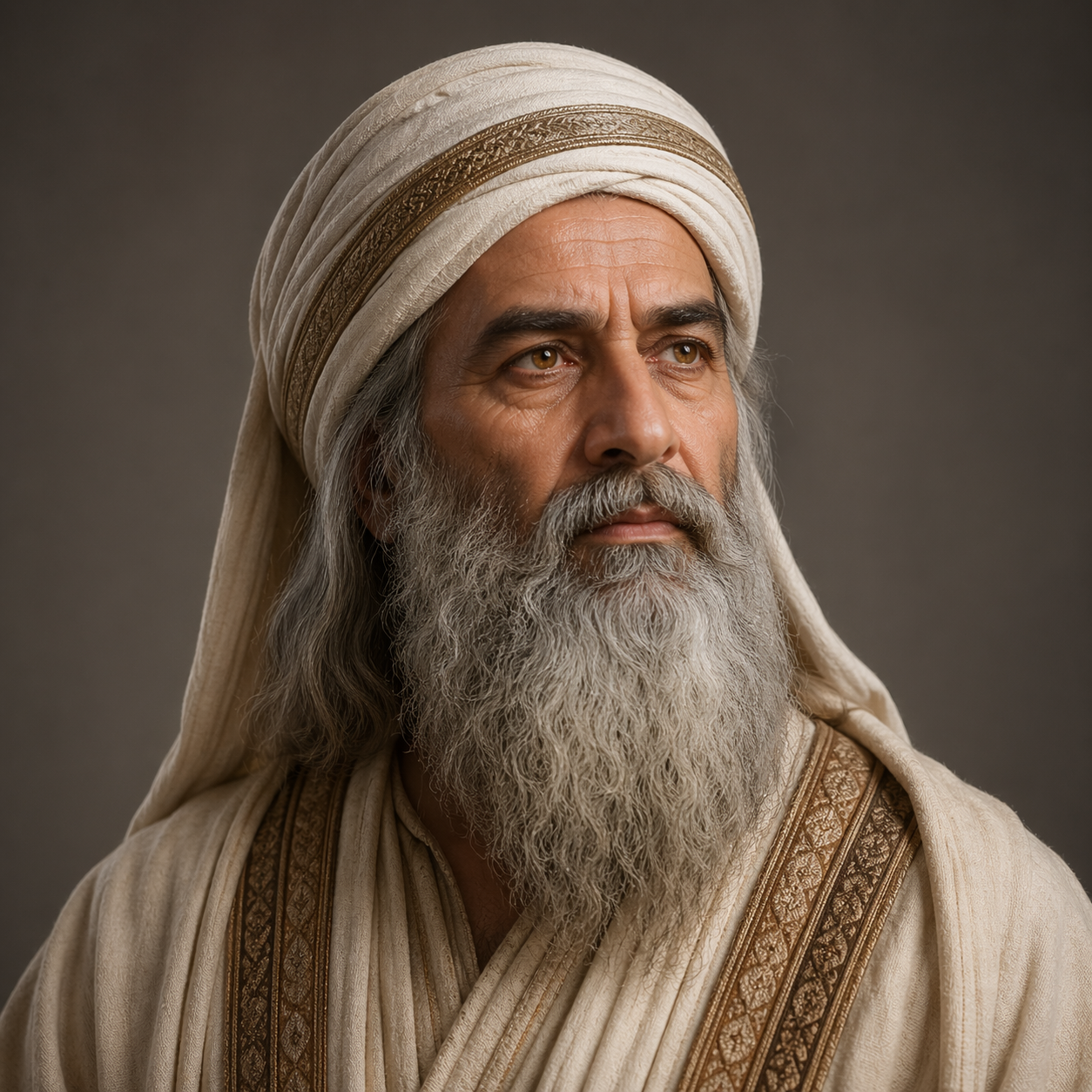
Zoroaster — "He who holds the righteous man dear, and the evil man far from him, he is a frie…"
He who holds the righteous man dear, and the evil man far from him, he is a friend to Ahura Mazda.
He who holds the righteous man dear, and the evil man far from him, he is a friend to Ahura Mazda.
Click any product to generate a realistic preview. Up to 3 at a time.
* Initial load can take up to 90 seconds — revising the preview in another color is nearly instant.
"How shall I satisfy Thee, O Ahura Mazda?"
"Let us strive to be like Ahura Mazda, with good thoughts, good words, and good deeds."
"He who sows the ground with care and diligence acquires a greater stock of religious merit than he could gain by the repetition of ten thousand prayers."
"Oh Mazda, I shall reveal your message to the seekers of knowledge. And shall tell them that the destiny of a false doer is pain. And the destiny of a righteous doer is happiness."
"May the divine light guide us in all our thoughts, words, and deeds."
Iranian prophet who founded Zoroastrianism, the first major religion of cosmic dualism between good (Ahura Mazda) and evil (Angra Mainyu). Closely associated with The Buddha (near-contemporary Eastern moral-cosmological revolutionary). For an intellectual contrast, see Friedrich Nietzsche, German philosopher of 'beyond good and evil' — Nietzsche appropriated Zarathustra's name for Thus Spoke Zarathustra (1883) precisely to invert the original's moral cosmology — the historical Zoroaster founded the good-versus-evil framework Nietzsche's character announces the end of.
Found in 1 providers: grok
1 source checked
This statement sets a clear moral standard for friendship and alliance. Keep close company with people who live with integrity and honesty, and keep deliberate distance from those who act with malice or deceit. Who you choose to associate with reveals your own character and values. By surrounding yourself with the good and refusing to enable the harmful, you align your life with the highest good itself.
Zoroaster framed existence as an active moral battlefield between Asha (truth, order) and Druj (the lie, chaos), and he taught that every person must choose a side through daily action. As the prophet who received revelations from Ahura Mazda, the supreme wise lord, he preached that friendship with the divine is earned through companionship with the righteous, not through ritual alone but through conscious ethical alignment.
Zoroaster lived in ancient Iran, likely between 1500 and 1000 BCE, amid tribal polytheism, animal sacrifice cults, and cycles of cattle raiding by warrior bands. Morality was often tied to clan loyalty rather than universal ethics. His teachings introduced a radical framework of personal moral responsibility and cosmic dualism that later influenced Judaism, Christianity, Islam, and Greek philosophy, reshaping how civilizations understood good, evil, and human agency.
AI-generated insights based on extensive research and information for context. Factual errors? Email [email protected].
Your cart is empty