Laozi — "He who is attached to things will suffer much."
He who is attached to things will suffer much.
He who is attached to things will suffer much.
Click any product to generate a realistic preview. Up to 3 at a time.
* Initial load can take up to 90 seconds — revising the preview in another color is nearly instant.
"He who knows does not speak. He who speaks does not know."
"When the government is lax, the people are simple. When the government is meddlesome, the people are discontented."
"Therefore it is because the sage never attempts to be great that he succeeds in becoming great."
"Do that which consists in taking no action; Pursue that which is not meddlesome; Savor that which has no flavor."
"He (the sage) wants all things to follow their own nature, but dares not act."
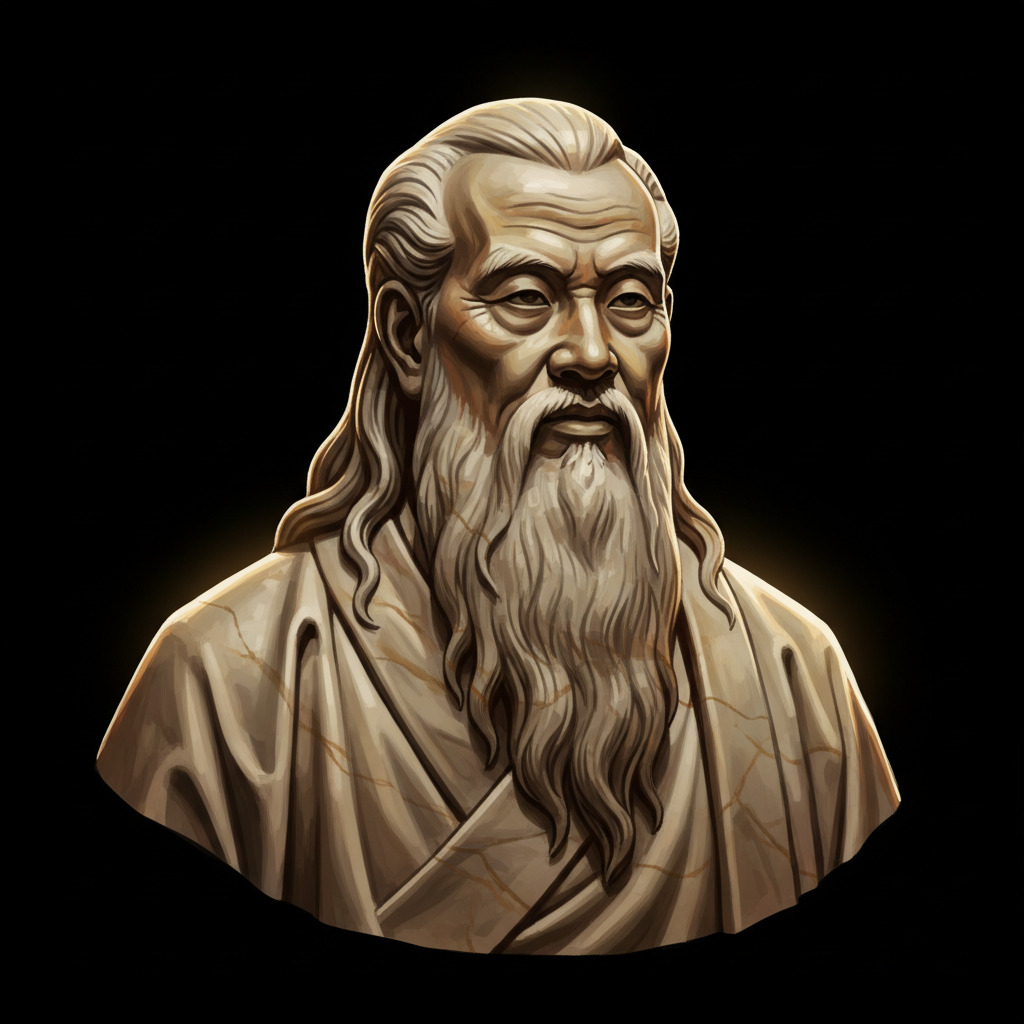
Reputed founder of Taoism and author of the Tao Te Ching, whose wu wei (effortless action) shaped East Asian philosophy. Closely associated with Zhuangzi (later Taoist who extended Laozi's framework). For an intellectual contrast, see Confucius, near-contemporary Chinese sage of social ritual and duty — Confucius systematized social order through ritual and hierarchy; Laozi argued that all such systems were the disease, not the cure — the two founding poles of Chinese moral philosophy.
Found in 1 providers: grok
1 source checked
Clinging tightly to possessions, people, status, or outcomes sets you up for pain. The more you grip, the more you have to lose, and loss is inevitable because everything changes. Attachment turns ordinary transitions into wounds and fuels anxiety about protecting what you own. Freedom and peace come from holding life loosely, enjoying what arrives without demanding it stay, and accepting that nothing truly belongs to you permanently.
Laozi, the traditional founder of Taoism, reportedly served as an archivist in the Zhou royal court before withdrawing from public life, disillusioned by political decay. His teachings in the Tao Te Ching center on wu wei, simplicity, and non-grasping. This saying reflects his personal choice to abandon rank and possessions, and his conviction that a sage empties desires rather than accumulates them, aligning with the natural flow of the Tao rather than human striving.
Laozi lived during the late Zhou dynasty, around the 6th century BCE, as central authority crumbled and rival states drifted toward the Warring States era. Ambition, wealth-hoarding, and political scheming defined elite life, and ordinary people suffered under taxation, conscription, and war. Against this backdrop of grasping rulers and collapsing order, a teaching that warned against attachment was radical, offering an alternative path of restraint and detachment when everyone around him was chasing more.
AI-generated insights based on extensive research and information for context. Factual errors? Email [email protected].
Your cart is empty