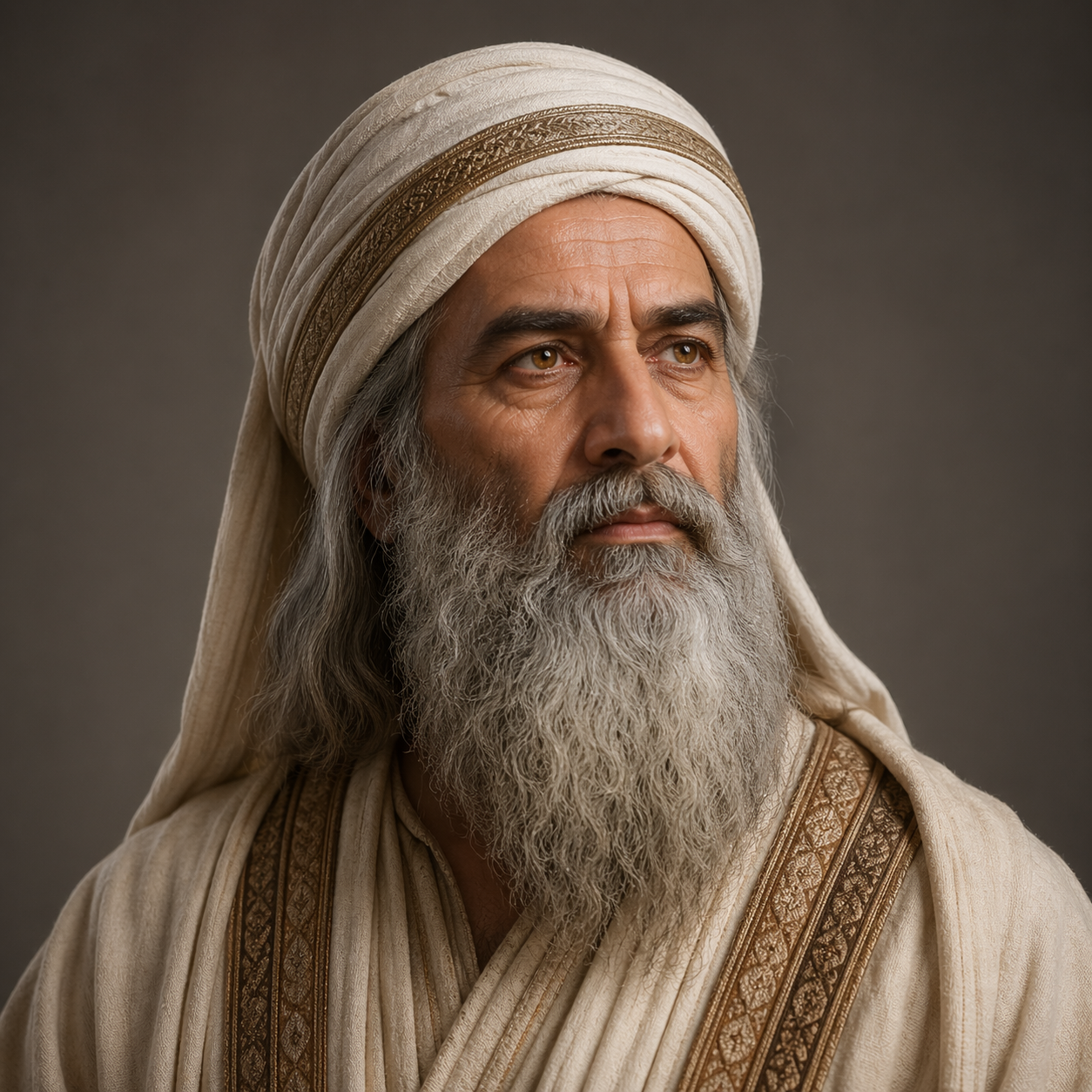
Zoroaster — "He who is righteous, him I shall praise, but him who is wicked, him I shall deno…"
He who is righteous, him I shall praise, but him who is wicked, him I shall denounce.
He who is righteous, him I shall praise, but him who is wicked, him I shall denounce.
Click any product to generate a realistic preview. Up to 3 at a time.
* Initial load can take up to 90 seconds — revising the preview in another color is nearly instant.
"The choice between the two spirits, the better and the bad, is to be made by each individually."
"Turn yourself not away from three best things: Good Thought, Good Word, and Good Deed."
"The wicked man, O Mazda, shall be known by his deeds, and by his words, and by his thoughts."
"The greatest weapon against evil is righteousness."
"Suffer no anxiety, for he who is a sufferer of anxiety becomes regardless of enjoyment of the world and the spirit, and contraction happens to his body and soul."
Iranian prophet who founded Zoroastrianism, the first major religion of cosmic dualism between good (Ahura Mazda) and evil (Angra Mainyu). Closely associated with The Buddha (near-contemporary Eastern moral-cosmological revolutionary). For an intellectual contrast, see Friedrich Nietzsche, German philosopher of 'beyond good and evil' — Nietzsche appropriated Zarathustra's name for Thus Spoke Zarathustra (1883) precisely to invert the original's moral cosmology — the historical Zoroaster founded the good-versus-evil framework Nietzsche's character announces the end of.
Found in 1 providers: grok
1 source checked
The speaker commits to moral clarity: good people deserve open praise, and wrongdoers deserve open criticism. There is no neutral middle ground, no silence that protects the wicked or ignores the virtuous. In modern terms, it is a pledge to call good and evil by their real names publicly, treating ethical judgment as a personal duty rather than a private opinion kept to oneself to avoid social friction.
Zoroaster built an entire religion on this exact binary: Asha (truth, order, righteousness) against Druj (the Lie, disorder, wickedness). As a reforming priest-prophet who rejected the older polytheistic Iranian cults and their ritualistic amorality, he demanded personal ethical choice from every believer. The Gathas, his own hymns, are full of first-person declarations like this one, where he personally aligns with Ahura Mazda and names deceivers rather than tolerating them.
Zoroaster lived in Bronze-Age eastern Iran, likely between 1500 and 1000 BCE, among pastoral tribes whose religion centered on blood sacrifice, warrior-gods, and intoxicant rituals led by a priestly caste. Morality was tribal and transactional, not universal. By preaching a cosmic struggle between truth and the Lie where every individual's words and deeds counted, he broke sharply from that world, and open praise and denouncement were radical acts of religious and social reform.
AI-generated insights based on extensive research and information for context. Factual errors? Email [email protected].
Your cart is empty