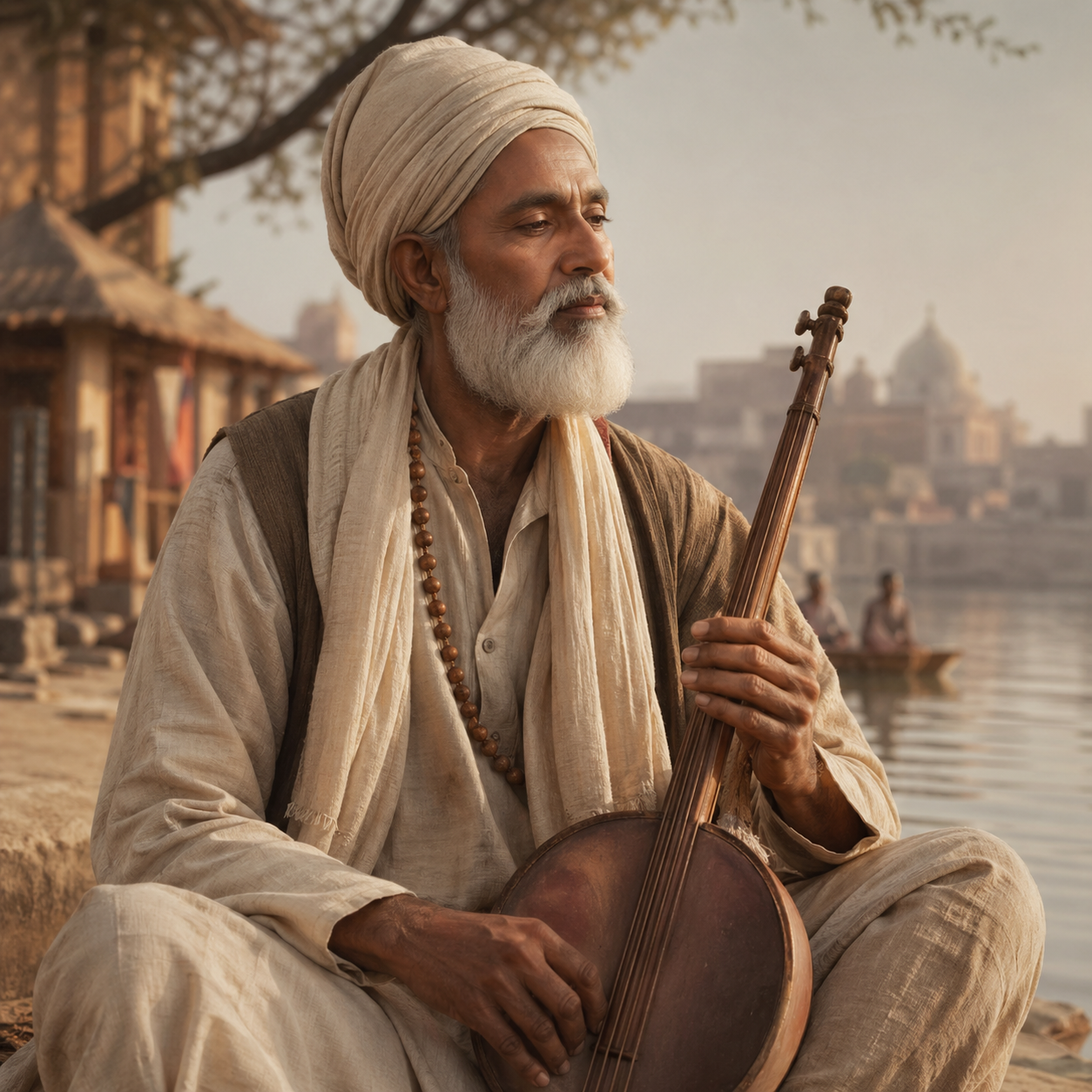
Kabir — "He wraps gold in dust, who wishes for beauty without struggle."
He wraps gold in dust, who wishes for beauty without struggle.
He wraps gold in dust, who wishes for beauty without struggle.
Click any product to generate a realistic preview. Up to 3 at a time.
* Initial load can take up to 90 seconds — revising the preview in another color is nearly instant.
"The true religion is to know God, and to serve his creation."
"What is God? He is the breath inside the breath."
"Go to the temple and worship the idol? But the idol is made of stone. How can it speak to you?"
"O servant, where dost thou seek Me? Lo! I am beside thee. I am neither in temple nor in mosque: I am neither in Kaaba nor in Kailash."
"The world is a dream, and the dream is real."
Indian mystic poet whose verses (preserved in the Sikh Guru Granth Sahib and the Hindu Bhakti tradition) attacked both Hindu and Islamic orthodoxy. Closely associated with Guru Nanak (founder of Sikhism, who incorporated Kabir's verses). For an intellectual contrast, see Brahmanical priesthood, the ritualistic Hindu establishment of his era — Kabir's poetry is the founding text of bhakti devotional rebellion against ritualistic Hinduism — his verses ridicule caste, ritual purity, and priestly mediation as religious theatre.
The necessity of effort and struggle for true beauty or value, from his poetry (Dohas).
Date: 15th Century
Art & CreativityFound in 1 providers: gemini
1 source checked
Your cart is empty