John Milton — "Hence, loathed Melancholy, Of Cerberus and blackest midnight born, In Stygian ca…"
Hence, loathed Melancholy, Of Cerberus and blackest midnight born, In Stygian cave forlorn 'Mongst horrid shapes, and shrieks, and sights unholy!
Hence, loathed Melancholy, Of Cerberus and blackest midnight born, In Stygian cave forlorn 'Mongst horrid shapes, and shrieks, and sights unholy!
Click any product to generate a realistic preview. Up to 3 at a time.
* Initial load can take up to 90 seconds — revising the preview in another color is nearly instant.
"No man who knows aught, can be so stupid to deny that all men naturally were born free."
"Methinks I see in my mind a noble and puissant Nation rousing herself like a strong man after sleep, and shaking her invincible locks."
"For books are not absolutely dead things, but do contain a potency of life in them to be as active as that soul was whose progeny they are; nay, they do preserve as in a vial the purest efficacy and e…"
"The world was all before them, where to choose their place of rest, and providence their guide."
"Who overcomes by force, hath overcome but half his foe."
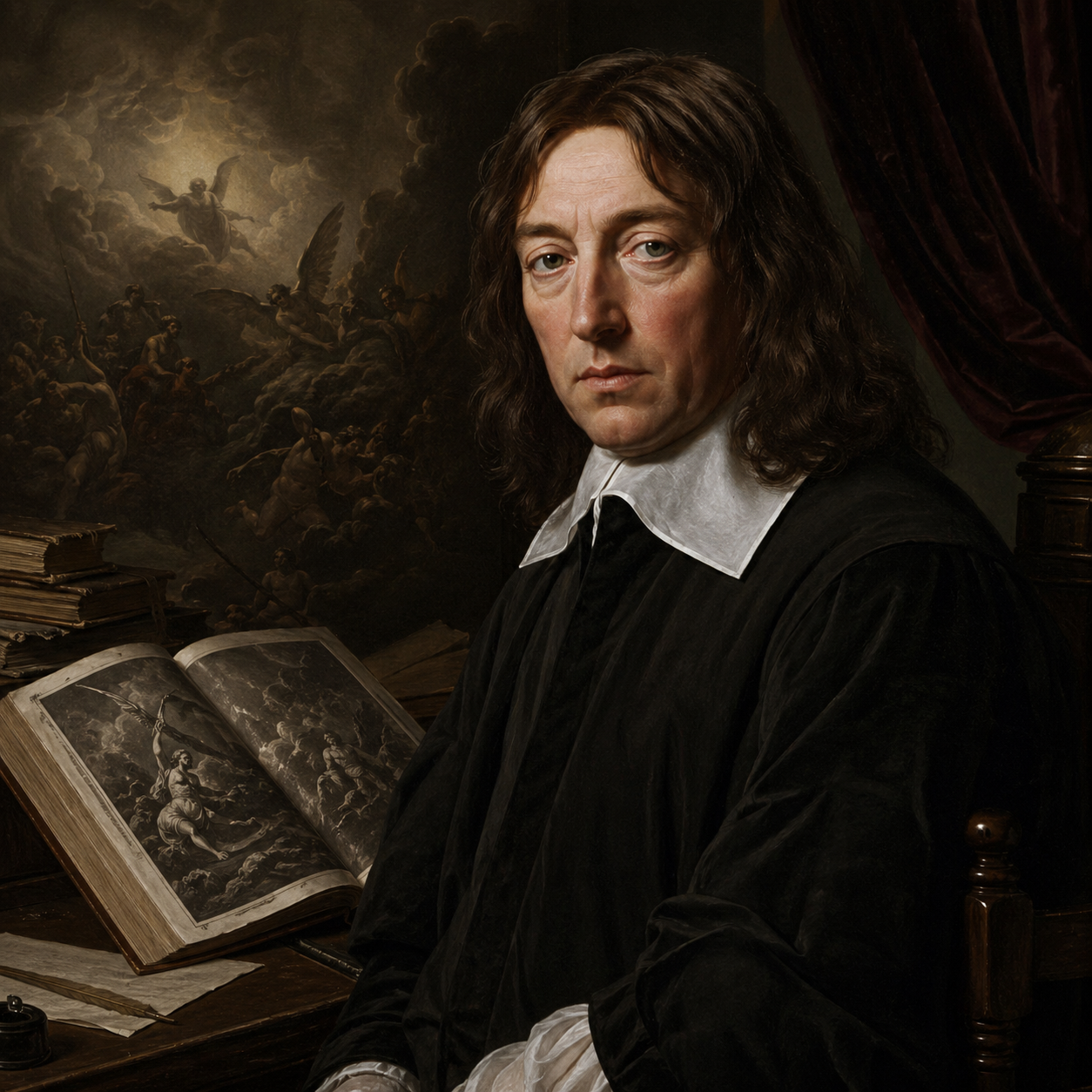
English poet whose Paradise Lost (1667) is the canonical English epic, written while blind during the Restoration after his service to Cromwell's Commonwealth. Closely associated with Andrew Marvell (Commonwealth poet and friend who protected Milton at the Restoration). For an intellectual contrast, see King Charles II's Restoration court, the courtly, sexually-libertine, theater-reopened world of 1660s London — Milton wrote Paradise Lost as a defeated Republican; the Restoration culture around him celebrated everything his Commonwealth had banned. The cleanest 'losing side writes the masterpiece' moment in English literature — Paradise Lost's Satan is freighted with the political defeat of the regicides Milton served.
Your cart is empty