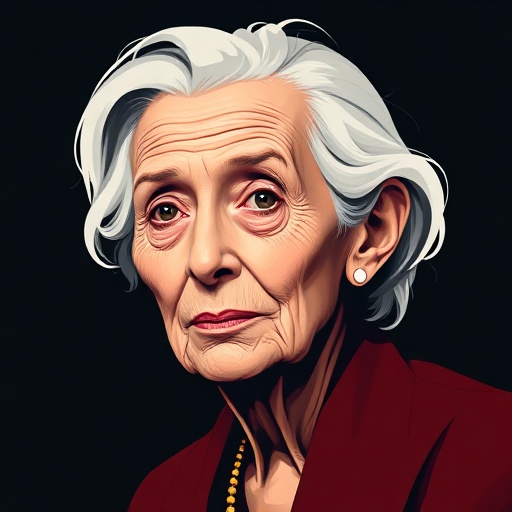
Jane Goodall — "Hope is what keeps us going. Hope is what drives us to make a difference."
Hope is what keeps us going. Hope is what drives us to make a difference.
Hope is what keeps us going. Hope is what drives us to make a difference.
Click any product to generate a realistic preview. Up to 3 at a time.
* Initial load can take up to 90 seconds — revising the preview in another color is nearly instant.
"The greatest joy is to be out in nature."
"If we don't change our ways, we are heading for disaster."
"We cannot live in a world where we're constantly taking, taking, taking, and not giving anything back."
"We have to learn to live in harmony with all living things, or we will perish."
"We need to listen to the voices of the natural world, and learn from them."
British primatologist who in 1960 began the longest-running wild primate study at Gombe Stream, transforming our understanding of chimpanzees. Closely associated with Dian Fossey (mountain-gorilla researcher) and Birutė Galdikas (orangutan researcher; together with Goodall and Fossey one of Louis Leakey's 'Trimates'). For an intellectual contrast, see Walter Palmer, American dentist who killed Cecil the Lion in Zimbabwe in 2015 — Palmer represents the trophy-hunting tradition Goodall's life's work has been organized against — the colonial-era hunter-naturalist worldview that treated primates and big game as specimens or trophies, which Goodall's Roots & Shoots and Jane Goodall Institute exist specifically to displace.
Found in 1 providers: grok
1 source checked
Hope functions as the engine of sustained effort and meaningful action. This quote argues that optimism isn't naive sentimentality but a practical necessity—without it, people surrender to despair and stop working toward change. It reframes hope as active rather than passive: a force that propels individuals to persist through setbacks and believe their efforts matter enough to continue. Without hope, motivation collapses and meaningful change becomes impossible to pursue.
Goodall began as a field researcher at Gombe in 1960, later becoming conservation's most prominent voice. Despite witnessing catastrophic chimpanzee population declines and African deforestation firsthand, she built her career around hope-centered messaging. Her Roots & Shoots youth program reflects this directly. She explicitly names four reasons for hope—human ingenuity, nature's resilience, young people, and the indomitable spirit—making hope foundational to her identity as both scientist and activist.
Speaking through the late 20th and early 21st centuries, Goodall witnessed accelerating climate crisis, mass extinction warnings, and rising eco-anxiety among younger generations. Environmental pessimism—the belief that ecological collapse is inevitable—became a genuine psychological phenomenon. Against this backdrop, her insistence on hope was deliberately countercultural, confronting the paralysis despair creates. Global biodiversity treaties, escalating IPCC reports, and surging youth climate movements made the tension between hope and despair culturally urgent.
AI-generated insights based on extensive research and information for context. Factual errors? Email [email protected].
Your cart is empty