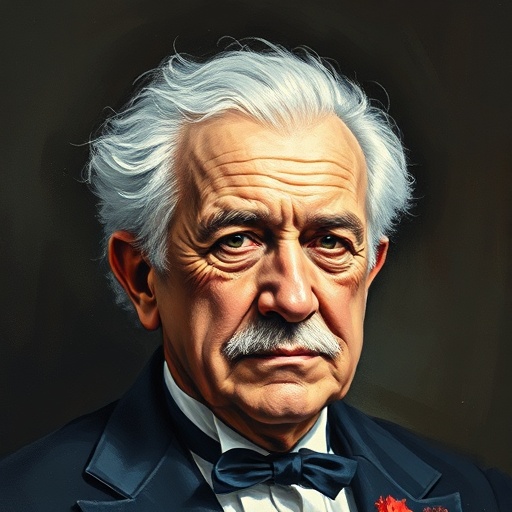
Thomas Edison — "I am not a believer in the theory of evolution. I believe in the theory of creat…"
I am not a believer in the theory of evolution. I believe in the theory of creation.
I am not a believer in the theory of evolution. I believe in the theory of creation.
Click any product to generate a realistic preview. Up to 3 at a time.
* Initial load can take up to 90 seconds — revising the preview in another color is nearly instant.
"I could always invent something for which there was a demand."
"I am not a spiritualist, but I am a firm believer in the fact that we can communicate with the beyond. I believe that we can build a machine that will allow us to hear the voices of the dead."
"I never perfected an invention that I did not think about in terms of the service it might give others. I find out what the world needs, then I proceed to try and invent it."
"Just because something doesn't do what you planned it to do doesn't mean it's useless."
"Five percent of the people think; ten percent of the people think they think; and the other eighty-five percent would rather die than think."
Found in 1 providers: grok
1 source checked
The speaker rejects the scientific explanation that life developed gradually through natural processes over millions of years. Instead, they affirm belief that a creator deliberately designed and brought life into existence. It is a direct statement of religious or metaphysical conviction, choosing intentional design over undirected biological change as the better account for how living things came to exist and take their present forms.
Edison was famously empirical, yet publicly wrestled with questions of intelligence, soul, and design, once saying existence suggests a supreme intelligence. As an inventor who engineered systems with purpose, he instinctively saw nature as engineered too. Though often called irreligious for rejecting traditional churches, he distinguished mechanism from Darwinian randomness, favoring a designed universe. This remark fits his lifelong habit of framing reality through the lens of a deliberate inventor rather than blind chance.
Edison lived 1847 to 1931, decades after Darwin's Origin of Species ignited bitter debate between science and religion. His later years included the 1925 Scopes Monkey Trial, when Tennessee prosecuted a teacher for presenting evolution, dividing America over creationism versus natural selection. Newspapers eagerly solicited opinions from famous inventors and scientists on God, evolution, and immortality, so prominent figures like Edison were repeatedly pressed to declare where they stood on origins.
AI-generated insights based on extensive research and information for context. Factual errors? Email [email protected].
Your cart is empty