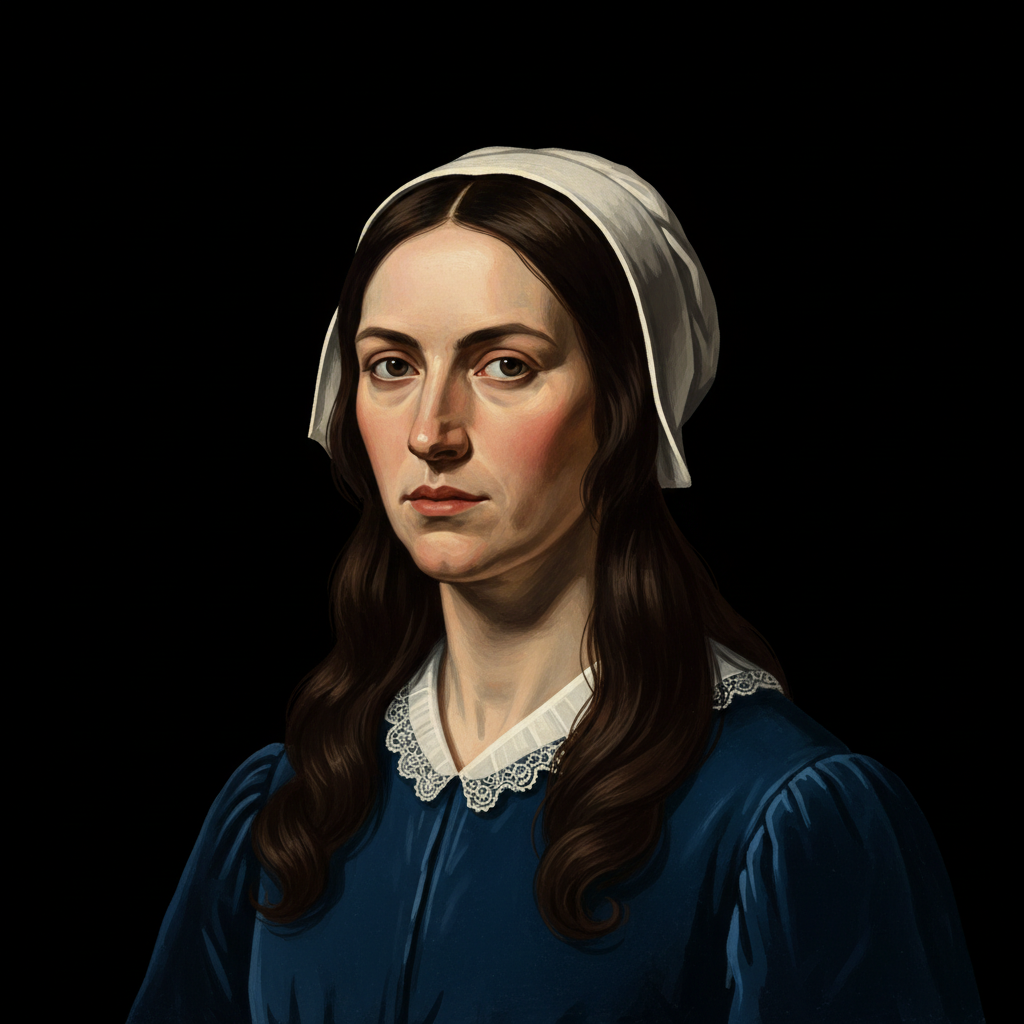
Mary Wollstonecraft — "I am not a creature of circumstances; I am a creature of principle."
I am not a creature of circumstances; I am a creature of principle.
I am not a creature of circumstances; I am a creature of principle.
Click any product to generate a realistic preview. Up to 3 at a time.
* Initial load can take up to 90 seconds — revising the preview in another color is nearly instant.
"I perceive that the most respectable women are the most unhappy."
"I am not afraid of the world, nor of its censures."
"Pleasure is the business of women, according to the present modification of society, and while it continues to be so, little can be expected from such weak beings."
"Women are systematically degraded by receiving the trivial attentions which men think it manly to pay to the sex, when, in fact, they are insultingly supporting their own superiority."
"Why are women not to have the same education as men? Because it would render them masculine and disgusting."
English writer and proto-feminist philosopher whose A Vindication of the Rights of Woman (1792) is the founding text of modern feminist theory. Closely associated with Thomas Paine (Rights of Man co-conspirator and revolutionary contemporary) and William Godwin (her husband and philosopher of anarchism). For an intellectual contrast, see Edmund Burke, Anglo-Irish conservative and parliamentarian — Burke's Reflections on the Revolution in France (1790) was the explicit target of Wollstonecraft's first book — A Vindication of the Rights of Men (1790), written in the weeks after Burke's appeared. She extended the argument to women in her second Vindication two years later. Burke's tradition-and-prescription conservatism is the worldview Wollstonecraft's career was structured against.
Found in 1 providers: grok
1 source checked
Your cart is empty