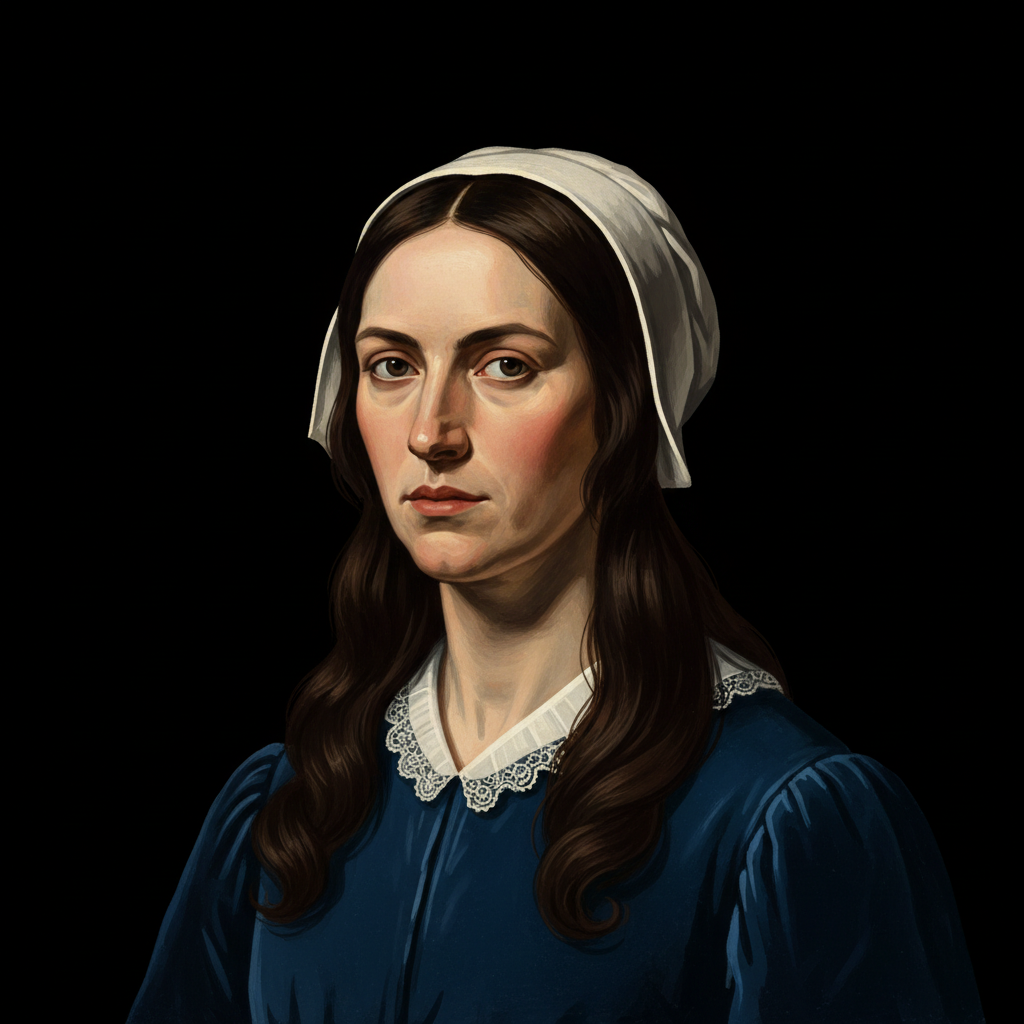
Mary Wollstonecraft — "I am not a mere echo, but a voice."
I am not a mere echo, but a voice.
I am not a mere echo, but a voice.
Click any product to generate a realistic preview. Up to 3 at a time.
* Initial load can take up to 90 seconds — revising the preview in another color is nearly instant.
"I am not a slave to any system, nor a devotee to any sect."
"I have a soul that pants for liberty."
"My own sex, I hope, will excuse me, if I treat them like rational creatures, instead of flattering their fascinating graces, and viewing them as if they were in a state of perpetual childhood, unable …"
"Till women are more rationally educated, the progress of human virtue and improvement in knowledge must receive a continual check."
"Men, indeed, appear to me to act in a very unphilosophical manner, when they try to secure the good conduct of women by attempting to keep them always in a state of childhood."
English writer and proto-feminist philosopher whose A Vindication of the Rights of Woman (1792) is the founding text of modern feminist theory. Closely associated with Thomas Paine (Rights of Man co-conspirator and revolutionary contemporary) and William Godwin (her husband and philosopher of anarchism). For an intellectual contrast, see Edmund Burke, Anglo-Irish conservative and parliamentarian — Burke's Reflections on the Revolution in France (1790) was the explicit target of Wollstonecraft's first book — A Vindication of the Rights of Men (1790), written in the weeks after Burke's appeared. She extended the argument to women in her second Vindication two years later. Burke's tradition-and-prescription conservatism is the worldview Wollstonecraft's career was structured against.
Your cart is empty