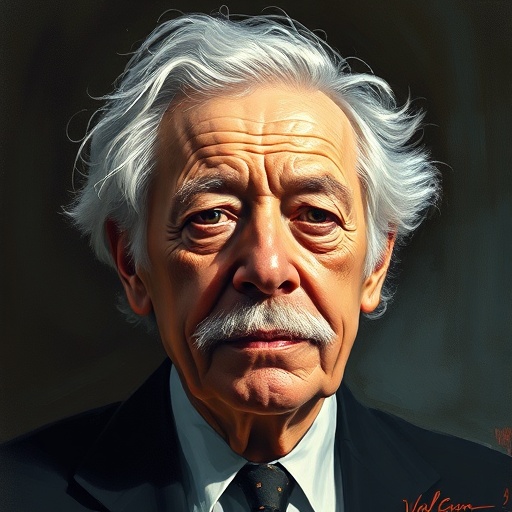
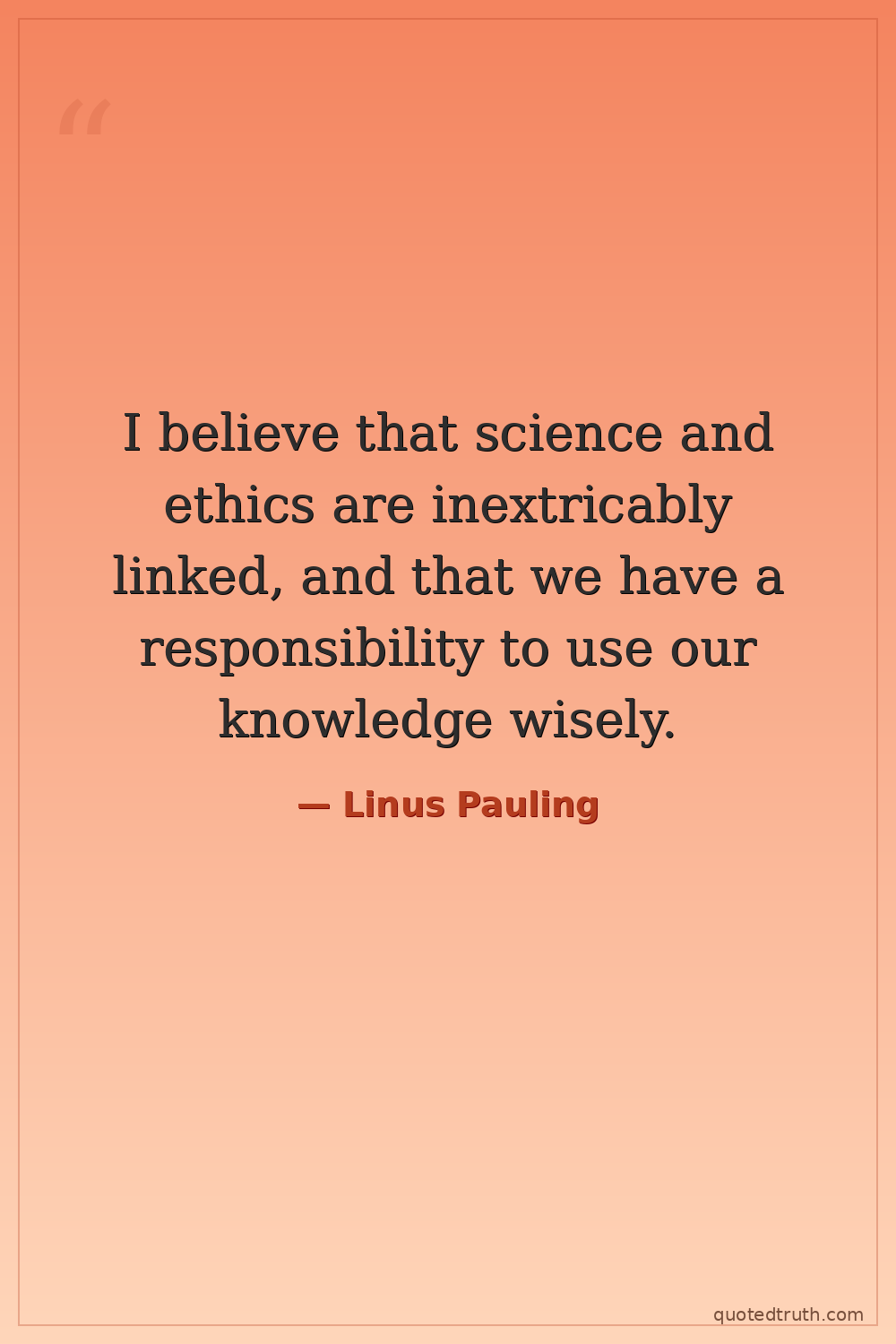
Linus Pauling — "I believe that science and ethics are inextricably linked, and that we have a re…"
I believe that science and ethics are inextricably linked, and that we have a responsibility to use our knowledge wisely.
I believe that science and ethics are inextricably linked, and that we have a responsibility to use our knowledge wisely.
Click any product to generate a realistic preview. Up to 3 at a time.
* Initial load can take up to 90 seconds — revising the preview in another color is nearly instant.
"I have always been a rebel, and I believe that it is important to challenge authority."
"I am not a quack. I am a scientist."
"I believe that the human race has the ability to solve all of its problems, if we only work together."
"I am an optimist. I believe that the human race will solve its problems."
"The problem of an atomic war must not be confused by minor problems such as Communism versus capitalism. An atomic war would kill everyone, left, right, or center."
Found in 1 providers: grok
1 source checked
Knowledge alone is never enough — those who possess it bear a moral obligation to wield it carefully. Science generates power, and power demands accountability. Understanding how the world works creates a duty to consider consequences before acting. Wisdom means recognizing that technical capability and ethical judgment must travel together, not separately, because discoveries ripple outward into human lives in ways their creators cannot always predict or control.
Pauling won two unshared Nobel Prizes — Chemistry in 1954 for chemical bonding theory, and Peace in 1962 for his anti-nuclear activism. He literally embodied the science-ethics link: the same chemistry expertise that advanced molecular biology drove his campaign against atmospheric nuclear testing. His 1958 petition signed by over 11,000 scientists helped achieve the Partial Nuclear Test Ban Treaty, proving he acted on this belief rather than merely stating it.
Pauling's career spanned the Manhattan Project, Cold War arms race, and hydrogen bomb development. Scientists who built nuclear weapons watched cities vaporized, forcing a reckoning with researcher culpability. The 1950s-60s saw Sputnik, fallout contamination debates, and emerging environmental consciousness. Scientific communities increasingly questioned whether technical progress automatically served humanity, making Pauling's insistence on linking laboratory work to moral responsibility both urgent and controversial during McCarthyism.
AI-generated insights based on extensive research and information for context. Factual errors? Email [email protected].
Your cart is empty